
Is There a Good Movie Without a Story for Unhappy Family?
We saw an excellent competition selection at the 26th European Film Festival Lecce, with diverse perspectives from the authors. Most of them went to the very end of things, and offered us a glimpse of what lies ahead there.
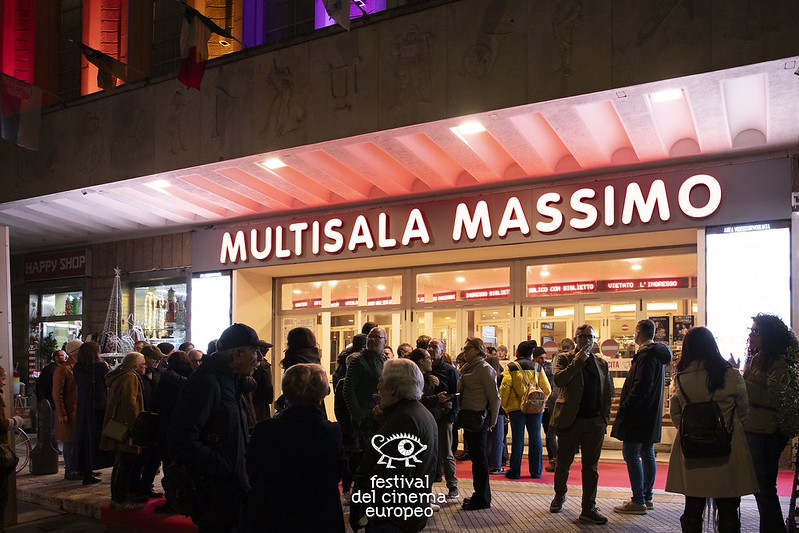
A thematic preoccupation in almost all the films from the official selection in 26th European Film Festival Lecce, looks like starting from the famous sentence by Leo N. Tolstoy from the novel Anna Karenina: “All happy families are alike; each unhappy family is unhappy in its own way.” On the other hand, German director Rainer Werner Fassbinder, in his essays dedicated to the famous master of melodrama, danish-german-american director Douglas Sirk, believed that the true formula for family drama is to go to the end of things, and see what happens next…
The 10 films from the official competition selection of the 26th European Film Festival Lecce, selected by Alberto and Luigi La Monica, are dominated by themes of growing up, complicated family relationships, pedophilia, rape, feminism, emotional maturation, parenthood, motherhood, death, the longing for freedom… as a stamp, or perhaps better said, a scar on family portraits. Framed in different social and natural landscapes, these authorial interests, each separately, create exceptional stories. After all, that is why they sound like different emotional microworlds of universal misfortune.
The winner of the FIPRESCI Award, Hlynur Pálmason’s The Love That Remains (Ástin sem eftir er, 2025), is a bittersweet family carousel in which marital relationships change like the seasons, questioning the mutual emotional relationship, in which sentimental memories and the desire to step away from a failed marriage are mixed. Pálmason’s style of filmmaking integrates screenplay, cinematography, and direction into a superior Cine-Eye format that presents the film’s story with a dynamic rhythm and diverse characters full of life, however they may be.
In the next film, we don’t have a classic family in the story, which in a strange way confirms our maxim from the beginning of the text. In White snails (2025) by Elsa Kremser and Levin Peter, winner of the festival jury award for best film, we witnessed the meeting of eros and thanatos in a naturalism style. The young model trying to make an international career and the apathetic technician from the night shift at the morgue, whose eerie professional experience filled with hundreds of deformed corpses that he dissects is transferred to his canvases, are the two extremes in the author’s depiction of stifled freedom of the individual. The story of the Austrian-German co-production, located in Minsk, Belarus, and played mainly in Russian and Belarusian, is a metaphor for a closed society. The deconstruction of that society is emphasized by the loneliness of the two individuals who begin communication in the strangest place for two young people – the aforementioned morgue – and their shyness and some strange resignation to the situation they find themselves in is a counterpoint to their desolate desires for a different life, desire to escape limitations and embrace new life opportunity.
Vladimir Tagić’s Yugo Florida (2025) was realized in a similar dark and depressing atmosphere. His story about the reunion between son and father, which turns out to be the last due to the parent’s illness, is told in a certain dimension in the style of Alexander Sokurov, but somehow, and according to old but good Sirk’s instructions – to go to the end and see what’s there. The young man, lost in the gap between his sentiment for his ex-girlfriend and his job as a producer of the Big Brother show, now receives a new challenge – the last trip with his sick, grumpy and selfish father, on which he reveals parts of his hidden past. Once again, we have a resigned character who faces the ghosts of his father’s past – Yugo Florida is a kind of metaphor for a car model from the former socialist Yugoslavia that did not fulfill the desired wishes of that country’s automotive industry to make a significant placement in the United States – but also with dilemmas about his own future.
Even when we have a harmonious family living a normal life, an intruder is bound to appear. In The Pupil (De Pupil, 2025) by Karin Junger, we follow the entry of a young schoolboy and football enthusiast into the trap of a pedophile coach. The silent but eerie horror of the tragic schoolboy is emphasized by the contrast of sport as a super-masculine activity against the ingrained opinion of gay people as feminized individuals. Junger tells the story (filmed according to her script) in a sensitive way and at a great pace in a documentary style – her beginnings are tied to documentary – so The Pupil is perceived as a visual testimony in one breath.
What happens, however, when your family literally falls from the sky? In Nathan Ambrosioni’s Out of Love (Les Enfants vont bien, 2025), Jeanne is unexpectedly visited by her sister Susanne with her two children. The next morning, Susanne disappears, leaving the children in the care of Jeanne, who has a failed marriage behind her precisely because she did not want to have children, choosing an emotional relationship with her friend as her desired future. In Ambrosioni’s story, filmed according to his script, Jeanne is thrown into an emotional rollercoaster, so she must manage the initial shock as best she can, for the sake of her helpless nephews, and also in the name of her own bad experiences with father in her childhood. Out of Love is a layered melodrama of modern style, in the best spirit of the genre, which unpretentiously treats motherhood, parenthood, sexual orientation, dysfunctional family…
What Marielle Knows (Lo schiaffo, Original title: Was Marielle weiß, 2025) by Frédéric Hambalek, filmed from his own script, has perhaps the most original (or wacky) introduction to the story. A seemingly harmonious family experiences serious challenges when the teenage daughter, after a slap in the face in a fight with a classmate, gains the power to hear and see everything her parents say and do. This reveals the small, but not so naive secrets and flaws of her parents, who will have to choose between false morality in family relationships and the truth.
When A River Becomes The Sea (Quan un riu esdevé el mar, 2025) by Pere Vilà Barceló chooses the sensitive topic of sexual abuse, which does not have to be depicted as realistically harsh, but its consequences are more than painful for the victim, a young student living with her father. She must convince her father, and not only him, that she was the victim of rape committed by her former boyfriend.
The main protagonist of The Son And The Sea (2025) by Stroma Cairns is in search of the meaning of life, tired of the constant entertainment as an immature man in big London, which he replaces with the quiet landscape of a small seaside town in Scotland. In his case, the maxim that the meaning of travel is not in the destination, but the journey itself, proves to be quite useful: meeting new locals from a world that is radically different from his previous social environment, also changes his outlook on life.
Anyway, we saw an excellent competition selection at the 26th European Film Festival Lecce, with diverse perspectives from the authors. Most of them went to the very end of things, and offered us a glimpse of what lies ahead there…
Stojan Sinadinov
Photo: Multisala Massimo
Photo credit: 26th European Film Festival Lecce
©FIPRESCI 2025