
Reviewing Renoir at Tromsø: This Girl's Life
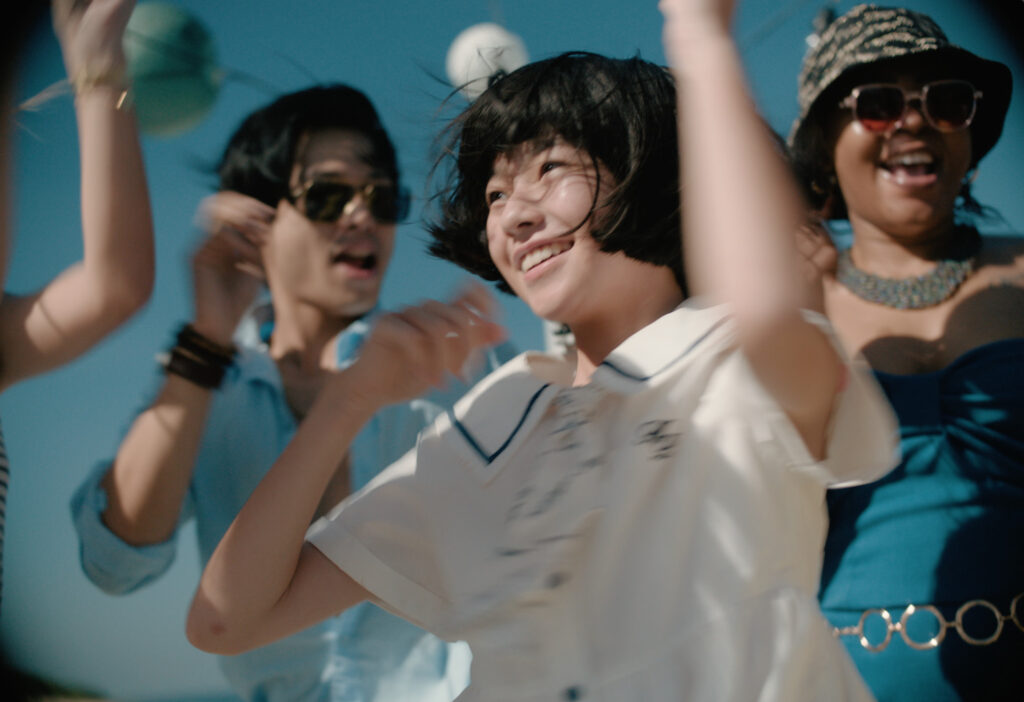
The Arctic festival offered a plethora of different stories about the varied lives of school-aged girls, but Chie Hayakawa’s Renoir stood out as one of the most compelling examples that encourages viewers to reflect on their empirical experiences. In the film, a young girl’s view on life in 1980s Tokyo is a refreshing contrast to a media-saturated world of insistent storytelling formats.
Among the eclectic program at this year’s Tromsø International Film Festival were many films dealing with young girls’ experiences and perspectives that let the viewers observe for herself. The FIPRESCI Prize winner, Broken Voices (Sbormistr, 2025) by Czech filmmaker and director Ondřej Provazník, is based on the true story about a young girls’ choir in Czechia dealing with an internal rivalry over who is the favourite of their handsome conductor—that is, until something darker emerges. In French filmmaker and director Hafsia Herzi’s The Little Sister (La petite dernière, 2025), a 17-year-old girl feels that her loyalty to her beloved Muslim family is challenged when she discovers an attraction to women. Little Trouble Girls (Kaj ti je deklica, 2025) by Slovenian filmmaker and director Urška Djukić is a sensual coming-of-age debut about teenage girls at a Catholic choir camp, where discipline and devotion are intertwined with unspoken desire and power plays.
My favorite “young girl film” from Tromsø 2026, Renoir (ルノワール, 2025) by Japanese filmmaker and director Chie Hayakawa, takes place in Japan—Tokyo, in 1987, to be exact. 11-year-old Fuki (played by newcomer Yui Suzuki) has just written a short story at school about how she would be an orphan. Is this just a sign of a vivid imagination, or is something not quite right at home? Her father (Lily Franky) has been diagnosed with terminal cancer. Her overstressed mother has plenty to think about—she’s not exactly doing well at work, either, and is sent to a communication course. Fuki feels lonely, and at the same time, she feels that adults are not telling the whole truth. She is observant and notices things that adults do not see.
The title Renoir is named after the renowned painter. The film is autobiographical and inspired by director Hayakawa’s own experiences as an 11-year-old in 1987—and the perspective she got from her father. The director already distinguished herself with her debut feature film Plan 75 (2022, Chie Hayakawa), which premiered in the Un Certain Regard section at Cannes and received a special mention in the highly coveted debut film competition Caméra d’Or.
Renoir demonstrates Hayakawa’s talent for poetic film aesthetics. The film language is very expressive but also low-key. There is a melancholic touch to it—notably due to its theme and given the seriousness of the film, with the father’s cancer situation and the lonely Yuki who struggles to seek contact and understand how to make new friends. Is it because she is a bit different? She can imitate animals, do other tricks, and also does not wear typically girly clothes—but rather, large and colorful t-shirts. Her inner world is mirrored in the film’s color-saturated universe, yet the color palette is soft and muted, keeping with the restrained tone of the film.
The audiovisual language is occasionally on Yuki’s terms; she communicates little through speech. It is her observations that we take in, and we see how she longs for contact with her mother, who is not good at communicating, although she talks a lot. The film refrains from playing with dramatic effects which amplifies the sentimentality, which would also puncture the unique form and rhythm of the film.
Instead, silence helps to emphasize everything that is articulated without speech. We start to notice the many sounds that exist through daily life and how some of them suddenly could suggest other interpretations. For instance, a sequence with a new “friend” filmed from behind is dominated by the creaking of a brown leather sofa as a disturbing element, as if the sound itself is saying something about the situation. The sensitive camera gaze captures details that Yuki notices but others do not.
Renoir is a different portrayal of a young girl’s inner life articulated through the human language of the work itself. The film never insists on anything but invites us to think for ourselves in the face of many contemplative images. Sections of the film make us think simply because they are filmed from perspectives that are unfamiliar. In this way, the film asks us to reflect, making Renoir a delicious contrast to a fussy world saturated with strong and insistent impressions.
Ida Madsen Hestman
Edited by Olivia Popp
@FIPRESCI 2026