
Reviewing Nipster: A Good Cause, Uneven Execution in Depicting Swedish Nazi Hipsters
Ukrainian film critic Elena Rubashevska examines Nipster, a Swedish youth drama that attempts to tackle radicalization, ecological extremism, and social alienation, yet ultimately struggles under the weight of too many themes.
Nipster, directed by Sunniva Eir Tangvik Kveum (Sweden, 2026), was immediately marked with a “selling quickly” note on the website of BUFF Malmö Film Festival. This fresh Swedish drama about radical movements among local youth came tagged with strong keywords such as politics, peer pressure, and fascism, quickly drawing the attention of festival audiences. Yet the higher the expectations, the greater the confusion: in its attempt to tackle everything at once, the film struggles to articulate a clear central idea. What exactly in Swedish society are the filmmakers trying to capture—and why does it ultimately seem to exceed their grasp?
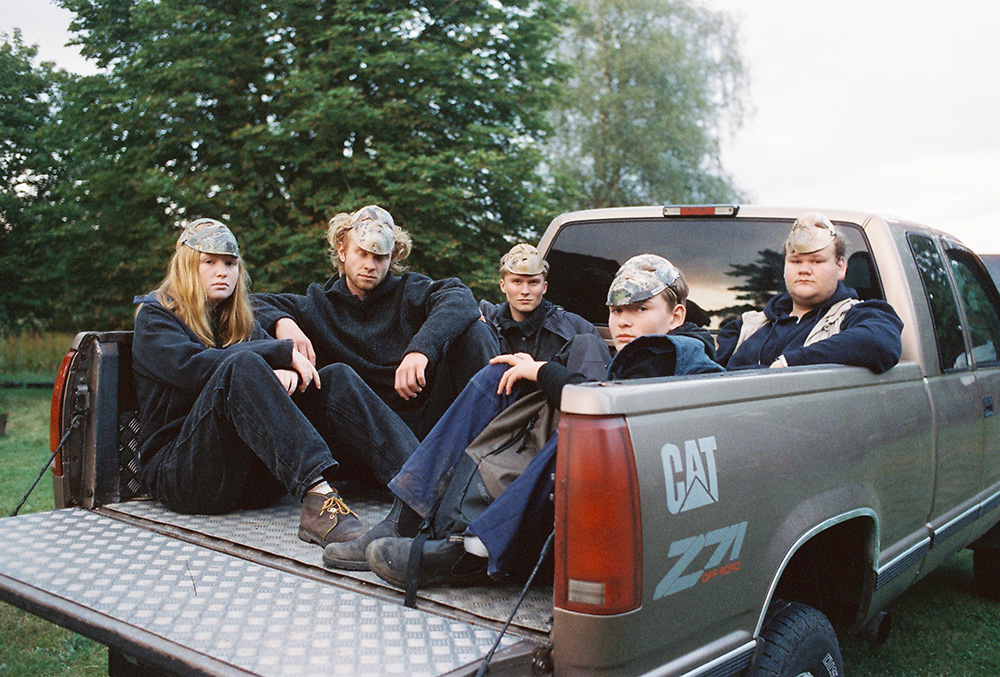
The title itself is the first intriguing element. The word “nipster” refers to a “Nazi hipster,” describing far-right extremists who adopt contemporary, fashionable aesthetics in order to make their ideology appear more modern and socially acceptable. In this hybrid style, traditional hipster fashion blends with extremist nationalist or racist views, creating a disturbing contrast between appearance and ideology.
The film’s protagonist, seventeen-year-old Chris (Saga Stenman), gradually becomes involved with a group representing this ideology and eventually turns into one of its most active members. The motivation that drives her toward such companionship lies in a familiar teenage vulnerability: a lack of confidence and belonging. Unable to find her place among her peers, Chris becomes drawn to the secrecy and exclusivity of the nipster group. The possibility of concealing her identity behind a mask—and disrupting society from within—becomes increasingly attractive.
The second intriguing element lies in the film’s visual contrast: the juxtaposition of a bucolic Swedish summer landscape with the slowly emerging menace of the group. Much like in Midsommar by Ari Aster, an initially idyllic environment gradually becomes overshadowed by the unsettling presence of a destructive cult.
The third promising thread concerns the idea of ecological fascism—a mixture of environmental awareness and activism pushed toward extremist limits. This ideological blend becomes one of the defining characteristics of the group Chris joins, hinting at a contemporary phenomenon in which ecological concern can be co-opted by radical political narratives.
Up to this point, the thematic ingredients appear promisingly aligned. Yet the filmmakers—screenwriter Sarah Olsson and director Sunniva Eir Tangvik Kveum—do not stop there. Evidently concerned with a wide range of contemporary issues, they expand the story to include racism, migration, bullying, family crises, and the destructive role of social media. Instead of strengthening the narrative, this decision ultimately fragments it. Over its brief 78-minute runtime, the film introduces numerous themes but develops none of them fully. Each of these topics is significant for modern Swedish—and more broadly European—youth, yet when placed together in a melting pot of ambitions, they lose their urgency.
In this sense, Nipster becomes almost symptomatic of a wider generational experience. Many young people today are confronted with an overwhelming array of global concerns and feel compelled to engage with all of them simultaneously. The film inadvertently mirrors this condition: trying to address multiple battles at once while struggling to maintain focus long enough to win any of them. The tendency to go broader rather than deeper is also reflected in the characterization. The psychological motivations of the nipster group members remain largely unexplored, leaving viewers without a clear understanding of what drives teenagers from one of the world’s most prosperous societies toward submission to a destructive cult.
Ultimately, Nipster serves as a reminder of a simple creative principle: when story attempts to address every issue at once, it risks losing the clarity needed to explore any of them meaningfully. If a film tries to fix every problem in the world, it risks fixing none.
Elena Rubashevska
©FIPRESCI 2026