
Beats of Liberation: Beef
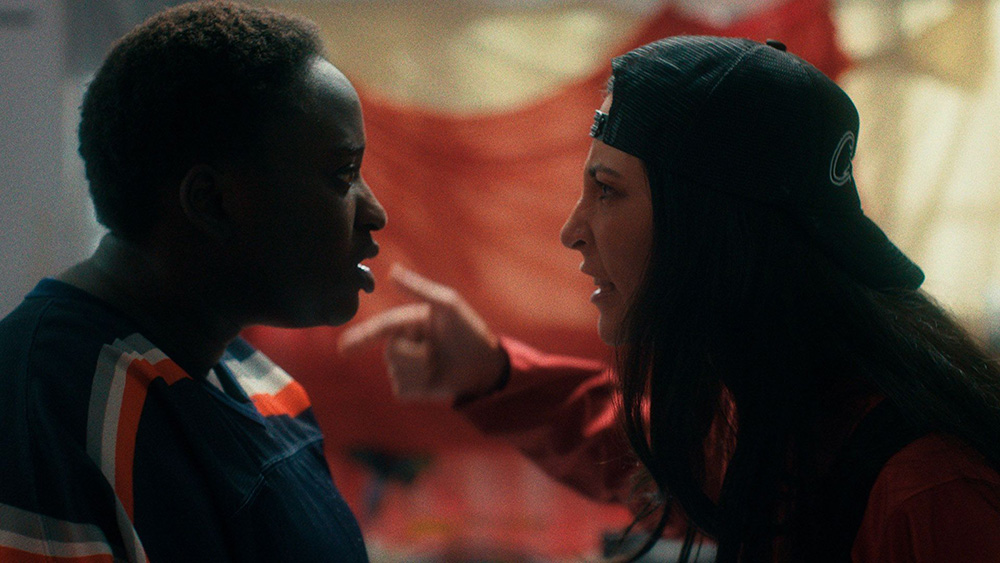
German film critic Axel Timo Purr reflects on the first FIPRESCI jury at the BUFF Malmö Film Festival and explains why Beef stood out in a socially engaged competition lineup.
At the FIPRESCI debut at the 43rd BUFF Malmö Film Festival, Ingríde Santos’s Beef stands out above all others in a strong line-up featuring similar social perspectives.
When a FIPRESCI jury was established for the first time for the BUFF Malmö Film Festival’s 43rd edition, it was more than just an additional award. It was also an attempt to bring the children’s and youth film genre – which is often treated by international critics as little more than an educational side-note – to where it actually belongs: at the centre of cinematic attention. For without good children’s films, there can be no good films for adults either. The fact that this initiative is to be extended to other children’s film festivals in future therefore feels less like an organisational move and more like a cultural-political one. And anyone who looked at this year’s nominees at BUFF in Malmö alone quickly realised: children’s film is no longer a protected space, but a laboratory of contemporary society.
Almost all the films revolved around a similar experience: children and young people having to find their way in dysfunctional, fragmented or simply overwhelmed family set-ups – patchwork families, migration, absence, new parents, old wounds. What at first glance looks like classic coming-of-age stories quickly turns out to be something more fundamental: young people’s attempt to find a form of self-empowerment in a society that has become fluid. A process that – as every adult eventually learns the hard way – is never truly complete.
Bérangère McNeese’s The Girls from Above already observes this search with subtle empathy: young women develop their own perspective in a world caught between hope and despair – without institutional support. Joëlle Desjardins Paquette’s My Stepmom Is a Witch takes a more fairy-tale-like approach: the father’s new partner becomes a witch, an ancient figure for modern patchwork family traumas – magic as family therapy. Splish Splash Forever! by Natascha Beller focuses on pop-inspired coolness and youthful politicisation: the feeling that, in a changing world, we are all migrants. Marcel Barelli’s animated film Mary Anning combines historical self-empowerment with modern sensibility – a coming-of-age story set in 1811, illustrated like a picture book. Nipster by Sunniva Eir Tangvik Kveum explores youth radicalisation, navigating between eco-activism and blood-and-soil rhetoric. Finally, Mira by Marie Limkilde, perhaps the quietest film in the competition, combines voice-over, animation and observations of everyday life into a sensitive look at peer pressure, first love and fragile families – and in doing so almost resembles a Bergman for the younger generation.
Yet the film that ultimately proved most compelling operated at a very different pace. Beef (Ruido) by Ingríde Santos tells the story of Lati, an Afro-Spanish teenager in Barcelona who, following her father’s death, discovers a voice for herself in the world of freestyle battle rap. What initially appears to be a variation on the familiar Karate Kid narrative – a mentor, a talent, a scene to be conquered – quickly unfolds with astonishing and ever-surprising depth.
For here, rap is staged not merely as a competition, but as therapy, protest and raw energy all at once. The beats and rhymes are the place where identity takes shape. Behind every punchline lies a family’s story: the mother, a Muslim woman from Mali, whose traditions echo in every decision her daughter makes. Language becomes a weapon, but also a bridge – between generations, cultures and continents.
The film depicts this slow coming-of-age with great precision. Insecurity turns to strength, observation turns to conviction. The lyrics of the rap battles become the film’s actual cinematic space. They carry the film – and at the same time open up wider resonant spaces, be it funeral rituals, sisterly relationships or music. For suddenly it is no longer just about migration between Mali and Spain, but also about the colonial lines connecting Europe and Latin America.
When the final takes place in Mexico, it does not feel like an exotic change of location, but rather an extension of the discourse. Here, everyone fights with the same tools: language and rhythm. A battle of the colonised, who challenge one another with words – and emancipate one another at the same time.
Beef is therefore more than a music film. It is a moving ode to friendship, to cultural hybridity and to the power of language. Or, as one might put it: a new, post-Jean-Pierre Dardenne / Luc Dardenne and post-Ken Loach neorealism all in one – except that here it is not silent upheavals or social criticism, but the beat that sets the pace.
The fact that the first FIPRESCI award of this children’s and youth film festival, which has been running for 43 years, went to this film is perhaps no coincidence, but rather something of a promise. Children’s and youth film can be more than merely educational background music. Sometimes it is the place where the future is already speaking – loudly, rhythmically and with astonishing clarity.
Axel Timo Purr
©FIPRESCI 2026