
Technology and Human (Dis)Connection in The Sandbox and Arctic Link
in 23rd CPH:DOX, Copenhagen International Documentary Film Festival
In their respective debut feature films, two documentary directors explore how rapidly advancing and omnipresent technology has transformed and continues to change our society. For although new technological tools promise opportunity, freedom, and security, something is also lost along the way: human connection. At its core, it is about human connection.
When we surround and intertwine ourselves with technology, what happens to our human connection? In the main competition at the 23rd edition of CPH:DOX, two ambitious debut feature documentaries ask this question and arrive at markedly different answers.
The Canadian film The Sandbox, directed by Kenya-Jade Pinto, examines global power relations and themes of migration, control, and militarisation, particularly in relation to emerging technologies. The film travels to the borders of the United States and the European Union to document increasingly digitised processes of surveillance and security. Here, a growing billion-dollar industry is driving the development of new tools such as biometrics, databases, and autonomous monitoring systems.
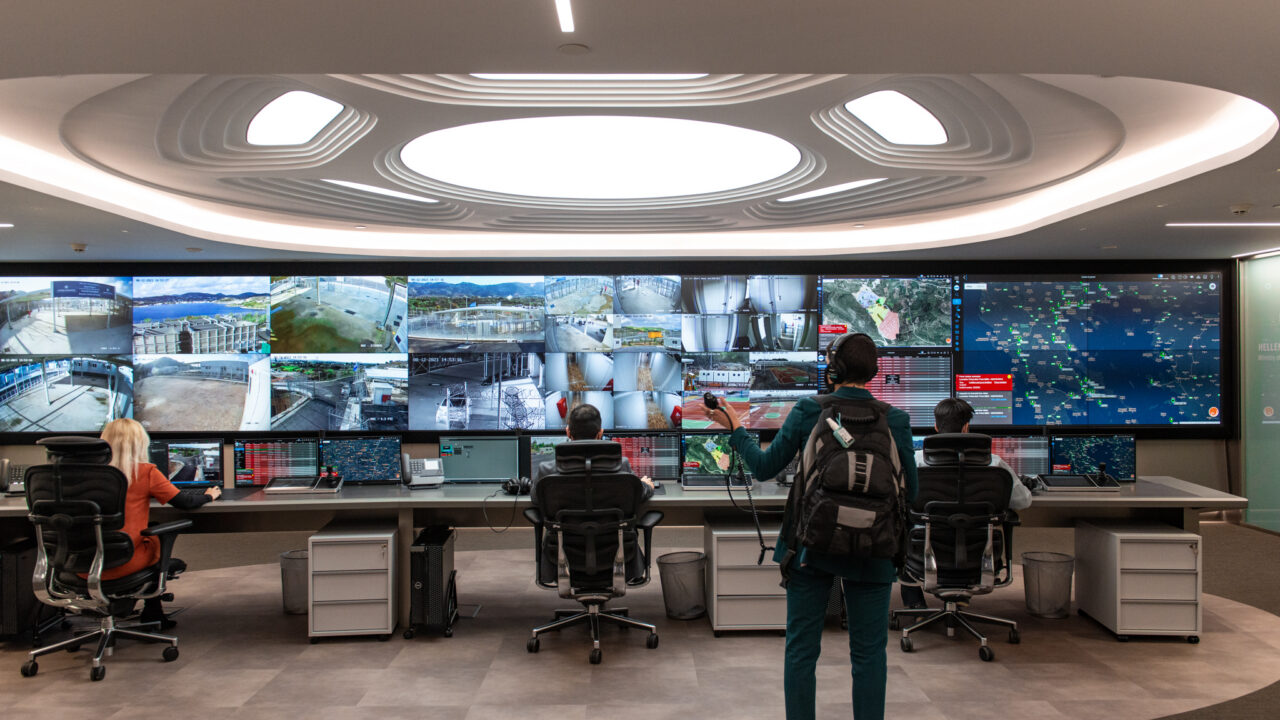
One of the institutions featured is Frontex, the European Border and Coast Guard Agency. It claims that its technologies employ “humane quality structures” that “dignify people.” The Sandbox, however, reveals a starkly different reality. Through testimonies from witnesses, journalists, and surviving migrants, the film shows how drones monitor waters south of Europe, signalling the so-called Libyan coast guard to intercept—not necessarily rescue—incoming boats. It exposes a system in which technology evolves continuously, while those subjected to it remain immobilised, denied comparable agency or mobility.
The film also visualises human beings through the lens of this technology. Drone footage appears in blurred monochrome, alongside thermal images in purples and oranges. Faces are obscured, framed by crosshairs, digital boxes, and tracking labels. Through these interfaces, individuals cease to appear human; they become abstractions—targets within a system. This visual logic suggests how technological mediation can facilitate moral distancing, making it easier to suppress the ethical implications of inaction.
Moreover, in the name of innovation, companies test and refine these systems on asylum seekers and low-income populations in the Global South—groups least able to refuse such intrusion. Participation becomes a condition of survival. In this vast “sandbox,” technological advancement is inseparable from structural inequality, generating profit at profound human cost.
Although corporate representatives appear throughout the film, the complex and opaque network of systems makes it difficult to assign responsibility to any single actor. With its expansive scope, The Sandbox suggests that this opacity is not incidental, but deliberately constructed.
Technology is also central—though approached with greater ambivalence—in the Swiss documentary Arctic Link, the debut feature of Ian Purnell. The film focuses on a remote community in the Aleutian Islands off Alaska, on the brink of being connected to high-speed internet for the first time. This impending transformation prompts a fundamental question: how will connectivity reshape daily life?
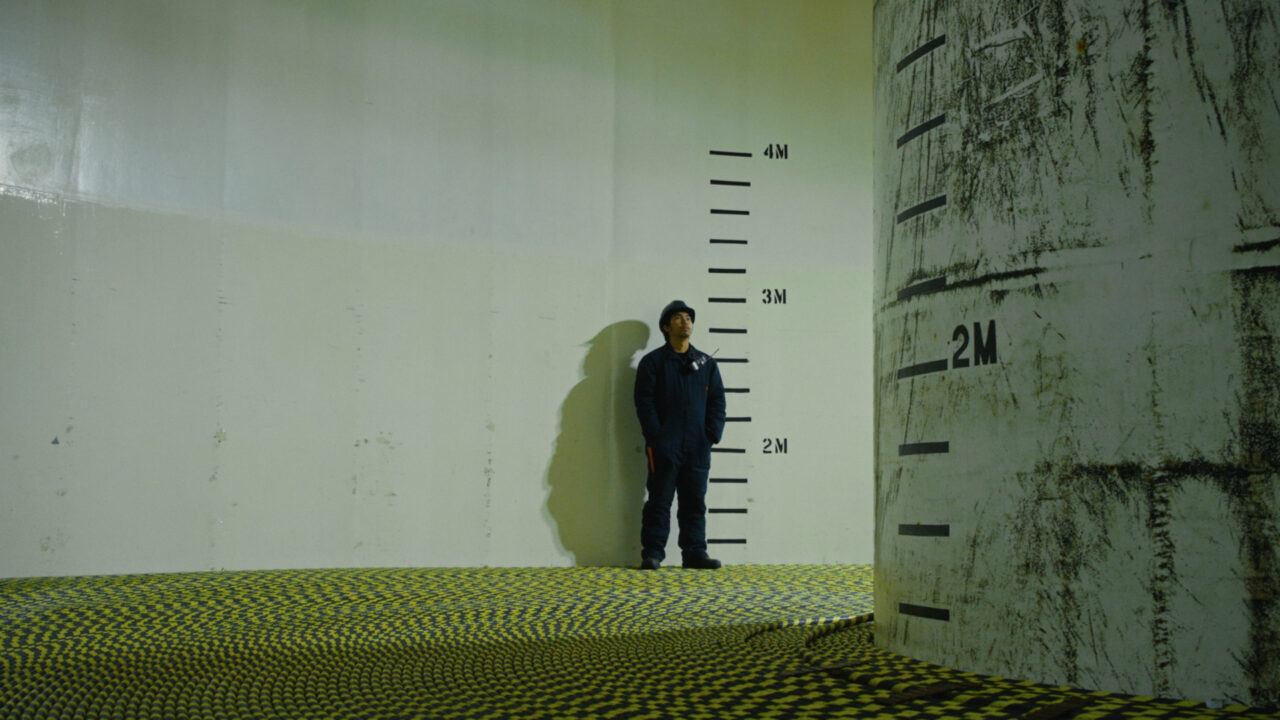
Reactions vary. Some residents express anticipation, others apprehension. A young mother mourns the loss of a quiet, analogue childhood she fears her own children will never experience. Meanwhile, an isolated queer individual looks forward to finding connection online, hoping to alleviate loneliness.
Reflecting on these changes, the islanders imagine the internet as something intangible, almost mythical. Adults and children alike attempt to describe it, comparing it to animals—a dog, a shark—struggling to grasp its abstract nature.
Arctic Link juxtaposes these imaginings with the material reality of digital infrastructure. Connectivity is made possible by a large vessel laying thick cables along the seabed, later buried underground and distributed to households. The internet, in this sense, is both invisible and profoundly physical.
Ironically, the ship’s crew themselves experience disconnection. Separated from their families for extended periods, they too reflect on how the very technology they install might help bridge emotional distance.
The film retains a degree of mysticism. The cable ship, filmed traversing vast oceanic spaces, takes on the presence of a mythical creature. The origins of the cables remain largely unseen; only in the final shot do we glimpse a data centre filled with humming machines at an undisclosed location.
Compared to The Sandbox, Arctic Link offers a more ambivalent perspective. It acknowledges the benefits of digital connectivity. An elderly man, initially indifferent, discovers an online archive containing a photograph of his father’s boat. “Wow, I didn’t know they had that on here. You can definitely find something!” he remarks, with genuine wonder.
Yet the film does not ignore the darker implications. A ship captain observes teenagers absorbed in their smartphones and notes, “Every technology has its demons.” This unease resonates within the film’s soundscape, where ominous electronic tones accompany images of the approaching cable ship.
Technology, the films suggest, moves in only one direction. There is no return to a pre-digital state. Both Arctic Link and The Sandbox invite reflection on what is gained—and lost—in this process. Crucially, they remind us that technology is not an autonomous force. Behind every system lie human decisions: choices about expansion, profit, control, and responsibility. As one anonymised voice in The Sandbox observes, “The problem is not technology itself, but how we use it.”
Morten Kildebæk
©FIPRESCI 2026