At the heart of Copenhagen, the semi-anarchic Freetown of Christiania has long stood as a radical social experiment. In her deeply personal reflection, Ukrainian film critic Elena Rubashevska revisits its legacy through a documentary that captures both the enduring idealism and the quiet erosion of a once-utopian vision.
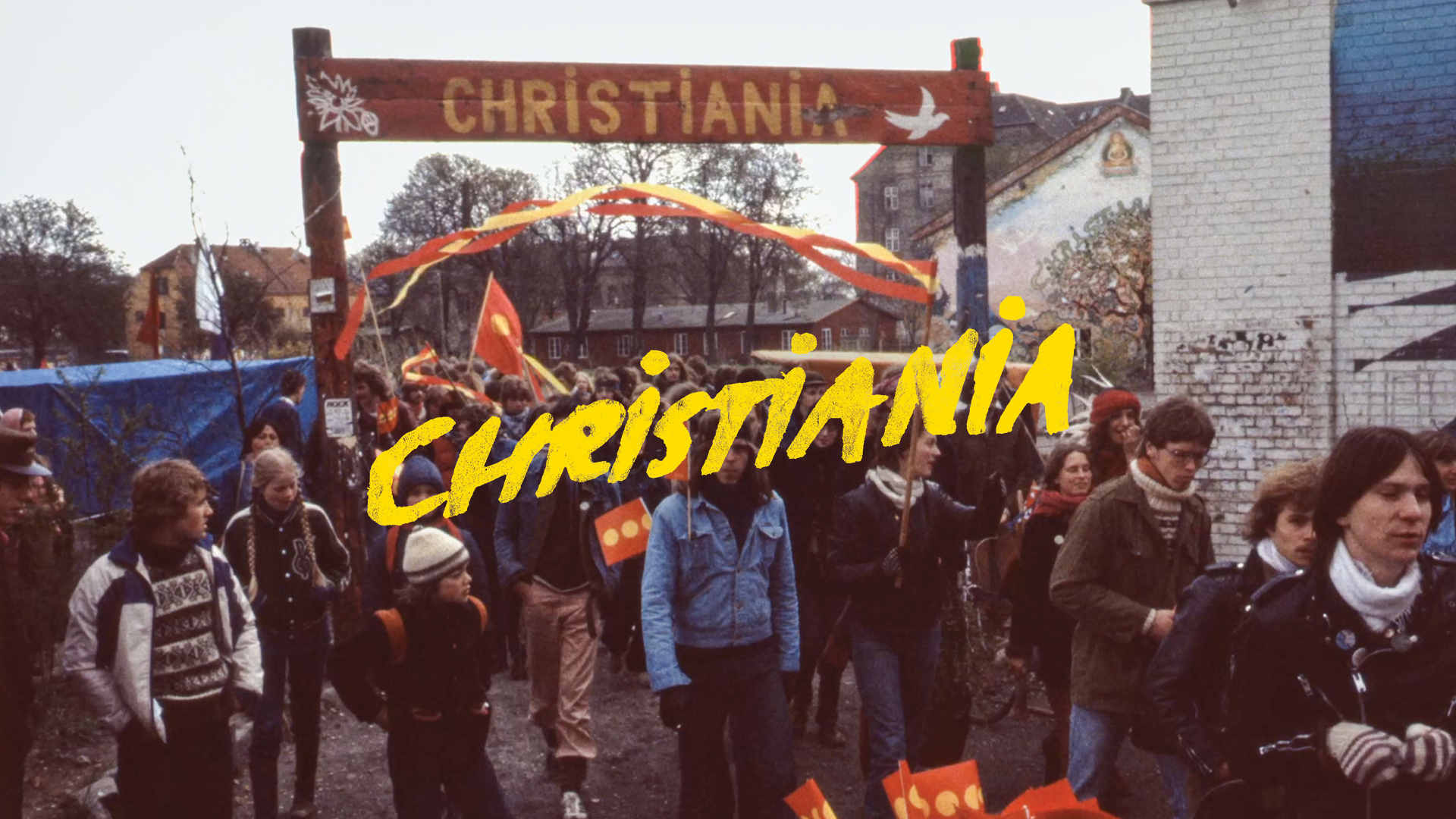
In the very centre of vibrant Copenhagen lies Christiania, a Freetown founded in 1971 by a group of young squatters guided by semi-anarchic ideals and a belief in radical self-expression. For decades, it has drawn artists and criminals, visionaries and outcasts—people in search of themselves and of a place where such a search can unfold beyond the limiting bounds of society. In 2026, CPH:DOX hosted the gala premiere of a documentary that finally captures fifty years of this extraordinary social experiment.
In 2015, I found myself in a strange place. In my early twenties, I had not travelled much, had lived through war, and felt trapped in suffocating social and economic conditions. I was searching—urgently—for answers to the questions crowding my mind. That was when I first learned about Christiania. Taking the first flight of my life, I rushed to Copenhagen equipped with no money, limited English, and a deep conviction that this was where I was meant to be. What I knew of the Freetown came from scattered fragments online, yet even that was enough to ignite a desire to become part of the community, to learn from it, and one day return home to help build a more sustainable and humane society.
Twelve years later, watching a documentary about Christiania at CPH:DOX as part of the FIPRESCI jury, I found myself unable to hold back tears—of nostalgia, sadness, and laughter. The film stirred reflections on the profound impact this place has had on thousands of lives, including my own.
Director Karl Friis Forchhammer appears to share this emotional connection, placing it at the core of his documentary. His relationship to Christiania is generational: his parents were among those who helped shape the Freetown, and he himself has grown into its ethos of radical freedom paired with collective responsibility. He carefully reconstructs a history rooted in the housing and social crises of 1970s Denmark, guiding the audience through the community’s evolution—its occupation of former military barracks, its prolonged negotiations with the Danish state, and the flourishing of a communal way of life built on solidarity and mutual care. At the same time, he does not shy away from the darker chapters: the persistent struggles with violence and drug abuse, and the many bizarre, provocative, humorous, and deeply human episodes that define Christiania’s past.
Although Christiania still exists much as it did half a century ago—adapting, evolving, and absorbing new realities—its story feels less like history and more like a parallel timeline. The image of young people confronting authority with creativity, disrupting complacency through performance, and actively taking responsibility for their future now feels distant, almost unreal. The Freetown’s enduring message—“Don’t you fear their insanity, we are fighting for humanity”—echoes faintly against today’s backdrop of escalating militarisation in which Denmark, too, has taken an increasingly active role, alongside deepening economic and ecological crises, and a generation helplessly lost in front of obsolete leaders fixated on accumulating power, resources, and wealth at any cost.
For ninety-three minutes, the documentary offers a rare respite from this reality—a gentle, warm requiem for the dream of a more just society. Yet even as Christiania endures, the “normalisation” its inhabitants long resisted inevitably creeps onto its grounds…
As for me, I never returned home to apply what I had hoped to learn during my time in Christiania. The war I once thought temporary spread far beyond its origins, expanding into new territories. In this light, a line from the film’s archival footage resonates with prophetic clarity: when asked how they imagined the future, a young resident responds simply that there is none—that humanity, as they see it, is already finished.
Elena Rubashevska
©FIPRESCI 2026