
Preserving a Moment in Time: An Interview with Ross McClean
in 48th Drama International Film Festival
by Paul Risker
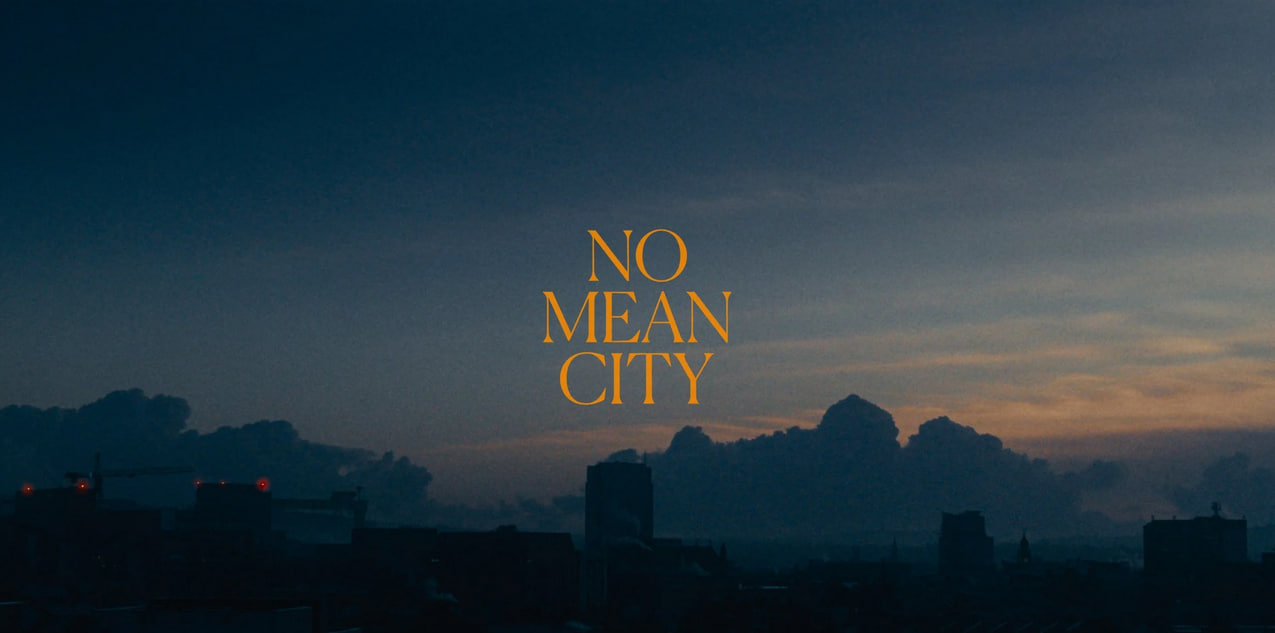
Playing in the International Shorts Competition at the 48th Drama International Short Film Festival, Ross McClean’s documentary No Mean City (2025) is a compelling meditation on humankind’s relationship to light, and one’s sense of place in the world amid slow and discreet changes.

Born in Belfast, McClean is a graduate of the European documentary directing masters program DocNomads. He has studied creative documentary in Canada, Hungary, Portugal and Belgium, and has lectured at Queen’s University, Belfast.
McClean’s 2019 debut short film, Hydebank, won Best Short Documentary at Galway Film Fleadh, London Short Film Festival, SPEKTRUM, Docs Ireland Film Festival and Leeds International Film Festival. It follows Ryan, a young offender who is serving ten years for a violent crime. Forming a bond with the flock of sheep inside Hydebank House’s walls, he reckons with the choices that have led to his incarceration.
He followed this with 2023’s Echo, the inspiring story of Allister, whose vocal cords were damaged by a surgical procedure. While the damage is an obstacle to communication, Allister discovers human connection through radio communication.
McClean is currently in production on Magilligan, a feature-length adaptation of Hydebank.
In conversation with FIPRESCI, McClean discussed interrogating change without taking a position, the advantages of the road movie format, inherent juxtapositions in his cinema, and the place of short films in cinema’s decline as the dominant art form.
It’s always said that making a film, even a short, is difficult. And with analogies comparing it to having a baby, raising a child, war and trauma, why do you put yourself through it?
I love how collaborative filmmaking is, particularly in the form I’m pursuing. The film only becomes what it is through other people’s involvement, whether that’s the shared language you build with the crew or the encounter with the characters.
It also feels like there’s a documentary movement underway right now, which is genuinely energising. It makes the inevitable turmoil feel worthwhile because you’re not doing it in a vacuum. You’re part of a wider conversation.
What was the seed of the idea for No Mean City?
One evening when I was returning to my childhood home just north of Belfast, I felt something was off. After a few visits, I realised the orange glow of the sodium lamps had disappeared, replaced by the cold white of LEDs. It completely changed the nighttime atmosphere of a place where I’d lived for 18 years.
I realised Belfast was quietly being switched over, lamp by lamp. Conveniently (and predictably) the city was the slowest in the UK and Ireland in this transition, which allowed for us to preserve this moment in time.
How do you see the relationship No Mean City shares with your other short films?
I joke that it’s the final film in my trilogy of ‘Northern Irish men keeping themselves busy at night.’
One of the first thoughts I had watching the film was the story of man being given the gift of fire. Could we say No Mean City is rooted in or is in conversation with mythology?
I think that’s a strong reading. Fire was always at the heart of the idea, given the relationship with the glow from sodium-vapour streetlights. We knew the film should convey something primitive, whether the familiar warmth of the glow, or the creation of light to fight against darkness.
If mythology is one of the ways a culture keeps certain stories and rituals alive, then the role of the 11th Night Bonfires in the film are absolutely part of that. Whatever you think of them politically, they’re a form of communal firelight that returns every July, and it carries memory and tradition in a very physical way. Putting that firelight beside the cold wash of LEDs felt like “progress” and “ritual” sharing the same frame. The film isn’t saying one is good and one is bad, but it is interested in what we gain when we’re given this new light, and what quietly disappears with the old one.
There are different and intersecting stories unfolding across the city that your camera spies. Some you offer more of a glimpse of, while others pass us by.
The film is built around moving through a place in transition. It’s a night shift where the characters, and the audience, encounter pockets of the city and each one is carrying their own version of change.
The road movie format gave us permission to do that. We’re in the van, we’re stopping and starting, or we’re passing by. In the original pitch, we called it a “nocturnal carousel,” and that’s still the best description. Some encounters we linger on because they open up and some we only catch in passing.
No Mean City also observes how light offers us a sense of safety, and yet, ironically, we see a woman complaining about how the streetlight is too bright. It leads one to reflect on humankind’s relationship to light and dark, especially given the nighttime glimpse of youths clashing with one another and running through the streets. This acts as a metaphor for the fear of the dark.
This week I read how deliberate fire-making goes back almost 350,000 years earlier than previously thought. Humans use light as shelter and safety. We came across an old Belfast law from the 18th century, long before modern streetlighting, where householders could be fined six pence if they didn’t hang a lantern and candle outside between 7pm and 10pm. I’d argue that’s the same impulse: light as order.
But the film is interested in the contradiction. The LEDs are sold as safe, efficient, environmentally friendly, yet they can also be an intrusion. You have the woman in the film saying it’s too bright. It’s in her window, and it affects her sleep. She’s reaching for language to describe a deeper unease about changing a lived environment.
For me, the bigger fear isn’t darkness itself, it’s darkness disappearing. On the street I grew up on, the sodium lamps held these warm orange pools and the night still existed around them. With LED everything’s lit, and it’s lit in colour. You lose some of the mystery, and you also gain a different kind of visibility that raises its own questions.
One of my favourite moments in the film is the first introduction of LEDs and that slow zoom after it’s installed. In a cinema, the room changes, and suddenly the audience is sitting under that light too. You hopefully feel it in your body and not just as an idea.
Reflecting on the tradition of light fitting across the years, No Mean City appears to be commenting on how traditions or a certain usefulness of municipal professions will diminish. Is the film about the experience of being devalued or displaced as time marches on?
Jimmy, our old lamplighter, was an important character to explore this idea of change. There’s a real pride and passion in how he talks about his profession. With the old lights, you had to go out at night, diagnose what was wrong, and work out how to fix them. He describes it like being a hunter-gatherer. It was a trade and profession that required skill and, with that, a sense of pride.
With the LEDs, there’s less of this. It’s quicker and cheaper to just “fit a new head.” That’s progress, and it makes sense, but you can feel something disappearing too. Not just a bulb, but a whole relationship to the job.
That’s why the apprentice, Packie, mattered as well. He’s not going to be a lamplighter in Jimmy’s sense, he’ll be an “LED fitter.” I think the film holds that ambivalence. It’s not his fault, it’s just the world changing underneath him. He has a different relationship to the work, a different relationship to the night, and that contrast helps you feel the shift more clearly.
So yes, the film is asking what’s lost in the drive towards modernity. Some crafts fade so quietly you only notice when they’re already gone. Using The Browns’ cover of The Old Lamplighter as our ending was our way of acknowledging that nostalgia, and the way the role was once mythologised and respected, even as it disappears.
Has a tradition fades, does this mean one becomes less a part of said tradition?
A lot of what the film is circling around is that strange thing where your environment changes faster than your own idea of it. Cities are getting reshaped everywhere. Neighbourhoods with life are becoming flatter and more transactional. In Belfast’s (and Dublin’s) case, tech firms move in, and the whole place starts reorganising itself around them.
So when a tradition fades, I don’t think it automatically makes you less a part of a place, but it can make you feel less at home in it. When everything changes to white LED, it’s like the city is speaking in a new accent overnight. You’re still from there, but you’re suddenly not sure whether you recognise it.
That’s why the lights matter to us. They were a way to talk about Belfast changing, and my own relationship to the city I grew up in. And it’s why we brought in things like the 11th Night Bonfires, and the old lamplighter song. Those are traditions that carry a kind of memory and identity, for better or worse. Put beside the LED changeover, they let us ask what kind of future we’re stepping into, and what gets left behind when a city reshapes itself.
Is one of the core principles of the film juxtaposition?
Yes, I think juxtaposition is one of the core principles, and it’s probably what connects this film to my other shorts too. I’m drawn to those pairings where two things shouldn’t sit together, but they do, and the meaning comes from the gap between them.
In my earlier films it might be a tattoo covered violent prisoner working with innocent lambs inside the prison walls, or a seemingly lonely man with damaged vocal cords finding community through radio communication. No Mean City is full of those collisions. Warm sodium against the cold LED. Jimmy, the old lamplighter and the apprentice who’ll never do the job in the same way. Bonfire firelight beside cost-efficient streetlights. A city feeling both comfortable and threatening. I like letting those things sit side by side without over-explaining them. That’s where hopefully the film starts to speak for itself.
There’s a lot of talk about cinema no longer being the dominant art film. If there’s an anxiety around feature filmmaking, how do you perceive the situation for short films and the development of the short film in cinema?
I’ve just finished a feature documentary that took five years. No Mean City took just over a year. Shorts take less time and less money, but more importantly they change what you ask of an audience. With a feature, you’re making a long promise. A short is a briefer exchange, and I feel people are often more open to you taking a risk or leaving things unresolved.
I think of them short stories. Raymond Carver can get under your skin in a handful of pages. There isn’t a grand arc. The emotional thrust can be a brief act, a reaction or even silence. It’s also how stories get told in real life, in the pub or around the dinner table. If someone’s good, they can hold a room.
So when there’s concern around features and where cinema is right now, I don’t necessarily read that as bad news for shorts. In some ways, shorts feel built for the moment, as long as they’re still treated as cinema and not just content. They’re also how I keep myself sharp as a filmmaker. You develop your technique, tighten your shared language with collaborators, and you learn to trust your instincts. No matter how many films I make, I’m still doubting myself the night before the first shoot. Shorts don’t remove it, but I think they help teach you how to work with it.
Paul Risker
©FIPRESCI