
Rose of Nevada: A Past That Never Was
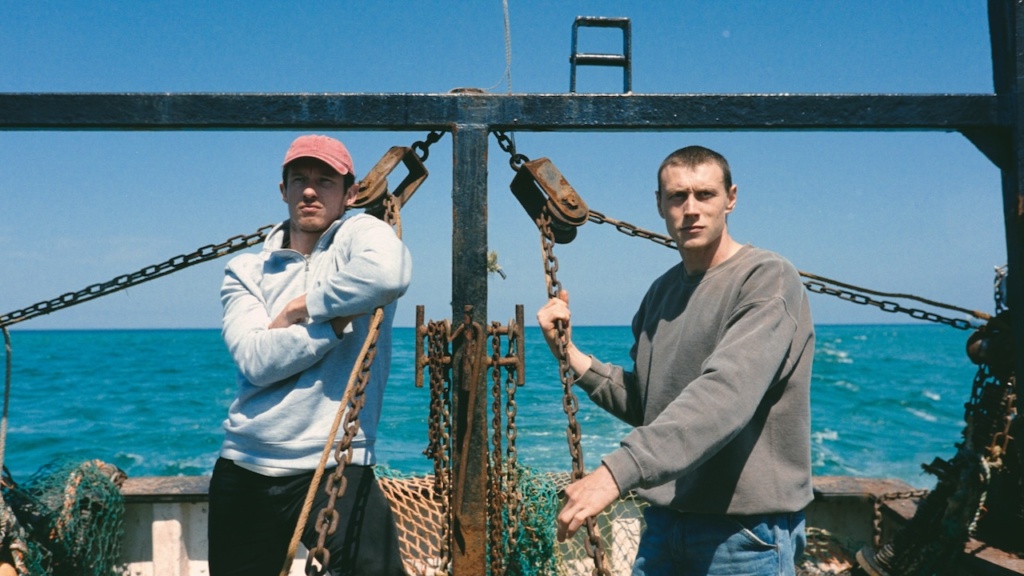
Turkish film critic Selim Eyuboglu examines Mark Jenkin’s Rose of Nevada, a FIPRESCI Award-winning film that blends science fiction and social realism to question nostalgia and the constructed nature of the past.
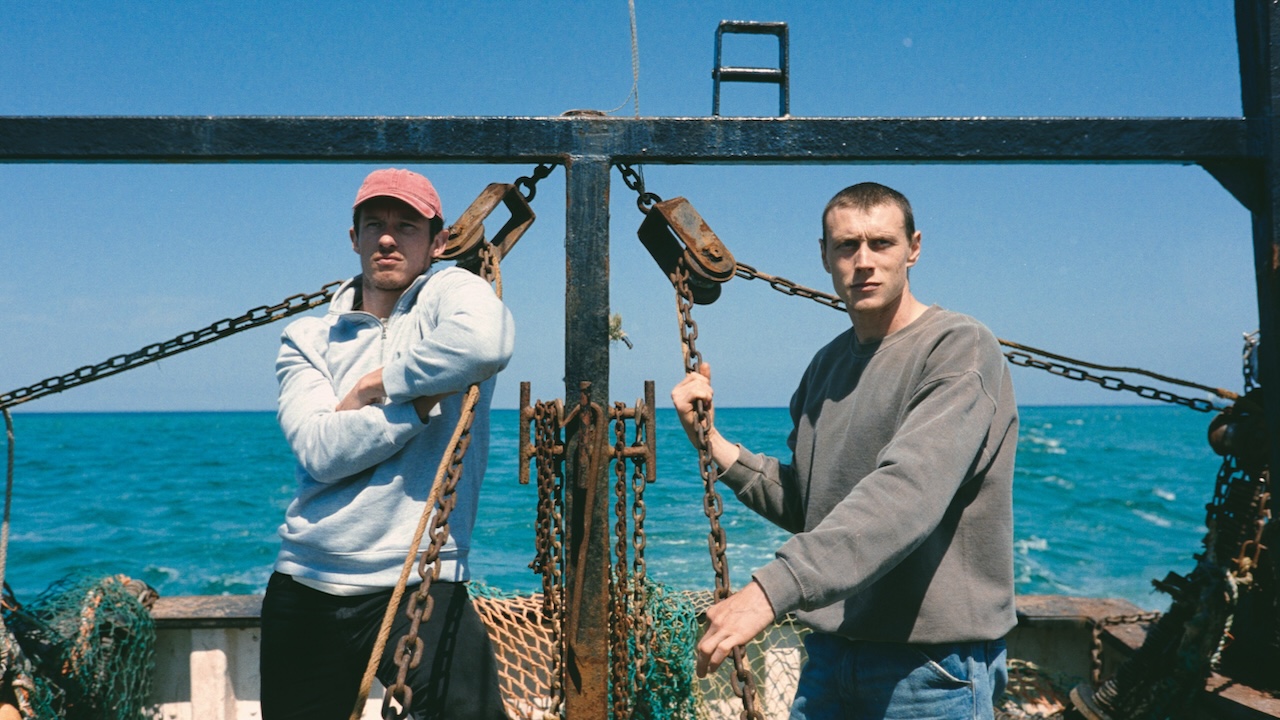
Rose of Nevada, written, edited, composed and directed by Mark Jenkin, was screened at the 45th International Istanbul Film Festival in 2026, taking home the coveted FIPRESCI award. The film starts off like a science fiction story, reminiscent of the early 60s iconic series The Twilight Zone, with a ghostly fishing boat appearing out of nowhere. However, while the latter might have attributed this phenomenon to a parallel universe, what happens in the film is quite distinct from that trope.
This is a Cornish fishing town where people struggle with poverty and stagnation. For the last 30 years, they have also been grieving a loss: the fishing boat “Rose of Nevada” was lost at sea along with its crew. When the boat inexplicably reappears at port, the townspeople take it as a good omen. They prepare it for fishing, hoping it will turn the town’s fortunes around. So it happens – the two young fishermen Nick (George McKay) and Liam (Callum Turner) set sail and catch a lot of fish. When they do return, however, they find themselves in the same town but three decades ago. They try to figure out what they are up against, struck by the contrast between their nostalgic assumptions about the past—a thriving economy and community spirit—and what they actually encounter.
What is happening in this town 30 years in the past is not that far off from a Twilight Zone episode after all: an uncanny event is not something to be explained but a condition to be lived through. What the fishermen sense is a rigid and uncomfortable past with assigned roles, which creates a sense of entrapment. The past is uncomfortably reminiscent of a role-playing game in which an unseen Dungeon Master has already determined the rules. The townspeople treat the newcomers as though they have never left, as if they have always belonged there. Rather than questioning their presence, they project identities on them. The past operates like a narrative, coherent and tactile, yet ultimately rigid and insular. At this point, George MacKay’s portrayal of Nick deserves praise. His expressions evolve brilliantly and in many layers as he struggles to adapt to shifting realities, greatly enhancing the film’s narrative intent.
At first glance, Rose of Nevada gives the impression that the crew of the fishing boat simply time traveled, disembarking in the same town 30 years ago. Mark Jenkin’s script, however, also suggests that what the characters are experiencing has to do with the ways in which the past is imagined; perhaps notions of a better past have more to do with our own anxieties about our present than the bygone realities and how older generations may have conducted their lives.
Rose of Nevada leaves us with a paradox: the past that abruptly appears seems desirable and inviting, offering the fishermen prosperity and a sense of purpose. At first, it seems as if it offers precisely what the present town has been yearning for: a sense of togetherness and purpose. While in the present day Nick unsuccessfully tries to repair his leaking roof all by himself under pouring rain, the people of the revisited town 30 years ago collectively repair the damaged fishing nets, clearly demonstrating a sense of community that the contemporary town sorely lacks. Yet the more the two fishermen experience the town, the more oppressed they feel.
In this sense, the film brings nostalgia to the present, yet in doing so, it reveals the problematic nature of imagined pasts. When nostalgia rubs against reality, the former loses its reassuring aura. Once nostalgia becomes “reality,” what remains is a narrative that resists change. Rose of Nevada seems to imply that our past is not something to be recaptured but something we construct based on our present, to only then project back. And that past may be—and often is—more constricting than liberating.
Selim Eyuboglu
Edited by Savina Petkova
©FIPRESCI 2026