
Tromsø IFF in the Polar Night: Watching Cinema at the Edge of Daylight
What happens to attention and judgment when cinema is experienced in a city without daylight? With a festival set during the polar night, this reflection considers how the event’s rhythm and environment reshape a viewer’s perception of, comparison of, and critical sensitivity toward films. Rather than offering verdicts, it asks how place itself becomes an active agent in the act of watching.
There is a particular kind of concentration that arrives when the day never fully does. In Tromsø in January, winter is not only weather; it is a condition that reorganizes the body’s clock, the pace of conversation, and the way images stick. You move from screening to screening with fewer bright interruptions, a tighter sense of continuity, and a sharpened awareness of what cinema does with darkness, duration, and sound. This is not a postcard effect. It is practical: the outside world already resembles a low-light image, and the inside of a theatre becomes less an escape than a laboratory.
As a critic and a FIPRESCI jury member at Tromsø International Film Festival, Norway’s major Arctic film festival, I am interested in what this setting does to the act of evaluation—not to the jury’s internal process, which should remain private, but to the spectator’s habits: what I notice first, what I forgive, what I demand, and what follows me back into the street. Tromsø’s winter produces a strict continuity between exterior and interior. You exit a screening, and the city still looks like a screen: luminous rectangles, silhouettes, a limited palette, and the soft insistence of footsteps on packed snow. That continuity is not neutral. It can magnify sensory decisions (sound perspective, density of black onscreen, distance kept from the face), and it can also expose certain gestures as rhetorical noise. Forced uplift, false urgency, and slippery or sentimental closure may register as intrusive when everything around you is pared down.
Rhythm matters as much as climate. Festivals compress experience and encourage constant comparison, sometimes unfairly. One film’s modesty is punished because the next is flamboyant; one film’s ambiguity is mistaken for vagueness because there is little time for it to bloom. But the festival rhythm can also be clarifying. It tests whether a film can hold up when you are tired, cold, and overstimulated, and when you no longer have the energy to “want to like” something. In that state, craft becomes more visible: precision of tone, coherence of form, and the necessity of each scene.
To avoid being swallowed by accumulation, I have been taking notes along four simple lines after each screening. First: one formal decision that dominates (camera distance, cutting patterns, sound design, use of music). Second: one thematic pressure point (isolation, community, history, violence, care). Third: one sentence of judgment, clearly attributed as my view. Fourth: one “festival effect”: how the room, the audience, or the day’s rhythm altered my response. This method is not meant to mechanize taste. It is meant to protect it from the noise of the schedule.
The polar night, in that sense, becomes a tool for reading. Three films in particular made me feel how place and rhythm can change what I think I am watching.
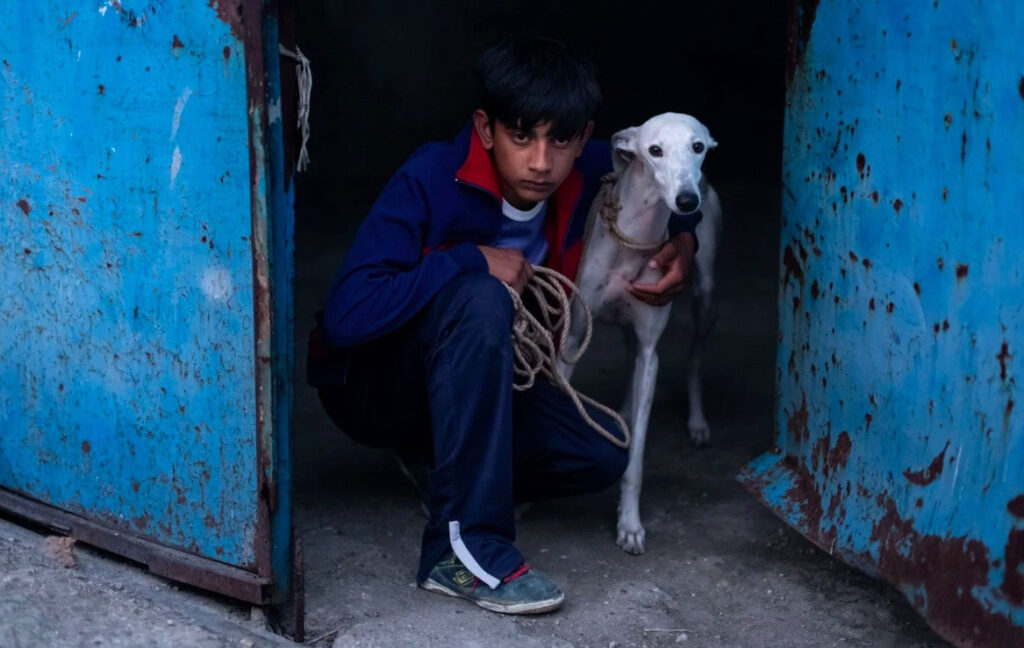
Sleepless City (La Ciudad sin Sueño, 2025, Guillermo Galoe, Spanish filmmaker and director) is a film that stays stubbornly horizontal. It watches a community at ground level: makeshift housing, informal economies, scrap dealing, and the quiet mythology a group builds to survive. I was struck by how the film refuses verticality, visually and morally. There is little in the way of heroic “rise” and almost no appetite for grand statements. Instead, the camera holds close to surfaces, bodies, and routes, with a subtle bias toward oblique angles that keeps the world slightly off balance. This choice is the film’s intelligence: it makes precarity feel structural rather than dramatic.
At the center is a child who already feels like an adult. He smokes, he carries decisions that are too heavy for childhood, and he seems to have learned early how to read a room and how to disappear inside it. The question—to leave or to stay—is not rhetorical but practical, and the film lets it remain unresolved without turning that uncertainty into a tidy lesson. What moved me most was the film’s touch, not its claims. It is tender without being sentimental and attentive without romanticizing its community. If anything, the Tromsø setting intensified that effect. In the polar night, modest films can feel even more exacting because there is less external noise to distract from what is actually on the screen.
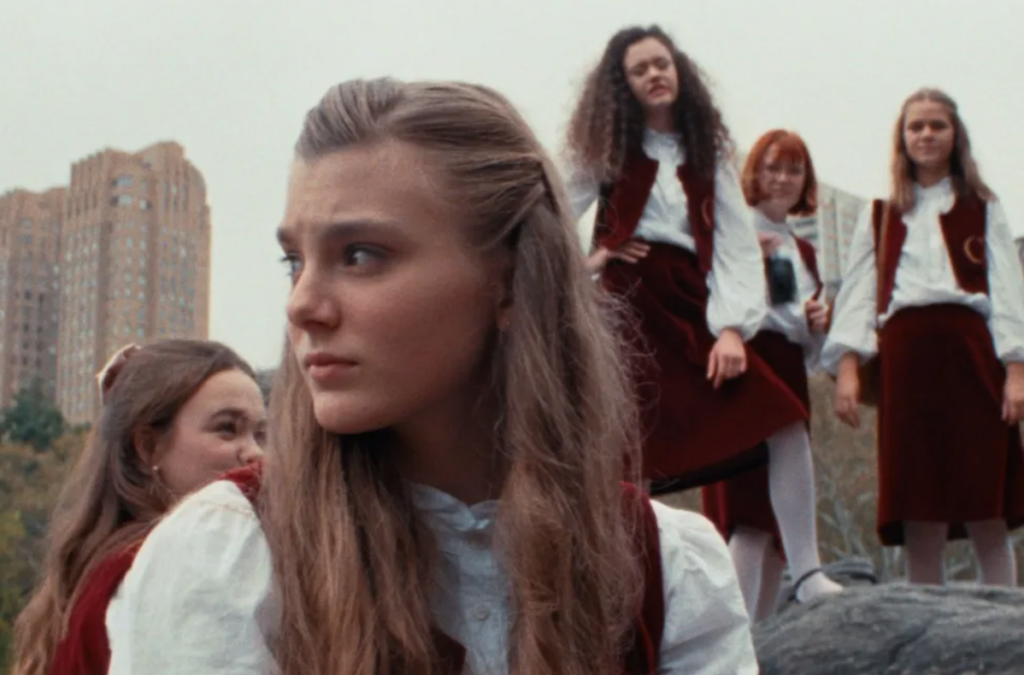
Broken Voices (Hlasy v Tichu, 2025, Ondřej Provazník, Czech filmmaker and director) made me feel a different kind of pressure: not horizontality, but enclosure. The performances are often extraordinary, and many images have real force. Yet, I left the screening with the sensation of being kept indoors for too long, as if the film itself were short of air. The film feels slightly unbalanced, with stretches that intensify a mood without evolving the story, and a final movement that becomes expeditious, as if it suddenly needed to finish rather than conclude.
Certain plot elements are difficult to grasp, especially around drugs and motivation, in a way that felt less like productive ambiguity than incomplete deployment. The film offers scenes that seem important, then abandons them. It builds tension, then releases it quickly. It gives me a powerful interpretation and an expressive frame, then it undercuts the momentum with narrative shortcuts. The Tromsø rhythm can sharpen this kind of response: after multiple screenings, a film’s architecture becomes impossible to ignore. When scenes do not accumulate into consequence, the audience feels it.
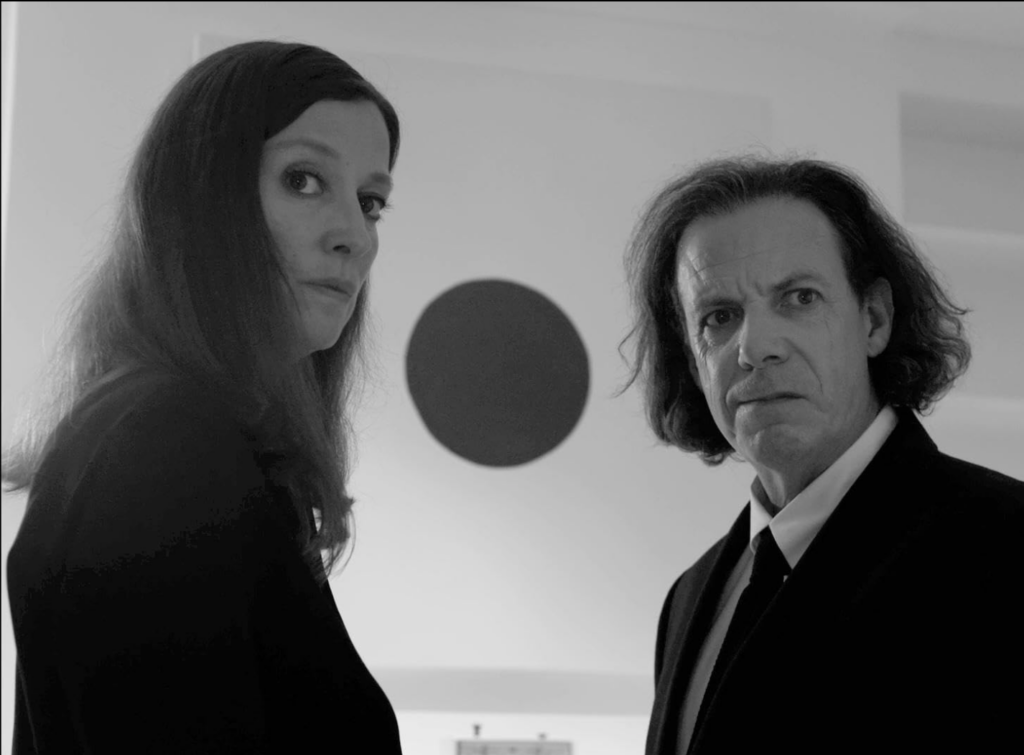
Then there is Bulk (Bulk, 2025, Ben Wheatley, British filmmaker and director), which embraces fragmentation as both style and thesis. On paper, it plays like noir science fiction filtered through video-game logic: handheld camera, tight framing, stark black-and-white, and a labyrinthine house that functions like level design, each door opening onto another reality. In practice, it is a parody that still wants the pleasures of genre: chase-like energy, sudden violence, the occasional flirtation with gore, and an insistence on motion even when comprehension slips away.
The tone is second-degree: a journalist-scientist figure, a deliberately playful “experiment” vibe, and a constant suggestion that this is cinema laughing at its own machinery. Even the end credits lean into performance, as if the film were stepping out of itself to comment on itself. The festival effect here is immediate: screenings invite a certain generosity toward nonsense, and the polar night makes the city outside feel as unreal as the film’s interior maze. Bulk becomes a question more than an answer. Do I watch to solve a puzzle or surrender to sensation? The film turns that choice into a game and then mocks the game.
Taken together, these three works outline three different relationships to confinement. Sleepless City refuses the fantasy of escape and stays with community at ground level. Broken Voices stages interior pressure but, in my view, struggles to give that pressure a fully coherent narrative shape. Bulk turns enclosure into a playground, a house-labyrinth where reality is endlessly reloaded. In Tromsø, these differences feel amplified. The darkness outside is not a metaphor; it is an environment that disciplines perception. In that environment, cinema cannot hide behind noise. It must be clear about what it is doing and why.
For a critic, that clarity is a gift. It becomes harder to bluff, easier to listen, and sometimes impossible to forget.
Sarah-Louise Pelletier-Morin
Edited by Olivia Popp
@FIPRESCI 2026