
Music, Manipulation and Innocence Stolen Away: The Corrosive World of Broken Voices
A choir is an ensemble structured around a strict hierarchy. Conductors can give voice to, but also silence, the choir members, shaping timing, intensity, and the overall feeling of what is heard. They strive for an ideal melodic composition, an artistic greatness that emerges from individual contributions, unified under their direction and supervision. As one of the defining authority figures in the realm of artistic creation, conductors impose their rhythm and command the undivided attention of the choristers.
In Ondřej Provazník’s film Broken Voices, at the top of the hierarchical structure stands Vitek, as the original title Sbormistr, which literally means The Choirmaster, already suggests. His narcissistic personality is established early on; he seeks absolute control over the choir, which is composed of adolescent girls. From his very first appearance on screen, a subtle menace lingers in his intense gaze, something that transcends his obvious strictness and his relentless pursuit of a captivating musical result. In fact, Vitek becomes more terrifying when he acts in a generous and friendly manner toward the young choir members. He possesses a magnetic presence, methodically exploiting the dominant position he holds over the girls. He carefully cultivates a relationship of dependence, having the girls eagerly awaiting a word of praise from his lips, all within a constant atmosphere of rivalry.
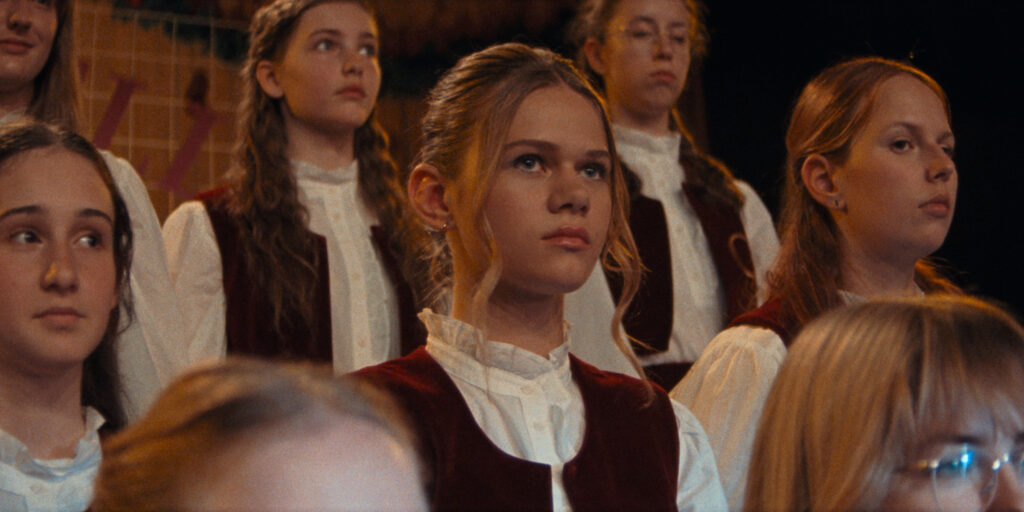
Our window into this world of manipulation and unspoken coercion is Karolína, a thirteen-year-old girl who unexpectedly secures a place in the choir and soon captures the conductor’s interest. The excessive attention she receives immediately sparks jealousy among her fellow choristers, who do not hesitate to subject the girl to the necessary trials. Among them is her older sister, Lucie, driven simultaneously by jealousy and a protective instinct toward Karolína, as if she already knows what lies at the end of this path, as if she herself once occupied this position yet finds it impossible to expose the invisible chains of abuse.
Through the eyes of the newcomer Karolína, we are allowed to observe the full scope of Vitek’s manipulative behavior. The initial glimpses of his fascination with her voice and personality and her gradual rise to a central presence within the choir. Her addiction to the flattery provided by the approval of a power figure. Her initial excitement giving way to a hidden, paralyzing fear. Her trust first given freely, only to be later shattered. The despairing sense that all of this is part of a meticulous plan, replayed endlessly with a single inevitable outcome.
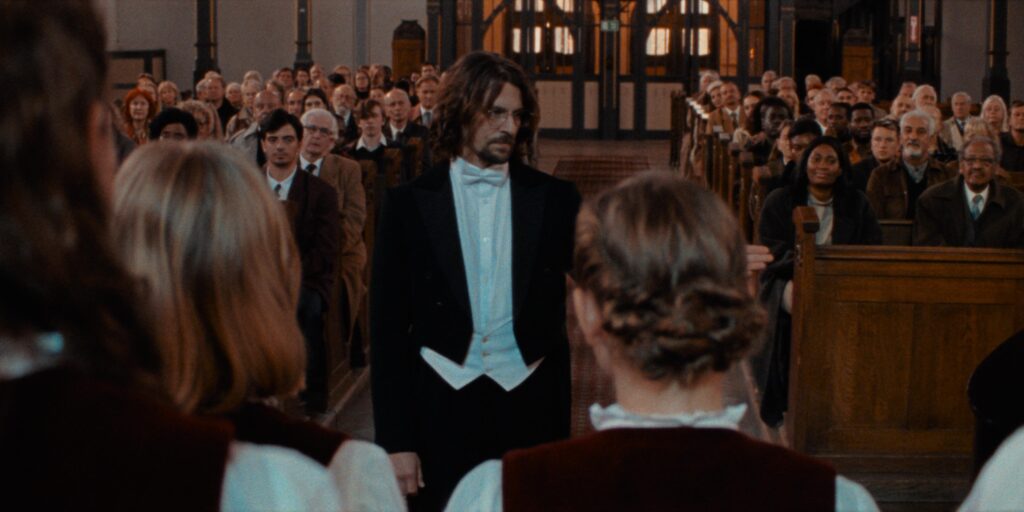
Provazník structures the film’s narrative around the contrast between the angelic voices that grace the soundscape and the ever-lurking threat beneath them. The antithesis between the euphoria generated by the polyphonic melodies and the eerie silence in moments when Vitek’s abusive personality emerges is central to the film. Beauty comes hand in hand with horror, and the polished aesthetic effect arises from a process of emphatic abuse of power. A significant part of the film unfolds in an isolated mountain retreat, idyllically surrounded by pristine snow, where the girls spend part of their rehearsal time and experience the full force of the choirmaster’s corrosive behavior.
Set in Czechia in the early 1990s, the film probes the atmosphere of a country on the brink of transition to a new world, shortly after the fall of socialism. The ultimate prize in the girls’ competition is a trip to some American metropolises, a small tour across the Atlantic only few of them can enjoy. A promise of opening up to the world, a gesture of liberating outwardness, is undermined and scarred by Vitek’s authority.
Broken Voices is a story of innocence about to be lost and of trauma in its very inception. As Karolína, along with the other girls, is forced to navigate situations for which she is unprepared, tenderness gives way to a shame that creeps under her skin. Her love for music, a metaphor for virtuous naïveté, is definitively crushed as Vitek’s abusive behavior pushes Karolína into an early fall from the Eden of childhood. Her coming of age is a bitter tale of dreams betrayed and exploited by a figure who should have served as a mentor or a guide to a new and exciting world.
Drawing clearly from the real case of the Bambini di Praga choir, yet without resorting to the conventions of a cinematic adaptation of a true story, Ondřej Provazník subtly depicts the formation of a culture in which boundary violations go unpunished, even in their most extreme form, and where the enforced silence of the victims stems from a power-driven mechanism that systematically strips them of their voice. The final impact is devastating, not only due to its portrayal of traumatic experiences, but for its chilling documentation of the process of authoritarian imposition on young bodies and souls.
Philippos Chatzikos
© FIPRESCI 2025