
Dreams, Memories and the Real: An Interview with Ester Ivakic
Playing in the International Competition at the 43rd Torino Film Festival, director Ester Ivakic and her co-writer Nika Jurman’s Ida Who Sang So Badly Even the Dead Rose Up and Joined Her in Song (Ida, ki je pela tako grdo, da so se mrtvi vstali od mrtvih in zapeli z njo, 2025), is an adaptation of Slovenian writer Suzana Tratnik’s Noben glas. A depiction of childhood, in each of the nine short stories, Ida is a different age. Ivakic and Jurman’s adaptation is sensitive and introspective, and in equal measure a quirky observation of childhood that feels ethereal yet real.
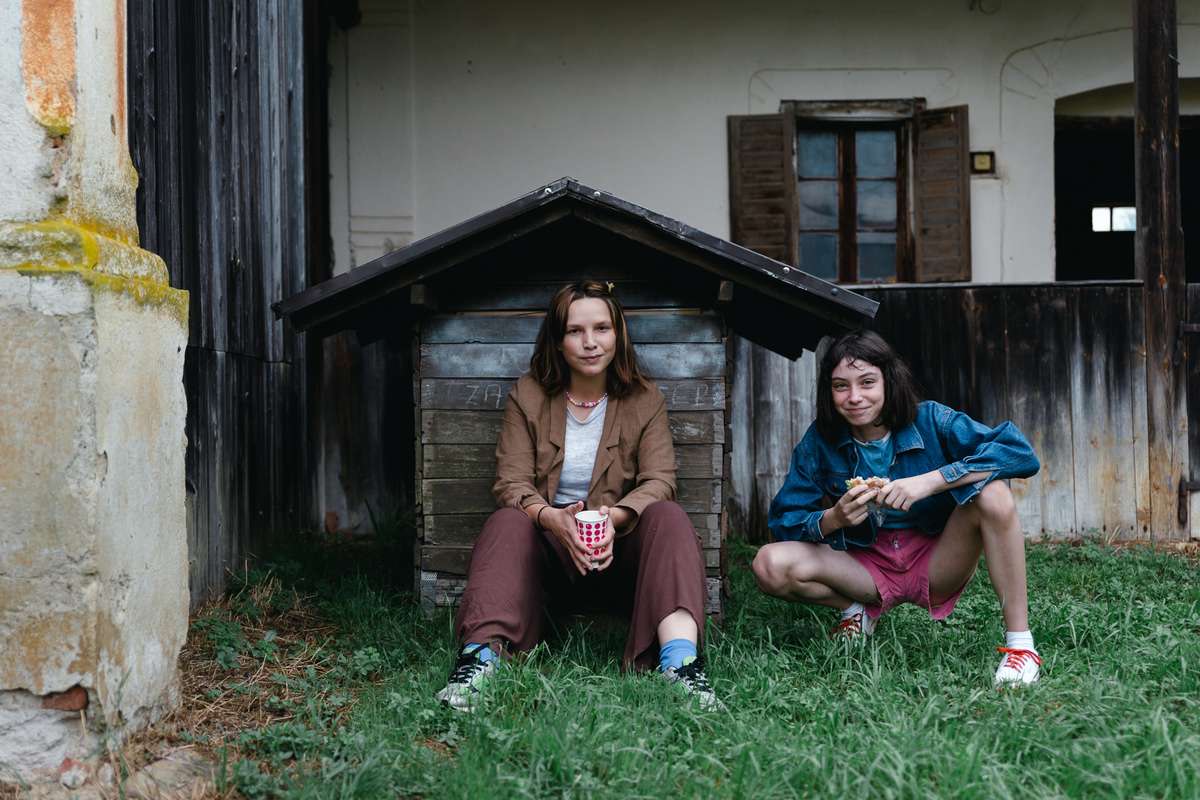
Ida (Lana Maric), a tone-deaf ten-year-old, makes an unusual decision to join the school choir after coming to believe that the mysterious singing from the village graveyard is the only thing keeping her sickly grandmother alive. Ida’s idyllic rural life is suddenly thrust into uncertainty when the young girl is forced to reckon with the reality that change is inevitable.
Ivakic’s previous films include the 2016 short film, Srdohrd, which sees Jelena and Jastog seek refuge in the mountains. With the war behind them, they must now face a terrifying phantom-like presence from Jelena’s childhood. Ivakic has also written and directed the shorts Assunta (2018), about a visit to comfort a dying friend, Everything I’m Trying to Tell You Using Telepathic Signals When You’re Not Listening to Me (Vse, kar ti hocem povedati s telepatskimi signali, ko me ne poslusas, 2019), and Okrog obrnjen zrak.
In conversation with FIPRESCI, Ivakic discussed the experience of her directorial feature debut, and echoes of the personal. She also reflected on the fatalistic nature of the story, evoking the feeling of a memory or a dream, and her future aspirations.
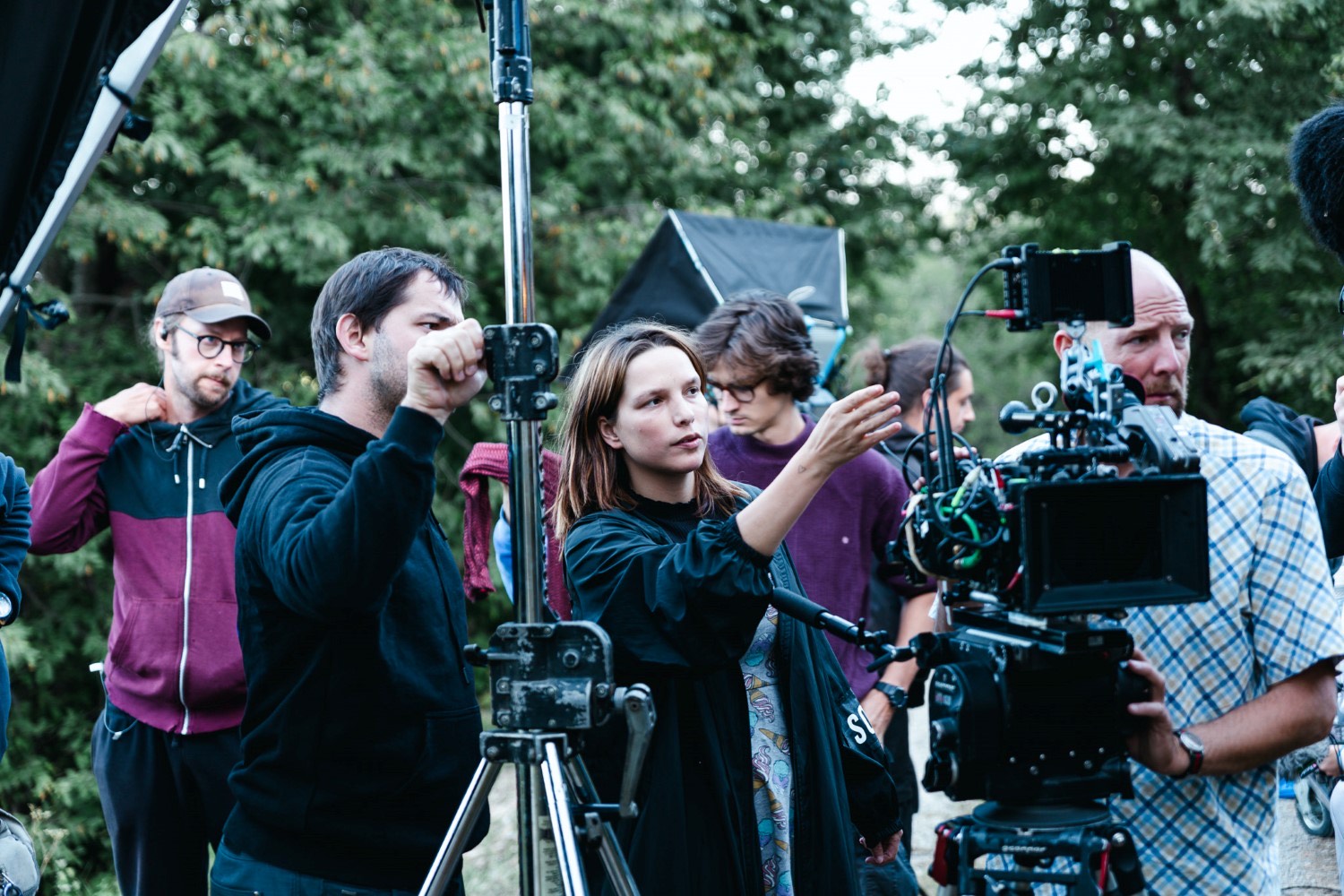
Why filmmaking as a means of creative expression?
I love to create different worlds, and the reason I like making films is that cinema is like creating a parallel one. And it’s simpler for me than making music or writing a book or doing anything else. But it’s really about creating an alternative version of reality.
How do you look back on the experience of your feature directorial debut?
Before Ida, I was doing short films and music videos. I love making experimental films myself, editing and crafting everything from scratch. But I also love live action filmmaking with actors, and here, with Ida, I combined everything, because I could experiment but not too much.
I still haven’t finished my masters; I still have some exams. But when I left school, I immediately joined Nika Jurman, my co-writer, who was already working on the script. I didn’t even imagine what this was gonna become when I jumped on that train, because I didn’t know the amount of work and responsibility, time and emotion this was going to take up. So, now when I look back, I have learned a lot. I can’t really point out the smaller things I learned because there’s so much, but I would say before, I used to work more from a place of emotional impulse. But here, I couldn’t be like that because you can’t let the adrenaline control you all the time. I grew up a little bit as an artist when I realised that it’s not just about this romantic, pure emotion, but it’s about hard work, discipline and thought.
So, making this film was a transformative experience?
Yes, but I only realised now that it’s over. There was just so much going on in my head. Now I can look back and realise stuff I couldn’t at the time, because before, you’re too close to everything to process it rationally.
What was the genesis of the film, and what compelled you to believe in the story?
The film is based on Noben glas, a book by Suzana Tratnik, a well-known Slovenian writer. It’s an anthology of nine short stories and in each one the girl is a different age. Andraz Jeric, our producer, first came across the book, and he told Nika that he thought it might work as a movie. As soon as she began reading Noben glas, she was immediately struck by its depiction of childhood.
In 2018, Andraz called and asked if I wanted to join him and Nika in the role of director and co-writer. I’d never imagined myself adapting a book because I’d always wanted to write and direct my own scripts. And when I began reading the book, I didn’t want to say yes immediately, because regardless that I was being offered a feature film, I needed to feel it. But I really did fall in love with it and I had a great connection with Nika. And there were also a lot of things in the book that were personal to me. So, this is why I was able to say yes.
The book is set in Prekmuria, a rural region of Slovenia, and I also come from a rural part of the country. So, I had this kind of childhood where you’re sitting with your grandmother under the wine tree in the wine yard, where older neighbours would come around to drink and then play cards. Community in these smaller places is important.
As a child, I also experienced an obsessive friendship like the character in the book, and I also had a vivid imagination, where I believed everything was possible. So, yes, it was very personal to me to read Tratnik’s book. She created her own world and then Nika and I jumped into it and started to shake up the different elements and add our own. Some were from our own lives, and others were, of course, made up.
Adaptation is not about being faithful to the source material. Instead, it’s about creating a new version of the story while honouring its spirit.
Yes, exactly, and when I see the movie now, I can no longer remember anymore what was in the book and what was not, nor what was made up. But when we read the book, it was alive with a certain vibe and an intense atmosphere — it had this spirit.
Childhood should be a time for innocence to thrive, but unfortunately it cannot always be so idyllic. Your film juxtaposes lighter and darker tones to offer a more nuanced and at times darker take on childhood.
I don’t know whether I see it as dark. I think I see it as a melancholic or a little bit of a sad world. Maybe because I associate the word dark with evil stuff. But I get what you mean.
Ida struggles to accept change, and it’s not always something she’s aware of. From the outset, both Nika and I connected to this aspect of the character. By the end of the film, this struggle will change, but the film follows the story of her resistance.
I’m drawn to stories in which the end is determined: we know what’s going to happen from the beginning. Ida might occupy these safe spaces, whether it be spending time with her friend or chilling with her father, but deep down she knows change is inevitable.
For me, melancholy is sometimes the feeling that something is wrong, but you don’t want to deal with it just yet — maybe later.
Also, in my private life, I feel connected to nature, and I wanted it to be the same in Ida’s world, where nature is a means to translate emotion.
Is the film about how we think our choices shape our lives, when, in fact, their impact is reduced by other forces, for example, fate?
I still believe that we have the free will to change the small things even if we can’t make big changes. This is why I believe in activist causes and the need for empowerment. There are, of course, things in life that make me sad, and this sadness can be very intense. And I want to use this emotion to tell stories because it’s a kind of release, a letting go. It’s also a type of Buddhist acceptance: What can we do? We are just here.
My worldview is not so fatalistic, but I just realised that maybe this film is too fatalistic. Ida can choose to have fun and share her love with those closest to her, despite the feeling that bad things are going to happen. If we cannot prevent these bad things from happening, then the best thing is to walk with our friends or have a nice coffee or breakfast with those that we love. So, in the end, Ida is still making her own choices.
There’s the idea that life is a balance between happiness and suffering. Also, people can be depressed and still be happy. The two are not mutually exclusive.
Yes, where happiness and sadness meet, there is a state of bliss. This is an idea that interests me.
The passage of time in the film is important, and one can feel its presence in the narrative structure by the pacing and rhythmic shifts that are like the film’s active unconscious.
Working with our editor Andrej Nagode, the first version was, of course, just like the script. And it was bad because it always is. Maybe for others it’s not, but for me, the first cut never works out. We quickly realised that this has to take a slightly dreamy form, in which Ida can drift and where nothing is determined. And yet, everything is real — nothing that happens is imagined or is a dream. Instead, the film can resemble a childhood memory where things are loosely connected. You remember some things, but memories are not complete, and so, there are gaps. While I know this is not a particularly experimental approach, I tried to imagine the film as feeling like a memory or fever dream, but in which everything is real.
Having completed your first feature, can you identify any specific areas of cinema or film language you’d like to explore?
Of course, there’s always so much to consider, and I know I have a lot to learn. I also want to write my own scripts because this was such a rare blessing to experience the connection I shared with Nika. Now, I want to see what I would do on my own, and what will come out of that. And with Nika, I was very funny, but by myself, I might be a little bit darker. So, I’m interested in seeing what will happen next.
Paul Risker
©FIPRESCI 2025