
A Tamed Military: Politics, Memory and the German Army in Marie Wilke’s Scenario
German film critic Ursula Kähler examines Marie Wilke’s documentary Scenario, presented in the Forum section of the Berlinale, and reflects on the paradox of a politically cautious Bundeswehr preparing for war. Her report situates the film within the broader ideological climate of the festival while questioning what a “civilian army” means in contemporary Europe.
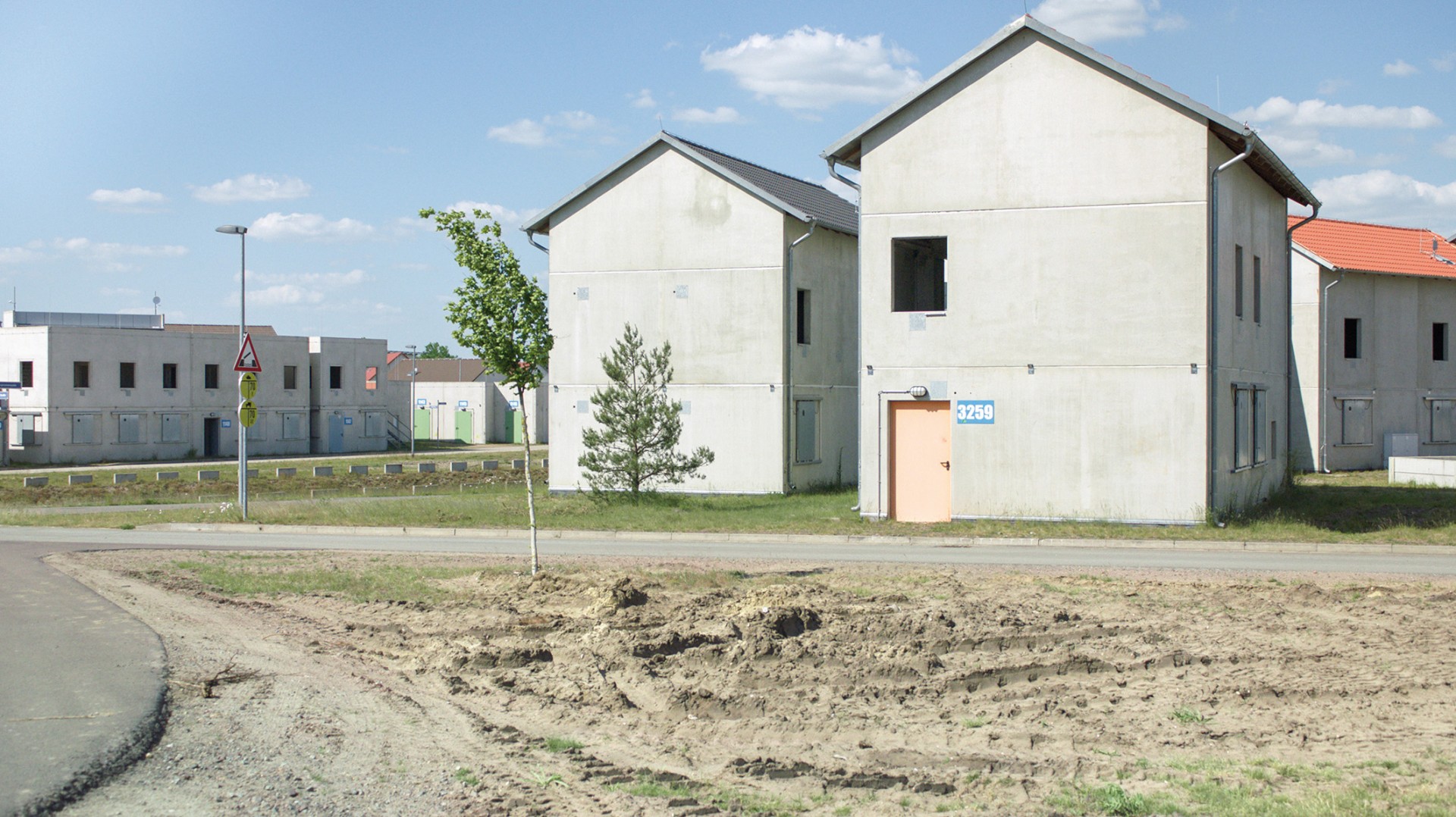
Marie Wilke’s documentary Scenario (Szenario), presented in the Forum section of the 76th Berlin International Film Festival, offers rare insights into the German Armed Forces, revealing troops who appear more civilian than soldierly — an endearing trait, perhaps, but also a troubling one.
“We are the opposite of politics,” said jury president Wim Wenders at the opening of the 76th Berlin International Film Festival. That was, of course, something of a fib. Not without reason is the Berlinale considered the most political of the major film festivals. Especially in the sections beyond the main competition, topics tend to dominate that offer everything the politically engaged — and mostly left-leaning — heart could desire. Sometimes that is interesting, often monotonous, and occasionally even questionable. For example, when — after the screening of a documentary about a lesbian film artist — “Free Palestine” slogans are read aloud by an American director and the entire cinema erupts in frenzied applause. It is regrettable that film art here in Berlin often entrenches the culture wars rather than easing them — yet this, too, is characteristic of our zeitgeist, which increasingly leaves little room for pragmatic listening to diverse opinions.
Among the many political contributions, however, there are occasionally works worth a closer look — because they enlighten, provoke thought, and touch a raw nerve. The documentary Scenario (Szenario) by Marie Wilke is such a work. In her 2015 debut Civil Servants (Staatsdiener), the Berlin native accompanied police recruits during their training. Three years later, in her award-winning documentary Aggregate (Aggregat), she examined the media mediation of political content. Now comes Scenario.
Its opening is powerful. With skill, a female soldier paints blood-red color into the deceptively realistic head wound of a comrade. What follows is a combat simulation. Next to a tank, another soldier writhes in pain. Medics somewhat awkwardly try to prepare the injured woman for transport to the field hospital. Welcome to the Army Combat Training Centre.
For a year, Wilke and her team observed everyday life here. The centre is located at the Altmark military training area in the Colbitz-Letzlinger Heide. Various village and urban backdrops have been constructed there, representing Kosovar and Afghan settlements. Here, the Bundeswehr trains, with the help of amateur actors from its own ranks, to simulate as realistically as possible contact with foreign civilian populations, road checks, or dealing with refugees. Part of the facility is the training city “Schnöggersburg”, named after a settlement of the same name that was demolished in the 1930s during the construction of the Hillersleben Army Research Institute.
With this historical reminiscence, the framework of the documentary is set. It portrays a force striving to learn from the past while being capable of meeting the challenges of the present. Yet one cannot always escape the impression that this is precisely the problem. Politically correct remembrance and the mandate, if necessary, to kill or be killed demand a mental balancing act that only very few can convincingly achieve.
This contradiction between a politically and morally tamed force and the core of its mission is captured by this spectacularly unspectacular documentary in an almost painfully precise manner. Take, for example, the course in which a sharp, uniformed psychologist hands each of a group of battle-hardened non-commissioned officers a round, plate-sized card. The goal is to arrange the hidden cards in the correct order through communication. What looks like an infantile team-building game is meant to teach military leadership.
In keeping with this, the viewer witnesses a scene in which the lowering and folding of a flag is practiced — a difficult ceremony, especially the precise folding. Yet the complete absence of posture, sharpness, and drill is remarkable. Just watch a flag ceremony of the U.S. Army.
One reason for this peculiar reluctance toward the military within the German military becomes clear during a lesson with young recruits. An officer attempts, at epic length, to explain the principles of Innere Führung (internal leadership): soldiers must refuse unlawful orders under international law, yet at the same time they are obliged to obey orders. Apparently, the leadership of the Bundeswehr assumes that the average soldier is a shrewd intellectual who can easily handle this form of higher dialectics. For simpler minds, however, the notion of being ordered to refuse orders may seem somewhat overly cerebral.
Scenario is more than a documentary about Europe’s largest military model city — although it does provide interesting insights into its infrastructure. Above all, the film portrays an army that does not dare to be military and, in doing so, appears profoundly civilian. A civil servant army. That is not unappealing, no question. But preparing for war requires more than expensive weapons. Mindset is decisive. In its combat exercises, however, the troops resemble scouts playing cowboys and Indians. All that is missing is a soldier shouting “Bang! Bang!” Let us hope no one in Moscow sees this film.
Ursula Kähler
© FIPRESCI 2026