
Family Affairs: Four Films from Berlinale 2026
With this report from the 76th Berlinale, German film critic Anne Küper finds a common thread in many of the festival’s competition titles, and focuses on four that have special resonance on the meaning of family: Lance Hammer’s Queen at Sea, Anthony Chen’s We Are All Strangers, Marcus Schleinzer’s Rose, and Alain Gomis’s Dao.
With Queen at Sea (United Kingdom/USA 2026), Lance Hammer returns to the cinema as if he had never been away. His unobtrusive film, which follows Ballast (USA 2008) and stars Juliette Binoche, Tom Courtenay, Anna Calder-Marshall, and Florence Hunt, does not, as has sometimes been mistakenly assumed, deal with dementia. Rather, it takes dementia as a starting point for a moral dilemma concerning care, responsibility, and self-determination in the context of family.
Hammer‘s drama is one of 22 entries in this year‘s Berlinale competition, and it is indeed striking that each of these 22 films deals more or less explicitly with family relationships. Although the question of what a family actually means, what holds people together, and how this smallest unit of society can be portrayed—especially when it does not correspond to conventional ideas of family—is certainly a timeless subject in the history of cinema, there seems to be a new urgency to deal with it at the moment.
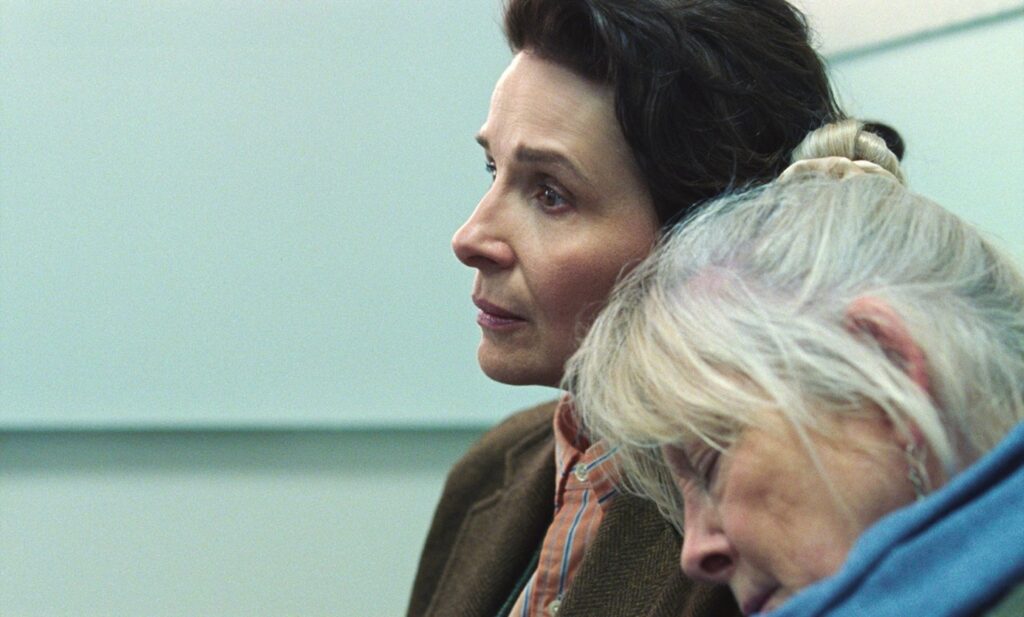
The way families are portrayed says something about how we want to think about relationships, stories, feelings, and society—at a time when isolation, rivalry, and exclusion are at the forefront all over the world. As a reflection of society, many of the films in this year‘s Berlinale competition portray the family as a problem itself. “Family is complicated“: This is also one of the tags on the festival website, which the Berlinale uses to indicate what viewers can expect.
However, this tag poses a problem: on the one hand, because the so-called complicatedness of the families depicted functions in various ways. Differences are smoothed over where nuance is crucial. Sometimes it is not the family itself, but rather, for example, the racism that this family experiences, that is the real problem addressed by a film. On the other hand, the generalization also obscures the fact that there are films that go beyond telling a family story and actually develop a unique perspective on cinema based on it. The following three films do so in a very special way.
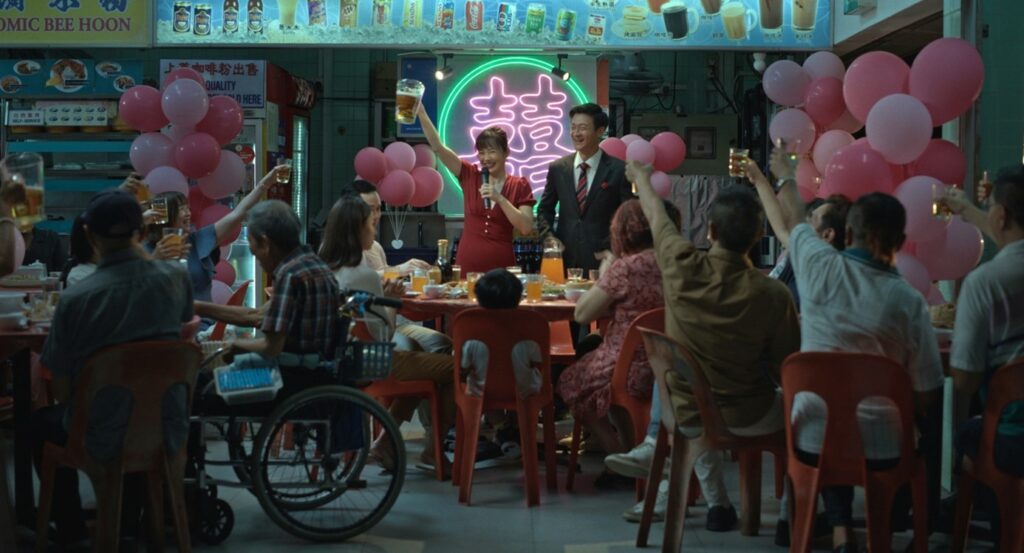
Between losing and winning, between coming of age and coming to an end, We Are All Strangers (Wo Men Bu Shi Mo Sheng Ren, Singapore 2026) by Anthony Chen unfolds in all its melancholy. The melodrama draws parallels between the lives of a father (Andi Lim) and his 21-year-old son (Koh Jia Ler), who are both at very different points in their lives and mourning their wife and beloved mother. Gradually, they fall in love with two women they meet, student Lydia (Regene Lim) and waitress Bee Hwa (Yeo Yann Yann). One of the two men is in love for the first time, the other is opening up again after a great loss.
Slowness characterizes these characters, and yet the rhythm of the city constantly intervenes, giving them no peace, no time, no space to move freely in their lives. Within these limitations and the narrowness imposed by the socioeconomic, hyper-capitalized reality Chen describes, small moments of joy and happiness arise. By using a circular narrative structure, the director leaves open whether his film is ultimately about an arrival or a departure. This applies both to the characters and to the country he shows at the intersection of tradition, dream, and radical change.
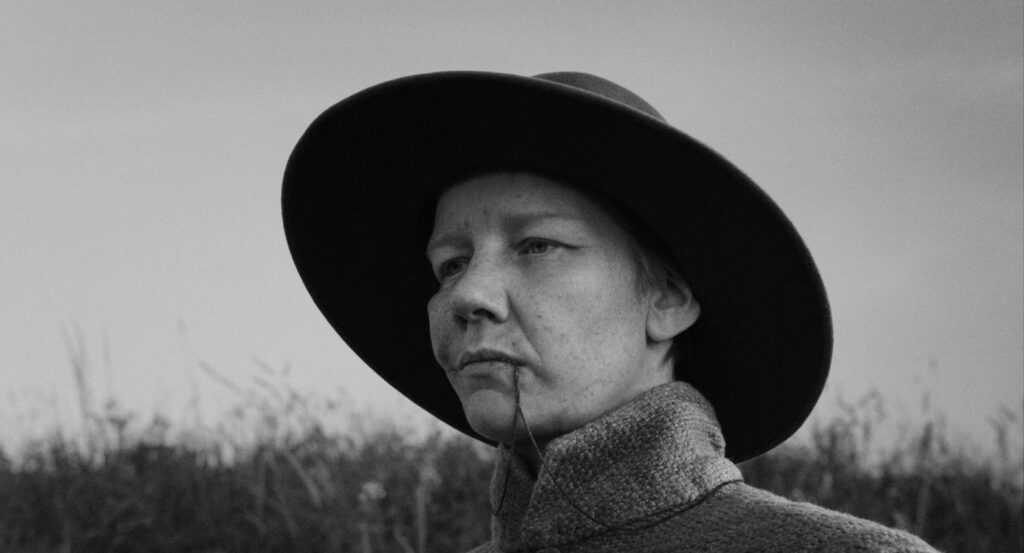
While Chen deals with contemporary and possible future realities of life, Markus Schleinzer’s Rose (Austria/Germany 2026) takes on a historical event. Sandra Hüller plays a taciturn soldier who shows up in a village at the end of the Thirty Years’ War and inherits a fortune. The soldier rises in the local hierarchy, expands in reputation and influence, marries a resident (Caro Braun) and has a child with her. But masculinity becomes camouflage: The protagonist is a woman who had to learn the hard way that pants offer more freedom, as it is said at one point in the film.
With a black-and-white seriousness that is quite reminiscent of Michael Haneke, Schleinzer’s film is committed to historical documents that bear witness to women who pretended to be men. This practice of cross-dressing should not lead us to believe that Rose is presenting a transgender person. However, there are definitely moments of transition and attempts at queering family relationships. But Schleinzer does not allow his protagonist to express any desire other than surviving, so that he immediately dispels the utopian moment created by this film, in which two women live together with their child in the forest and share a home, instead of indulging in this 17th century fantasy.
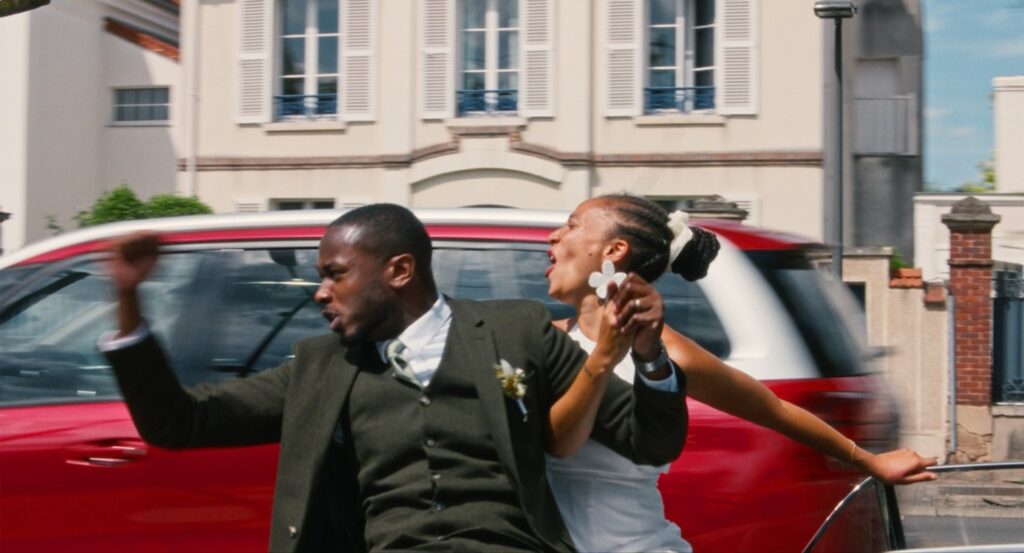
Dao (France/Senegal/Guinea-Bissau 2026) by Alain Gomis, which focuses on relationships and, at the same time, creates them in a performative manner, does not have one speed, but rather different rhythms. A wedding in France, a death in Guinea-Bissau, a “real fake family” comes together to find the roles of its members together. The director holds a casting call at the beginning of his film, looking for a mother and daughter who are not intended to be the focus of the film. Instead, it is precisely about the connection between the two places, between reality and fiction, between the characters, who are played by both professional and non-professional actors, and all the layers of colonial history that lie between them.
Everything is temporary. Who leaves, who stays, who or what returns in the images of cinematographer Celine Bozon? With a duration of 185 minutes, Dao creates a flow in which it becomes questionable what viewers can recognize based on their own experiences. Which recordings have a documentary effect on whom, and why is that actually the case in this feature film? What is being performed here for a white audience? And where does this film connect with a very common family experience, when power structures shift, and love and hate are as close together as bodies that play soccer together in summer?
Anne Küper
© FIPRESCI 2026