
The Other Side of the Sun: “Painful Is the Story, Painful Is the Silence”
In this Berlinale report, the Italian film critic Roberto Baldasarre explores The Other Side of the Sun, winner of the second prize in the Panorama Audience Awards. The documentary, directed by Tawfik Sabouni, is grounded in the filmmaker’s own experiences as a former prisoner of Sednaya prison, a “Human Slaughterhouse” that once held rebels against Bashar al-Assad’s regime.
[The teardrops which you will see / flowing from our eyes / you should never believe / signs of despair. / They are only promise / promise for Fight] –Alexandros Panagoulis
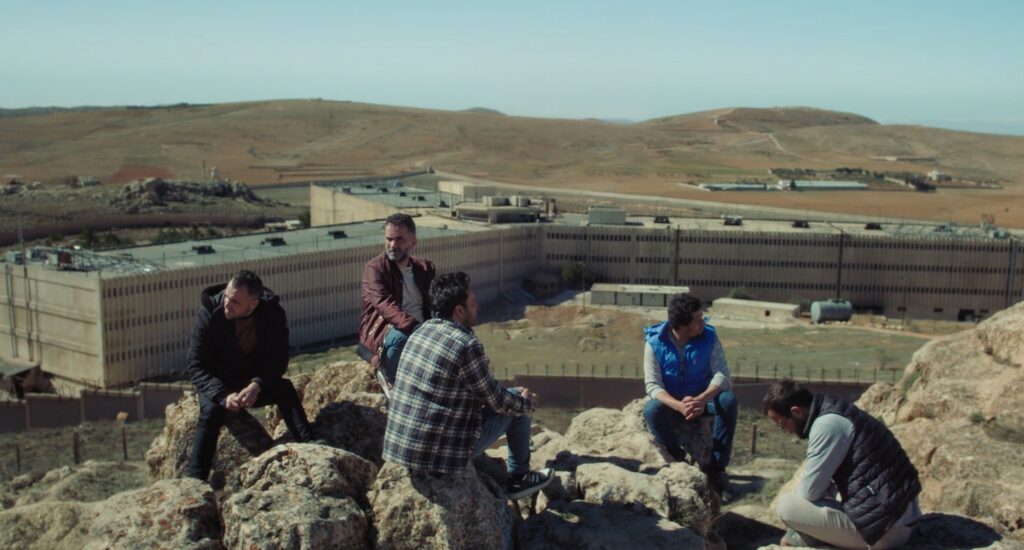
At several moments in Tawfik Sabouni‘s The Other Side of the Sun (2026), tears flow. The five men, former captives of Sednaya prison, weep for the pain of a deep wound that will never heal. They cry out of anger at their brutal and unjust imprisonment. They cry for the death of many former comrades whom they were unable to help. But they also cry tears of resistance, of being among the few who managed to survive and thus be able to tell their story, hoping that the horror they experienced in their flesh, minds, and souls will never happen again.
In competition at the 76th Berlin International Film Festival in the Panorama section, The Other Side of the Sun is the documentary debut of Sabouni, who was also one of the prisoners who suffered the abuse and horror of detention at Sednaya, a military prison located in the city of the same name near Damascus. Sadly nicknamed the “Human Slaughterhouse,” it was a huge Y-shaped building that was used extensively from 1986 to December 2024. From 2011, it began to host mainly rebels who were against the Assad regime, which ended with the rebel offensive and the fall of Bashar al-Assad, the last dictator of the dynasty. In one of its reports, Amnesty International estimated that between 2011 and 2015, 5,000 out of 13,000 prisoners were killed with summary executions. Now Sednaya is almost a ruin, emptied like Alcatraz or Auschwitz, but its elaborate architecture, those cramped and gloomy spaces, and those endless bars still exude the bloody violence they once hosted.
With The Other Side of the Sun, winner of the second prize in the Panorama Audience Award, Sabouni wants to bear witness to what that hell was like, assisted in this painful journey into recent memory by four other former inmates, to show the world what that place was like and how impossible it will be to leave the suffering behind: At the beginning of the documentary, he methodically reconstructs a small model of the prison, and shortly afterward, while commenting on the hastily shot footage filmed with a camera shortly after the fall of the regime, he states that the shaky images are due to his hands trembling and his state of mind on returning there. The documentary focuses on this reunion in which the five former prisoners, incarcerated for being opponents of the regime, recount their personal stories and all the abuses they suffered during their stay. A pilgrimage inside this dilapidated building to recall aloud—and sometimes “recite” the diktats imposed—everything they suffered and saw their fellow prisoners suffer. It was not just a detention center but a veritable slaughterhouse where the guards, all soldiers of the regime, enjoyed inflicting pain on the prisoners. Torture that could end in death. When they reach one of the office rooms, they find a pile of paper documents listing all the executions carried out, a massacre that confirms Amnesty International’s rough estimates, but also how prisoners often did not even know what had happened to their comrades. But the violence also extended to the prisoners’ wives, who were raped. In the scene where there are two puppets representing the soldiers, one of the witnesses lashes out, hitting it and knocking it over. A rage that can never be appeased, and those two mannequins also represent how the soldiers were merely puppets in the hands of those in power, sadistic or mediocre men who drew strength from their roles.
Sabouni also uses mannequins to represent the physical and mental deterioration of the prisoners: In one scene, the director shows how, when he looked at himself in the bathroom mirror in his cell, that is how he saw himself. Sometimes animated in stop motion, these monstrous sculptures quickly bring to mind the prisoners held in extermination camps. The director and the other four witnesses also recreate some brutal everyday circumstances, such as having to move from their cells to the showers by walking in single file, all huddled together with their heads down and their hands covering their eyes. The showers were freezing in winter and hot in summer, and everyone was forced into the small space. Or they recall another type of horror used by the military: throwing a sick prisoner into a cell to infect the others or simply to frighten them.
In this vivid return to horror, there is also a moment of exchange of totally personal confessions, at times Bergmanian in its delicacy and intimacy. Outside the prison, the five survivors, who were young when they were arrested and thrown into prison, remember their romantic relationships. During their detention, they also lost the love that could have been a lifeline for survival, a promise of a normal future. One of them cries, and those tears confirm that the time spent in the horror of prison will never be alleviated. Alexandros Panagoulis (1939-1976) was one of the best-known witnesses—through poems and testimonies published in books—of the violence in prisons during the dictatorship of the colonels. Sabouni provides another important memory, visual and bitterly poetic, with his personal and painful The Other Side of the Sun. Perhaps to seal the meaning of this documentary, made to raise awareness among others, it is necessary to quote Aeschylus: “Painful is the story, painful is the silence.”
Roberto Baldassarre
© FIPRESCI 2026