
FIPRESCI Winner AnyMart, and Boundary-Testing Films in the Forum
Iranian juror Amirata Joolaee reflects on formal risk, thematic depth, and cinematic experimentation in the Forum program, finding that while Yusuke Iwasaki’s AnyMart embodied a moral clarity that distinguished it among its peers, other films in the section also tested boundaries.
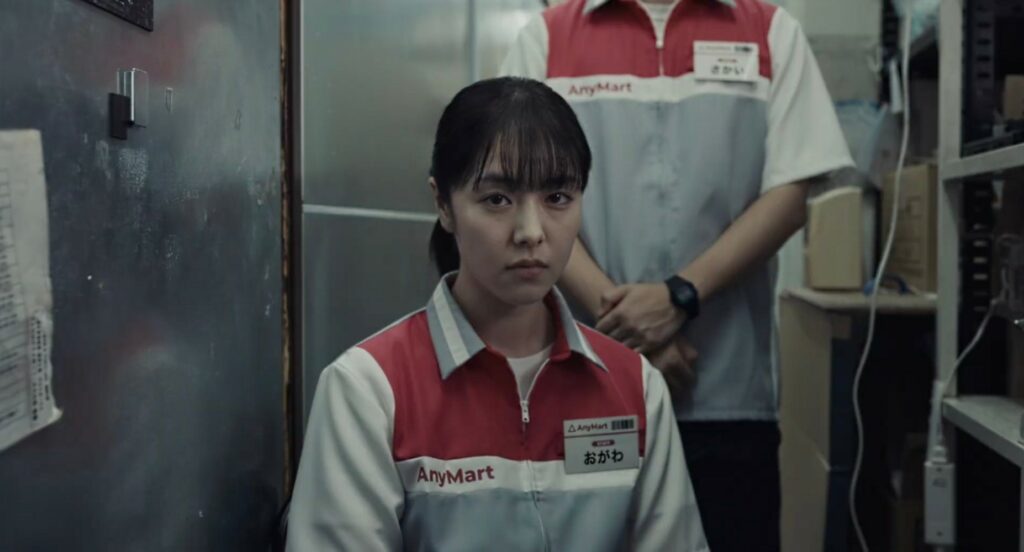
As a juror for FIPRESCI in the Forum section of the Berlinale 2026, I encountered a selection defined more by formal experimentation than thematic cohesion. The program included works that pursued innovative structures, visual strategies, and temporal rhythms, even when narrative clarity was not always the primary goal. Some films aligned concept and execution with remarkable precision, offering a fully realized vision of their thematic concerns. Others revealed the productive tension that makes the Forum vital, where ambition and experimentation often matter more than polish or narrative completeness. The diversity of approaches was striking, reflecting a space where filmmakers test boundaries and push cinema into unexpected registers.
Our prize went to AnyMart by director Yusuke Iwasaki. The film unfolds almost entirely within the confined space of a convenience store, transforming a banal commercial location into a site of existential scrutiny. Iwasaki observes precarious labor without sentimentality or exaggeration. Repetition becomes the structuring principle: scanning barcodes, restocking shelves, wiping counters, and waiting under the harsh, flickering glow of fluorescent lighting. These small gestures accumulate into a precise anatomy of contemporary isolation, highlighting the ways in which routine work produces subtle rhythms of fatigue, social hierarchy, and quiet endurance. The film resists turning its setting into a heavy-handed allegory; instead, it relies on duration, framing, and sustained observation to demonstrate how economic systems shape intimacy, attention, and human connection. This combination of formal rigor and ethical insight decisively distinguished AnyMart among a field of formally daring peers, producing a moral clarity that emerges organically from the work itself. Several other films in the program explored striking conceptual premises, with varying degrees of success.
If Pigeons Turned to Gold by director Pepa Lubojacki begins with a highly inventive allegorical conceit in which value literally takes flight. The opening sequences are visually witty and conceptually playful, yet the central metaphor gradually settles into predictability, narrowing the potential for sustained engagement.
Sometimes, I Imagine Them All at a Party (Was an Empfindsamkeit bleibt) by director Daniela Magnani Hüller examines intergenerational memory through fragmentary sequences and quiet silences. The austere style is consistent, yet the commitment to restraint sometimes limits emotional escalation, leaving certain passages feeling more studied than lived, and demanding patient attention from the viewer.
Barbara Forever by director Brydie O’Connor constructs a cinematic portrait through the interplay of performance and archival traces, interrogating the idea of permanence in personal and cultural memory. Although conceptually compelling, the accumulation of fragments rarely crystallizes into revelation, producing a reflective but emotionally distant effect.
Dream logic structures Masayume by director Nao Yoshigai, with its porous boundaries between sleep and waking, producing striking visual images and dreamlike atmospheres. However, ambiguity occasionally substitutes for narrative development, leaving the film as an exploration of mood and sensation rather than plot-driven transformation.
Panda by director Xinyang Zhang focuses on urban alienation, portraying a central figure caught between mascot and misfit, navigating a city that commodifies visibility. Tonal shifts are sharp and suggest a potent critique, yet episodic sequencing weakens the cumulative impact.
Gemstones (Piedras preciosas) by director Simón Vélez anchors viewers in both geological and human extraction. Tactile landscapes are presented with compelling clarity, and moments of labor feel immediate and embodied, though explanatory interjections occasionally dilute the impact of the strongest sequences.
Women as Lovers (Liebhaberinnen) by director Koxi analyzes romantic aspiration with austere clarity, emphasizing formal control to underscore economic and social pressures; however, the emotional register remains narrow, with precision functioning simultaneously as strength and constraint.
Members of the Problematic Family by director R Gowtham animates domestic tension through nuanced performances and careful framing, with the work proving most successful when gesture and visual subtlety are trusted over explicit explanation.
Finally, I Built a Rocket Imagining Your Arrival (Fiz um Foguete Imaginando Que Você Vinha) by director Janaína Marques embraces a modest, handmade futurism, where speculative design and intimate performance converge to express longing and hope, even within a deliberately limited narrative scope.
The Forum remains vital because it privileges inquiry over certainty, experimentation over convention, and formal exploration over predictable storytelling. Not every experiment is expected to cohere perfectly, nor does every ambitious gesture result in a fully realized film. Among the works considered, AnyMart achieved a rare balance of formal rigor, ethical observation, and social acuity. In its quiet attention to routine and labor, it illuminated contemporary solitude and the rhythms of life shaped by economic systems, without resorting to didacticism or rhetorical emphasis. Its capacity to combine meticulous formal strategy with deep human insight exemplifies why the Forum continues to be an essential space for cinematic innovation and exploration, fostering a diversity of approaches and offering viewers an opportunity to engage with cinema as a reflective, challenging, and profoundly human practice.
Amirata Joolaee
© FIPRESCI 2026