
Yearning for Freedom: Panorama at Berlinale 2026
The Panorama section underlines its name with films from across the globe, but also in keeping with the festival’s tradition of highlighting struggles from the same world, served up for audiences who are usually watching in comparative comfort zones. Dana Duma picks out some films from this year’s section that once again sought to shake the earth’s foundations more than a little.
The section our jury followed at the 76th Berlin International Film Festival, the Panorama, is considerably one of the most aligned with this major festival’s main trends. The thirty-seven films selected here had clear “formal ambitions and subversive narration” and raised pressing questions. As the director of the event, Tricia Tuttle, explained in an intervention on 14th February, the 278 films included in the different sections proved that “there are artists speaking, at times, about geopolitics, which may or may not be related to their films,” but there are also filmmakers “who come to the Berlinale with different aims — to ask how we can talk about art as art, and how we can keep cinemas alive, so that independent films still have a place to be seen and discussed.”
It is already a cliché to say that the Berlinale is a political festival, yet it was understandable that some wished to see more on screen about the suffering of people in Gaza, Ukraine, African countries, or European ones, in this time of wars and economic crises.
Returning to the films we saw and evaluated in the Panorama section, we remember many images of suffering people and their reactions in works set in different parts of the globe.
For instance, in Lady by Olive Nwosu, from the US, we see a Nigerian taxi driver furious about male domination over women, especially prostitutes — a woman who literally fights with men and who becomes an anti-colonialist fighter in a rather demonstrative ending.
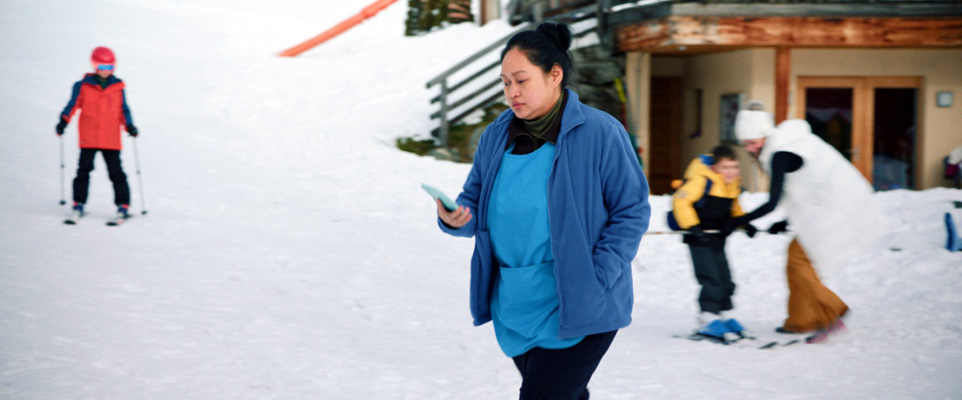
Another film, Enjoy Your Stay by Dominik Locher and Honeylyn Joy Alipio, describes in dark tones the supremacy of whites in Switzerland over workers who come from poor countries — in this case, an undocumented Filipina woman working in this European country to earn money that would help her solve the dramatic problems she faces at home, especially gaining custody of her children. She also becomes, together with her colleagues — equally exploited — a fighter for women’s dignity in general, and especially for those who come from former colonies.
We discovered cases of women despised by men even in more “civilized” worlds, as in the Nordic co-production Arru by Elle Sofe Sara, about the struggle of a woman living in Norway near the North Pole to save her land from the construction of a mine arranged by her corrupt neighbors. The musical moments included in the narration and the beauty of the regional costumes help create a charming feminine portrait.

We cannot ignore that these films are often based on the authors’ own experiences, as seen in the Germany–Netherlands co-production Two Mountains Weighing on My Chest by Viv Li. The two mountains in the title are a metaphor for the two identities between which the Chinese filmmaker — who also studied and now lives in Germany — oscillates, trying to better understand the cultural differences between the two countries. Although she makes perceptive observations, especially in conversations with her family, she never fully manages to define her authentic identity.
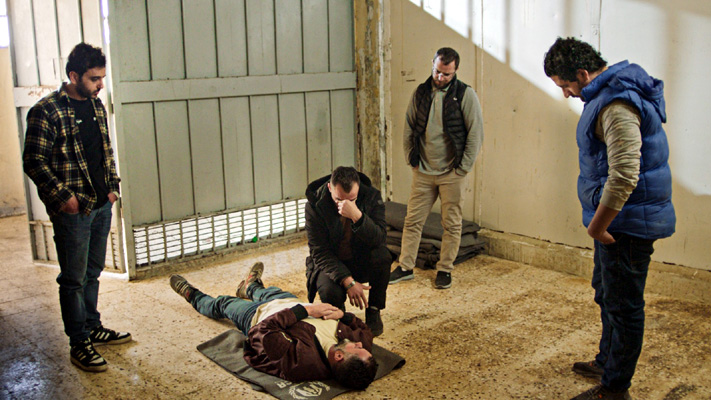
We also saw a number of films that approach the topic of freedom, some based on personal experiences, such as The Other Side of the Sun by Tawfik Sabouni (a co-production between Belgium, France, and Saudi Arabia). Former convicts from a Syrian torture prison, where they were sent during the Assad regime, return after the fall of the dictator and discuss their cruel experiences. We also heard much about freedom in the US documentary Buks Harbour by Pete Muller, a striking portrayal of a community where male children are educated according to the rigid codes of their fathers. It was an excellent film, respecting the principles of John Grierson, who advocated thorough documentation before shooting.
Even fiction entries we praised in our section echoed this yearning. In Narciso by Marcelo Martinessi, we observe this longing for freedom during the years when jazz and dictatorship arrived simultaneously in Paraguay.
Almost all the films selected in our section proved that no filmmaker was indifferent to what is happening in today’s world.
Dana Duma
Edited by Steven Yates
© FIPRESCI 2026