
In the Gentle Rhythm of Days: Maureen Fazendeiro’s The Seasons and the Art of Revealing the Invisible
Where the Ordinary Begins to Glow
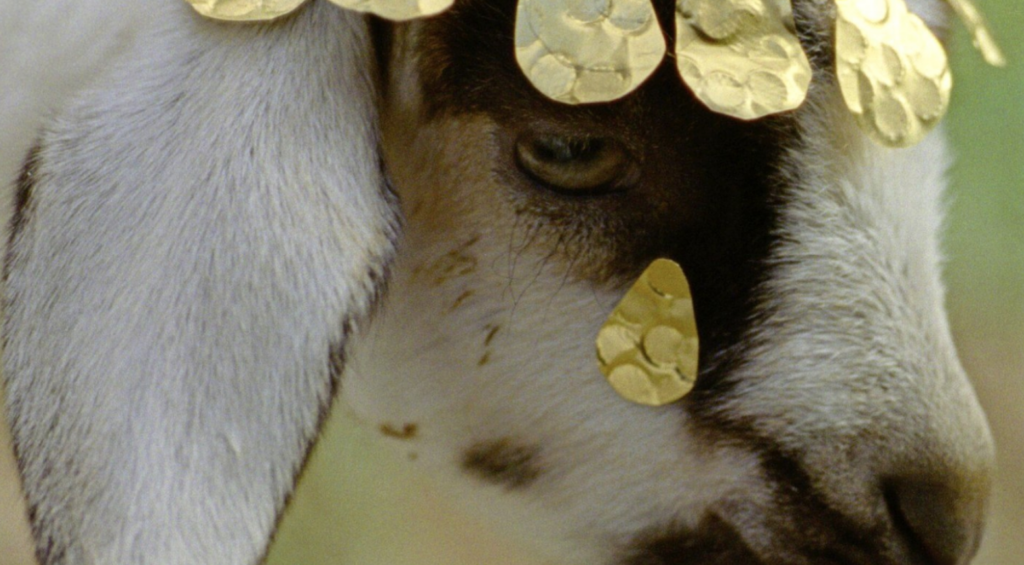
“What a wonderful world of sheep!” This is the very first sensation that arises as Maureen Fazendeiro’s The Seasons begins: a filmic universe where simplicity quietly blossoms into myth, where the most ordinary gestures seem to carry the echoes of centuries, and where the ancient rhythms of the Alentejo breathe with an understated yet majestic grandeur. Fazendeiro crafts a world that feels suspended between the real and the timeless, inviting us into a landscape where every stone, every birth, every song, and every shadow holds a memory that precedes us. In this delicate interplay between documentary observation and poetic reconstruction, she reveals a cinema attuned to the subtleties of life, one that listens to the land as much as it observes the people who inhabit it. The Seasons becomes, from its very first images, an invitation to slow down, to surrender to the pulse of a territory shaped by labour, myth, and silence, and to rediscover how the smallest movements can radiate profound meaning when placed in the patient, luminous gaze of a filmmaker who understands that the everyday is never merely ordinary.
Fazendeiro invites us into a universe that seems, at first, deceptively modest: shepherds tending their animals, goats giving birth under a trembling light, a dolmen waiting in patient silence for someone to listen to its ancient murmur. Yet behind this gentle façade lies a rich, multilayered cinematic vision one that binds past and present with a grace that feels almost elemental.
In The Seasons, realism does not oppose enchantment—rather, it becomes the very foundation that allows magical realism to emerge with integrity and sophistication. It is a lineage we know well in Portuguese cinema and Fazendeiro honors it without ever imitating it. She extends it, reshapes it, and infuses it with a distinctly feminine, tender, and attentive gaze. A quiet revolution, filmed in the language of the everyday.
Threads of Time Woven Into the Present
Drawing from stories, oral testimonies, archaeological letters, and regional legends, Fazendeiro constructs a narrative that floats between the modes of documentary and fiction. Her editing breathes. Her camera listens. Her characters, whether human, animal, or geological, exist with a full presence rarely granted on screen. A goat’s first breath feels as important as the whisper of a legend. A family singing communist songs becomes part of the same temporal tapestry as the footsteps of a girl who may have lived centuries ago or may only exist in the stories locals refuse to let die.
Fazendeiro’s mixed technique of handheld observations, reconstructed sequences, and archival fragments forms a delicate patchwork of memory and sensation. And yet the film never feels fragmented. It feels whole, as if we were walking inside a living organism stitched together by time itself.
What touched me most, perhaps, is Fazendeiro’s unwavering confidence in slowness. She does not rush. She does not explain. She lets us feel the world she films, its textures, its silences, its recurring cycles, its quiet rebellions. In a moment when cinema often depends on noise to exist, The Seasons dares to trust the humblest of gestures: a hand caressing a sheep, a shadow sliding across a stone, the long inhale of a landscape that has seen more than any of us ever will.
This is Fazendeiro’s first solo feature, and her first time working without Miguel Gomes, and it reveals her voice with undeniable clarity: patient, precise, deeply sensual, and profoundly committed to the poetics of the real. She crafts a film that embraces both history and imagination, reminding us that to understand the present, we must honour the invisible threads that bind us to what came before.
The Beauty and Burden of Stillness
Yet The Seasons is not without its demands. Some sequences stretch out with deliberation, embracing a rhythm that may test the viewer’s patience. The film lingers on gestures, silences, and daily rituals that unfold at the pace of the land itself. This slowness, while integral to the film’s immersive quality, can at times feel too extended, as though the narrative were suspended in a loop of observation. And yet, this very slowness becomes part of Fazendeiro’s artistic statement: a refusal to rush, a desire to let time settle, and an invitation for viewers to inhabit each moment fully. It is a demanding tempo, but one that ultimately enriches the experience for those willing to surrender to it.
What ultimately makes The Seasons so deeply inspiring is its ability to illuminate moments of life that most of us no longer notice—or may never encounter at all. Fazendeiro turns her camera toward gestures and bonds that exist far from the rapid pulse of the world: the quiet labour of farmers, the fragile arrival of newborn goats, the tender exchanges between humans and the animals they care for, the vibrations of a land shaped by memory and myth. These are scenes that remind us of the profound beauty embedded in the simplest forms of existence. Through her patient gaze and her profoundly humane style, Fazendeiro offers not only a film but an invitation—to look again, to listen more carefully, and to recognize that the extraordinary often dwells within the ordinary. The Seasons becomes, in this sense, a gentle yet powerful reminder of how cinema can reconnect us to the world, revealing everything that haste and routine make us forget.
By Yasmine Bouchfar
Edited by José Teodoro
FIPRESCI@2025