Peruvian film critic Luis Vélez examines Mauricio Freyre’s FIPRESCI Award-winning debut Estados generales, a formally rigorous and politically charged exploration of colonial legacies, scientific archives, and the possibility of restitution across time and geography.
An exceedingly auspicious feature film debut from artist and filmmaker Mauricio Freyre, Estados generales unfolds as the chronicle of a journey, a relocation, and a symbolic restoration. The spaces of departure and arrival—each marked by histories of conquest and extraction—divide the film into two distinct yet interrelated parts. These are circumscribed environments, dense with hidden dimensions that demand interpretation. The film advances through a process of excavation, probing what remains out of sight through light and darkness, hermeneutic inquiry, and a quasi-detective impulse.
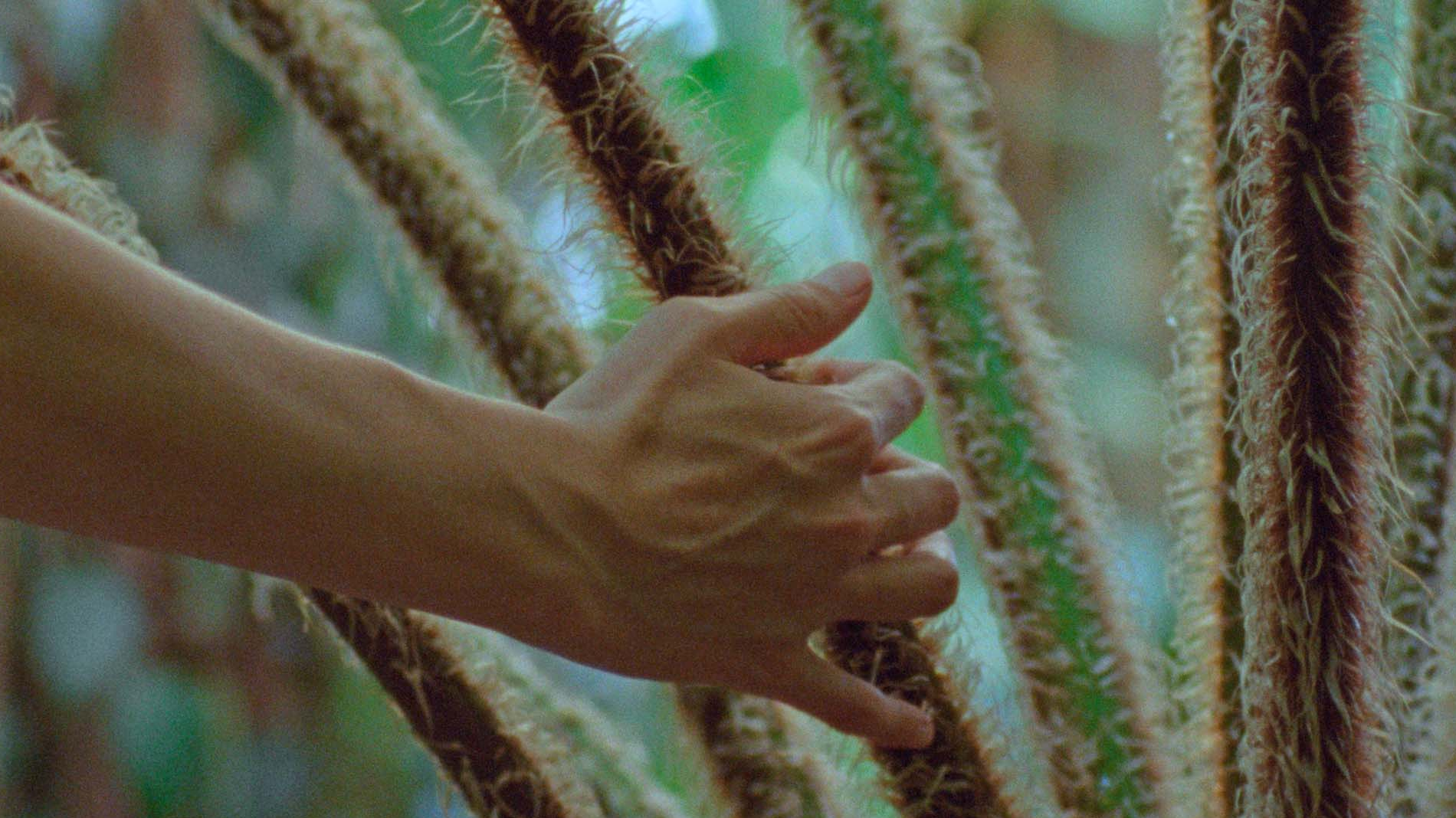
The Royal Botanical Garden of Madrid—its historical ties to royal power unmistakable—emerges as a serene yet ideologically charged site. The city surrounding it remains largely unseen, while the garden itself is rendered through a sensuous audiovisual language that foregrounds its edenic qualities. The film’s aesthetic—defined by carefully composed 16mm imagery and meticulous sound design—anchors its conceptual framework. This formal precision becomes instrumental in articulating one of the film’s central concerns: colonialisms, understood not as a singular historical phenomenon but as a multiplicity of enduring structures.
Scientific inquiry forms another crucial axis. Botanical and entomological research intersect with anthropological reflection as the film introduces archival materials—herbaria, drawings, and specimens—linked to the Spanish Crown’s 18th-century expeditions to the Viceroyalty of Peru. These expeditions, monumental in scope, yielded collections that contributed to publications such as Florae Peruvianae et Chilensis Prodromus. Preserved yet inert, these seeds and plant specimens—alongside issues of cataloguing and traceability—suggest both the material and symbolic residues of extraction. They also point toward the Spain-based Peruvian director’s underlying motivation.
From here emerges an epistemological and political question: can repatriation occur? Having exposed colonialism through what might be termed a “vegetal archive,” Freyre’s documentary adopts a mode that borders on intervention or staging. A nocturnal sequence—marked by the recurring motif of flashlight illumination—suggests a clandestine act of restitution. This gesture transforms the film into a quiet yet tense operation, where the act of return becomes both symbolic and materially charged.
A second dimension of colonial history unfolds in the Chincha Valley, Peru, a region deeply connected to Afro-Peruvian heritage and plantation slavery. The landscape is layered with temporalities: the remnants of a hacienda and later agrarian cooperative, alongside a more distant past preserved in a local museum. These historical strata are not presented as static but remain in active dialogue with the present.
In the film’s second half, the Chincha Valley also appears as a contemporary site of labour exploitation, shaped by global agricultural markets. This third form—neocolonialism—reaches its most tangible expression in the depiction of a tangerine packing facility. Here, fruit is subjected to strict visual inspection for international export, with one key requirement: the absence of seeds. This detail resonates beyond the immediate context, pointing to ecological consequences and to the role of corporations—often European—in patenting and controlling agricultural production.
These converging threads—archival, historical, and contemporary—form the film’s conceptual core. Yet Estados generales does not conclude in determinism. The possibility of restitution, whether literal or metaphorical, remains open. Freyre articulates a critical yet poetic manifesto, one that finds resonance in a quotation by Jean Rouch, delivered in voiceover: “The presence of the observer can never be neutral, whether he wants it or not.”
Luis Vélez
Edited by José Teodoro
©FIPRESCI 2026