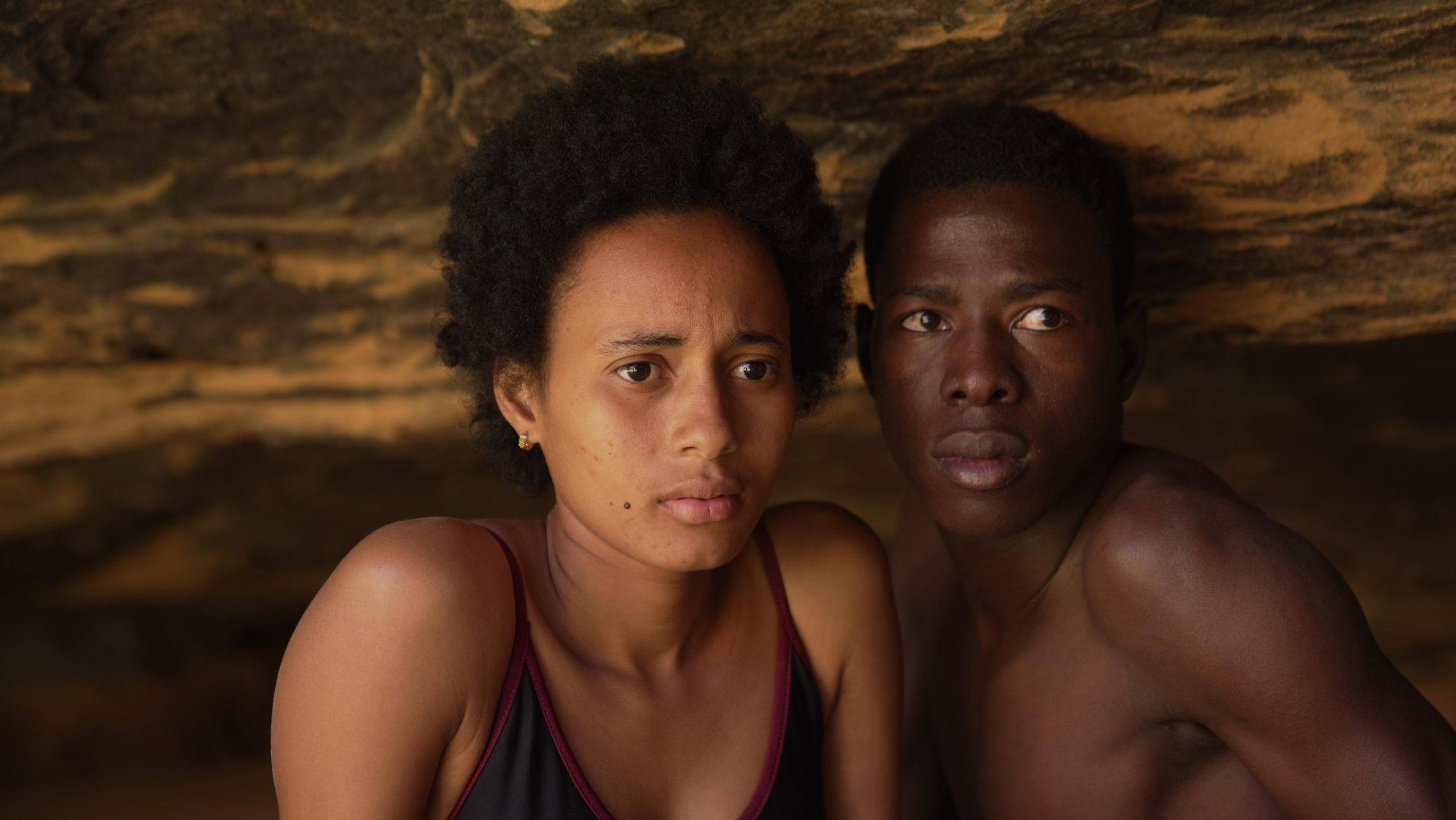
The new film by Chadian auteur Mohamed Saleh Haroun is a gem that the 76th Berlin International Film Festival saved for the final days of its main competition. It is poetic in the clearest sense, filled with quiet magic, and shaped by images that carry meaning as strongly as words.
Haroun, known for major works such as Bye Bye Africa, Dry Season, and A Screaming Man, has long explored themes of memory, guilt, exile, and belonging. In this film, he moves further into the mystical while remaining faithful to the human realism that defines his cinema.
The story centers on Kellou, a seventeen-year-old girl who carries mysterious supernatural powers she does not understand. Since childhood, she has felt different. As she grows up, men accuse her of being a foreigner, a migrant. The desert village where she lives is surrounded by uncertainty about her origins, about the belief that her mother died giving birth to her, and about her father, who once arrived there after committing a killing. Troubled by her gift and unsure how to live with it, Kellou drifts in confusion until she meets Aya, a woman in her forties. Their meeting changes both their lives.
Aya knows that Kellou has a special power. She was present at her birth and heard her mother’s last words. As Aya feels her own life nearing its end, she fears the disappearance of the mystical world they share — a world where the visible and invisible coexist. She entrusts Kellou with protecting this fragile realm.
The film can be described as African magical realism. It is grounded in reality yet surrounded by mystery and imagination. The setting is a sandy village in a rocky desert, with trees and small water channels — a place that feels almost like a mirage. It appears both real and mythical at the same time.
The cinematography is striking but restrained. Some shots are still, others move gently, yet all serve the story. Dialogue is minimal; the image carries most of the meaning, supported by music that blends African rhythms with jazz elements. The religious and social environment is shaped by tribal and patriarchal traditions, yet women — especially the protagonist — demonstrate strong individual agency. Local beliefs about spirits and the dead form part of daily life.
Kellou challenges her community. She refuses repression, rejects the labels imposed upon her, and resists being treated as strange or foreign. In what may be the most feminist film in the competition, she asserts her will. In the end, she carries a woman — whose identity we gradually come to understand — to her grave for burial, despite the village’s refusal to accept her, accusing her of being a witch who brings misfortune.
In its visual approach, the film recalls Timbuktu by Abderrahmane Sissako, although their contexts differ. In both films, the African desert is more than a setting — it becomes an aesthetic presence in itself.
Soumsoum, la nuit des astres (101’, France/Chad, 2026, with Maïmouna Miawama, Ériq Ebouaney, Achouackh Abakar Souleymane) is calm in tone. Its editing is measured, its pace slow, its movements deliberate. Many scenes are contemplative. The desert becomes an atmosphere, a state of being in which magic feels natural.
Magic here is not spectacular. It is subtle, like the desert itself — less an oasis than a mirage. It may seem fragile or distant, but it reflects something real: a mirage, perhaps, yet one rooted in lived experience.
Saleem Albeik
©FIPRESCI 2026