
The Family Factor: about the FIPRESCI awards at Palm Springs
in 37th Palm Springs International Film Festival, USA
by Fran Romero
All things on the subject of the familial were the anchor point common denominator for the critics’ prizes at year’s festival. Fran Romero looks at the five winners and finds that the domestic theme was a concurrent omnipresence.
Five films were awarded by the FIPRESCI jury at the International Palm Springs Film Festival this year, 2026.
The award for Best Film went to Spain’s Oscar submission Sirat, directed by Oliver Laxe. Best Screenplay went to Norway with Sentimental Value (Affeksjonsverdi) by Joachim Trier. Best Actress was awarded to the ensemble cast of the three female protagonists of the solo directorial debut by Shih-ching Tsou, Left-handed Girl, representing Taiwan: Janel Tsai, Nina Ye, and Shi-Yuan Ma. Best Actor was awarded to Milan Ondrík for his performance in The Father (Otec), from Slovakia. Best First Feature went to Sarah Goher, representing Egypt, with Happy Birthday (هابي بيرث داي). The first three films are part of the shortlist of international films on the road to the Oscars. However, all of them are narratives with no similar storyline; we could understand their differences by considering their geographical distance, as they come from different parts of the world yet this year there was a common denominator, and that was the family.
Different authors, from Aristotle to Durkheim – among others – have referred to the family as the fundamental core of cohesion and societal construction in order to understand its importance. But beyond a theoretical concept, it is the relationships built at its foundation that permeate the early childhood of those women and men who will eventually integrate into the social fabric.
Thus, from a father living through a devastating tragedy in The Father, to a family of three generations of women migrating to Taiwan in Left-Handed Girl, to a young girl who does not understand economic and social differences in Happy Birthday, and the desperate search of a father for his daughter in Sirat, we return to that fundamental core of life, understanding those who inspired these stories that were etched into the skin of the audience.
From the silent desert, governed by vulnerability and the majesty of nature; to a chaotic Taiwan surrounded by neon lights in the middle of a night market; to an Egypt divided by architectural injustice that manifests the contradiction of a country’s economic class; to a fast-paced city in Slovakia that erases the sense of time for a father absorbed in the automation of daily life; and the pain of a dysfunctional family attempting to heal its wounds through the sale of a house in Norway, transforming the material into the immaterial of intergenerational trauma – these are common denominators that perhaps we need to rediscover and make visible in these turbulent times to relate to the important.
Intimate and moving stories that revisit the fundamental base of life and reflect on decisions that in a single moment can change lives, that open wounds which resurface again and again beyond the passage of time and the inevitable transition into adulthood, with tireless nuances of joy and pain that define us as imperfect human beings who often move through life without a particular event to tell, yet holding the intrinsic power to sometimes look back to the beginning.
Sirat, the Best Film winner starring Sergi López, invites the viewer to feel small before the omnipotence of the desert, within the fragility of persistence that displays the pain of a father and his young son who desperately try to connect with a societal subgroup to find his daughter. That sacred bond, which seems to be the only permanent element in that windy place that appears to purge humanity like a biblical walk, merges with electronic rave music at a liminal boundary between life and death. Here, family is that tireless love of finding one another in immensity and the hope of completing the journey along an arduous path that is extreme both physically and emotionally.
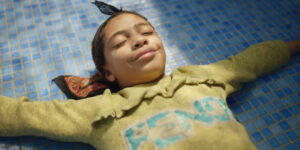
In Happy Birthday, its extraordinarily talented actress Doha Ramadan portrays Toha, a young girl who works alongside her mother in an upper-class home and plays with the homeowner’s daughter, who is her same age, in the innocence of not understanding economic or social differences under a bubble. In the film, the director uses a perfect analogy: an event that for many is unthinkable yet traditional birthday. Thus, the prejudices of being part of domestic service and her own family’s refusal – under the mandate of the employing family – to participate in the birthday of whom she considers her friend and part of her life becomes the genesis of the pain of injustice. The audience witnesses how those eyes full of hope begin to cloud over in the face of the true situation. Heartbreaking, but real. Families, distances, barriers, and a girl learning how modern society works.

In the case of the Best Actor award for Milan Ondrík in Father, we are immersed in the artist’s ability to performed one of the most painful situations that can occur in earthly life. Witnessing the death of his daughter places him in a state of extreme emotionality in which any human being could freeze and never rebuild a life again. But family is more than any terrifying event; it continues meanwhile while you breathe. In the film, marvelously directed by Teresa Nvotová, his partner accompanies him, and while the two live through grief, they attempt to survive as a core emptied of hope in a spiral of anguish that keeps them in a precarious equilibrium on the edge of destruction. A fragmented family attempting to piece together their emotions like a mosaic.
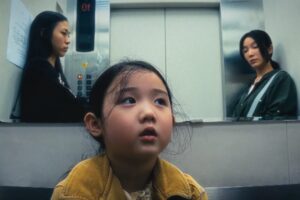
Otherwise, in the cinematic delight that is Left-Handed Girl, Tsou offers us a piercing vision of how three generations of women can live in the same place yet at times feel so far apart when they need each other most. Nevertheless, despite this, connection is still achieved, and in the most difficult moments they manage to find one another as a family. All of this is seen through the tender perspective of a nine-year-old girl who navigates strenuously yet in perfect balance with comedy life immersed in adulthood.
The Best Screenplay award this year went to Norway and Sentimental Value in the hands of the sensitive director Joachim Trier, who with the brilliant idea of using something material – a house – as a trigger for the immaterial nature of familial trauma that shows daughters Renate Reinsve and Inma attempting, together with their father – the spectacular Stellan Skarsgård – to reconstruct a virtually nonexistent relationship through a stage play that pushes their emotions to the maximum tension of confronting old wounds.
The institution of the family appeared subconsciously this year in global narratives that converged among the winners of the International Palm Springs Film Festival, where, even across different genres and visions, they returned to that profound atom: the difficult relationships within families.
By Fran Romero
Edited by Steven Yates
© FIPRESCI 2026