
Women Filmmakers Bring Boldness and Empathy to Festival Storytelling
How two films by women became the emotional and narrative highlights of Rabat’s auteur festival
At this year’s 30th Rabat Auteur International Film Festival, held from November 8th to 14th, only two of the twelve films in competition were directed and written solely by women. Yet these two works — And the Rest Will Follow (original title: O da Bir Sey mi) by Turkish filmmaker Pelin Esmer and Sisterhood (original title: HLM Pussy) by French-Moroccan filmmaker Nora El Hourch — delivered the festival’s most incisive storytelling. Their presence underscored an enduring truth: when women bring their own scripts to the screen, cinema gains dimensions and tackles emotional challenges that are too often absent from mainstream cinema.
And the Rest Will Follow is Pelin Esmer’s seventh feature and stands out as a masterclass in narrative precision. The film observes the intersecting lives of Aliye (Merve Asya Özgür), a hotel housekeeper who crafts stories to carve out forms of human space beyond the limits of her own, and Levent (Timuçin Esen), a well-known film director who remains oblivious to Aliye’s existence until she begins sending him voice messages. Their relationship unfolds in fragments — gestures, overheard conversations, unanswered desires — gradually blurring distinctions between truth and self-created fiction.
Esmer’s direction is marked by meticulous composition enriched with lived-in textures: the clatter of reception desks, the soft fatigue in late-night hotel shifts, the unguarded gestures exchanged between strangers. The film’s narrative structure demands attention, weaving a layered web from the various stories Aliye and Levent tell each other and themselves. Not every narrative thread lands with equal resonance — a subplot centered on a short film that Levent has made carries a lighter tone — but the whole remains compelling. Esmer excels at drawing unexpected connections between people who might never otherwise cross paths, reaffirming the idea that storytelling can bridge divides of age, class, and geography.
One character’s assertion that “Who cares about the truth?” as long as any given story works becomes an underlying thesis for And the Rest Will Follow’s exploration of narrative agency. At a festival that defines itself as a “cinema of authors,” only a fraction of the selected films truly embodied a distinctive, unconventional authorial voice. And the Rest Will Follow stood out for its authenticity and emotional complexity, qualities that linger in the viewer’s mind long after the film ends.
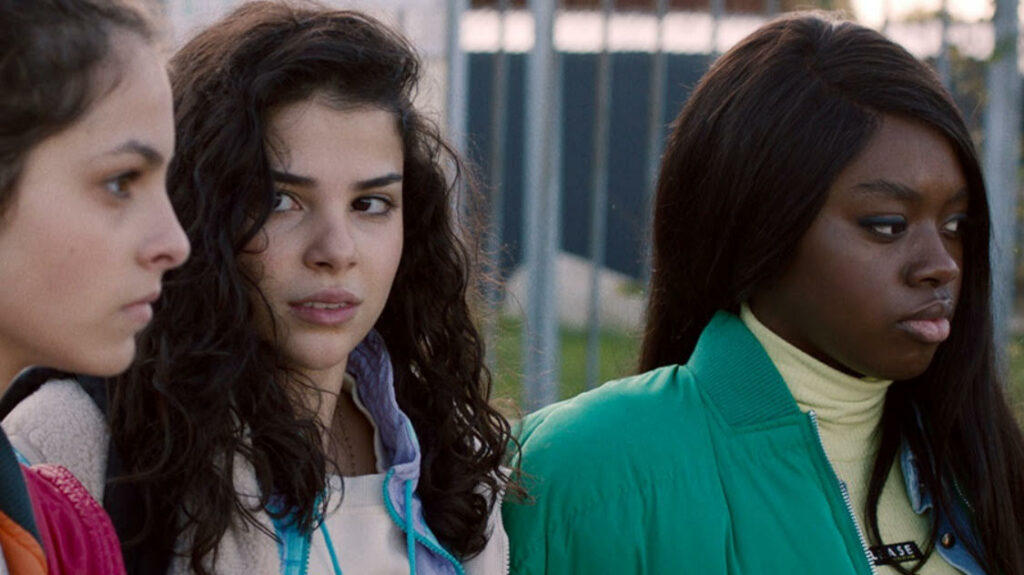
Nora El Hourch’s Sisterhood approaches storytelling from a different angle but with equal intensity. The film follows three teenage girls — Amina (Léah Aubert), Djeneba (Médina Diarra), and Zineb (Salma Takaline) — in the Paris suburbs as they navigate friendship, identity and the pressures of their contrasting socio-economic realities. When Zineb becomes the victim of assault by a local boy, Amina impulsively records and uploads footage of her friend’s experience, setting off a chain of consequences that strains their friendship and exposes the fragile dynamics of gender, power, and reputation within their community.
While its cinematography is less polished than that of Esmer’s film, Sisterhood delivers an emotionally grounded depiction of adolescence and the challenges of coping with assault at a young age. The film explores intensely topical issues such as consent, cultural duality, social class disparities, and the unpredictable influence of social media. El Hourch’s commitment to portraying her protagonists with honesty — fiery, loyal, conflicted, and vulnerable — results in a story that is raw, resonant, and deeply human. Sisterhood’s impact comes not from visual spectacle but from the accumulation of small, revealing moments that show how young women navigate trauma and resist the roles imposed upon them.
Film festivals remain vital spaces for emerging voices. They encourage experimentation and intimacy, providing a platform for films that might otherwise be overlooked to reach audiences receptive to fresh perspectives. Esmer and El Hourch’s contributions to Rabat’s 2025 edition embraced narrative risk, layered storytelling and a keen attention to the nuances of everyday life. These filmmakers broadened the festival’s emotional and narrative vocabulary, presenting audiences with rich and thought-provoking explorations of identity, community and self-invention. Building further on And the Rest Will Follow and Sisterhood’s previous inclusion in other festivals, such as IFFR and TIFF, their presence in competition at Rabat signals a growing momentum for female filmmakers whose work deserves broader international distribution.
Although women were underrepresented in this year’s international competition at Rabat, the impact of the films female artists directed was undeniable. Esmer and El Hourch’s contributions underscore the importance of expanding space for women in filmmaking — not merely for reasons of equity, but also because women’s perspectives enrich the art form itself. As these directors and those who will follow in their footsteps continue to challenge narrative conventions, they offer a powerful reminder that cinema’s greatest strength lies in its capacity for discovery, empathy and reinvention.
By Letícia Alassë
Edited by Johnny Murray
Copyright FIPRESCI