

1925–1926
The First Initiative
In 1925, film journalists from Paris and Brussels founded a Professional Association of the Film Press. Soon after, Belgian journalists initiated contact with colleagues in other countries.
The idea of creating an international federation emerged during the Congress of Cinema held in Paris at the Rothschild Foundation building between September 27 and October 3, 1926. During the congress, critics called for the establishment of an International Federation of the Film Press that would serve both as a center for international information exchange and as a body defending professional interests.
1930
The Foundation of FIPRESCI
Belgian critics continued negotiations with national film press associations across Europe. The process moved slowly and by 1929 it seemed the initiative might disappear before officially beginning.
In June 1930, during the International Congress on Cinema at the Palais des Académies in Brussels, French, Italian and Belgian critics decided to establish the Federation based on the principle of individual membership.
1931–1933
International Recognition and Structure
The second General Assembly took place in Rome in 1931, where efforts were made to attract additional member countries. During this assembly, the Italians proposed adopting the name “FIPRESCI.”
Later that year, an International Commission was established to reorganize the federation and draft new statutes.
By the third General Assembly in London in 1932, the revised international statutes were officially approved.
At the fourth General Assembly in Paris in January 1933, Belgium assumed the roles of General Secretary and Treasurer. The federation also introduced its first logo and membership card.
1935–1936
Expanding Cultural Influence
The fifth General Assembly took place from the 29th May to the 1st June at the Brussels Exposition of 1935. Delegates from fourteen countries attended and the first links were made with a view to promoting the cultural value of the cinema. It ratified proposals made at earlier assemblies and decided to create Information Bureaus in each national section. It also asked that the editors of film magazines should be asked to only use members of FIPRESCI as foreign correspondents. It was also asked to obtain financial reductions for travelling and accommodation for FIPRESCI membership cardholders.
The next year, as part of the 40th anniversary of the invention of the cinema, members of FIPRESCI met in Rome where they were addressed both by Pope Pius XI and Mussolini.
Late 1930s–1945
FIPRESCI During Political Turmoil and World War II
During the late 1930s the Bureau of FIPRESCI had to tread a very wary line among the conflicting political storms taking place in Europe. On the whole FIPRESCI managed to maintain a position of neutrality, and during the first years of the Second World War the Bureau was able to assist members of FIPRESCI in Austria and Poland.
At the outbreak of the war FIPRESCI consisted of seven national sections, Germany, Austria, Belgium, France, Italy, Luxembourg and Czechoslovakia. With nine other countries represented by individual members, the Vatican City, Spain, United States of America, Holland, Poland, Portugal, Romania, Sweden and Switzerland.
1946–1947
Post-War Revival
Return to International Festivals
After the war finished it was again France and Belgium that started the process of getting FIPRESCI running once more. When the Cannes Film Festival began in 1946, FIPRESCI was present and at a meeting new officials were elected with the British critic Dilys Powell as President. FIPRESCI also formed its first festival jury and awarded its inaugural prize jointly to:
Brief Encounter by David Lean
Farrebique by Georges Rouquier
In 1947, Denis Marion joined the organisation and helped guide FIPRESCI toward its modern form through his diplomacy and leadership.
1987–2024
Global Federation
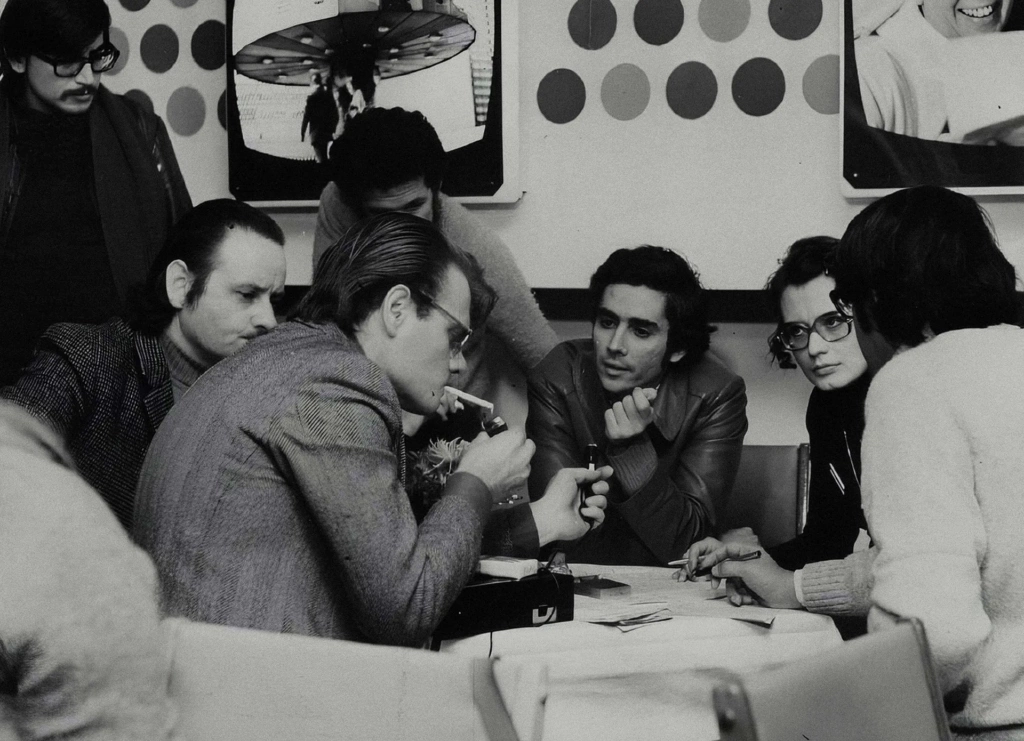
From 1987 to 2024, FIPRESCI was headed by the General Secretary Klaus Eder, during which time he shaped it into what it is today: an umbrella federation of international film critics associations with 50 national sections worldwide and 36 additional countries represented individually.
2025
100 Years of FIPRESCI
In 2025, FIPRESCI celebrates its 100th anniversary, marking a century of international film criticism, cultural exchange, and support for cinema worldwide.