
How much praise can a portrait hold before the person disappears? A Quiet Man, a documentary about industrialist, philanthropist and collector Romain Zaleski, is one that tests the limit. His life deserves attention, whether it receives scrutiny is another matter.
Directed by Rafael Lewandowski, who has already made a film about Zaleski’s father in 2017, and produced by Zaleski’s daughter, Hélène Zaleski, who also shares the screenplay credit, the documentary follows a life spanning Poland, France and Italy. Wartime childhood, industrial ambition and an extraordinary appetite for art emerge through archives and interviews. The film’s speakers, however, seem to have agreed on what we should think of him before we have sat down.
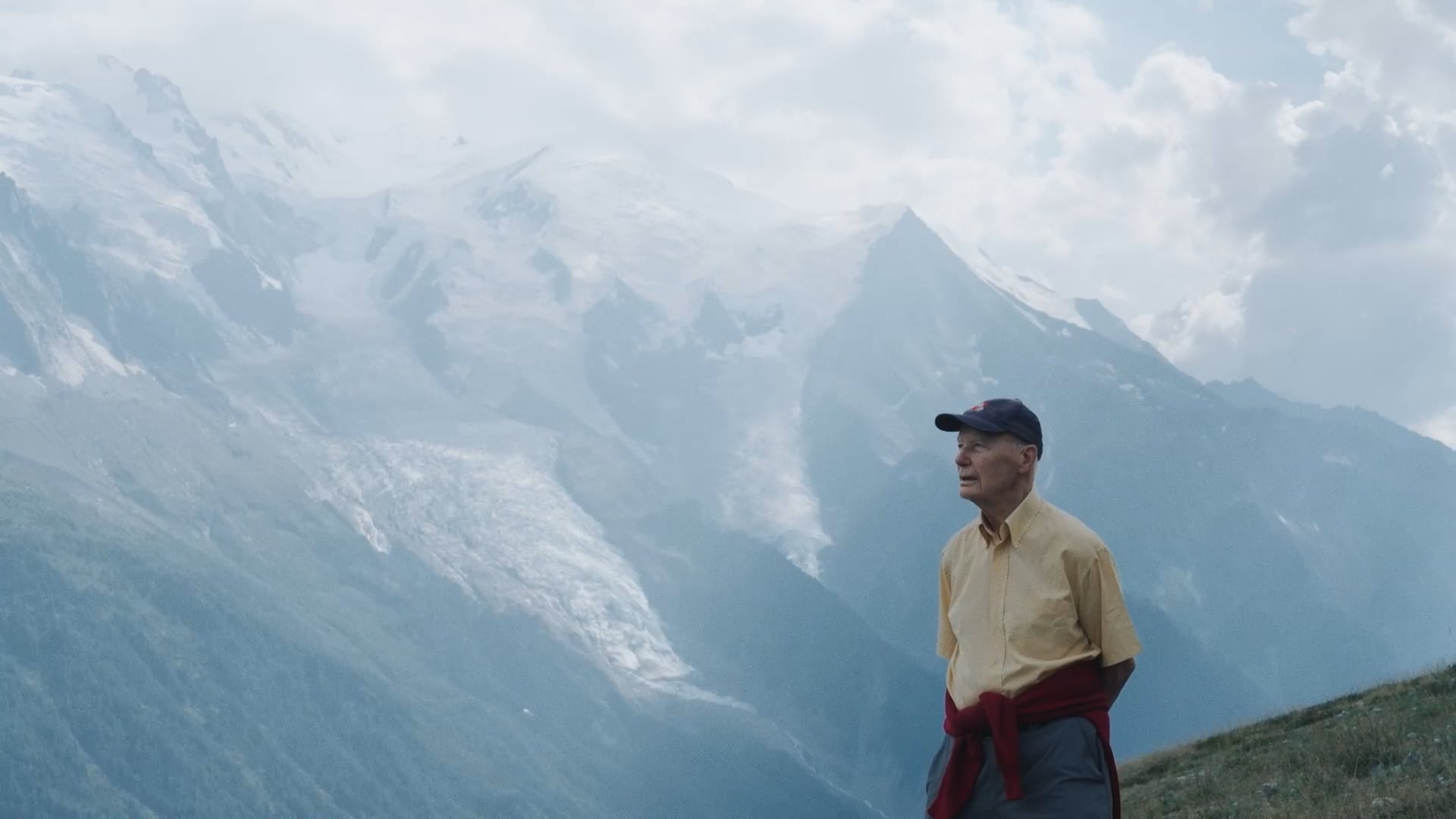
Visually, the film is basic to the point of blandness. Built from archive footage and talking heads, a look familiar from streaming documentaries, it loses its footing early. Pen-drawn animations appear and are never used again. A factory follows, then mountains. For a viewer who knows nothing about Zaleski, none of it connects, and what any of this is about stays unclear far longer than it should. The forest shots verge on comical, with a billionaire framed through woods, recollecting memories of a riverside manor in a bid to seem relatable. In today’s climate, it all feels so detached from reality that you doubt your own judgment.
That is a pity, because the material is there. Zaleski was born in Paris in 1933 to a Polish family. A summer visit to Poland in 1939 became six years of war. His father, Zygmunt Lubicz-Zaleski, was a literary scholar who championed Polish culture in exile. His mother, Maria Zdziarska-Zaleska, was a doctor and Resistance member. The occupation scattered them, she was sent to Ravensbrück, he to Buchenwald, and their eldest son, Andrzej, died of illness during the war.
In a household like this, preserving culture was tied to survival and belonging. In 1990 Zaleski created a foundation in his father’s name, supporting projects such as the Polish Library in Paris. A line runs from war to loss to collecting to preservation, and it is the most compelling idea the film touches.
The film leans almost entirely on witnesses drawn from Zaleski’s own orbit – friends, colleagues, employees who owe him their livelihoods and, perhaps, their loyalties. It never pauses to ask how those ties might color what they say. The workers speak of him in hushed, reverent tones, and their devotion may well be genuine, but the film treats it as sufficient evidence.
Not for a moment do we see a flaw, a doubt or a critic. Did Lewandowski and Hélène Zaleski look for any, or decide we shouldn’t see them? With the director and the daughter this close to the subject, this is an ethical question as much as a stylistic one, and a documentary offering a single, unchallenged opinion does not pass it.
There is a story worth telling here. But affection is not insight, and a portrait that never lets its subject be questioned is closer to a monument than a documentary. What remains is a set of questions the film never dares to ask itself, and the quiet man at its center stays unexamined, and for all the praise, unknown.
Director: Rafael Lewandowski
Writer: Hélène Zaleski, Rafael Lewandowski
Running Time: 79 minutes
Country: Poland
Year: 2026
Rating: 1,5
Elizabete Didža
©FIPRESCI 2026