
A secret heart
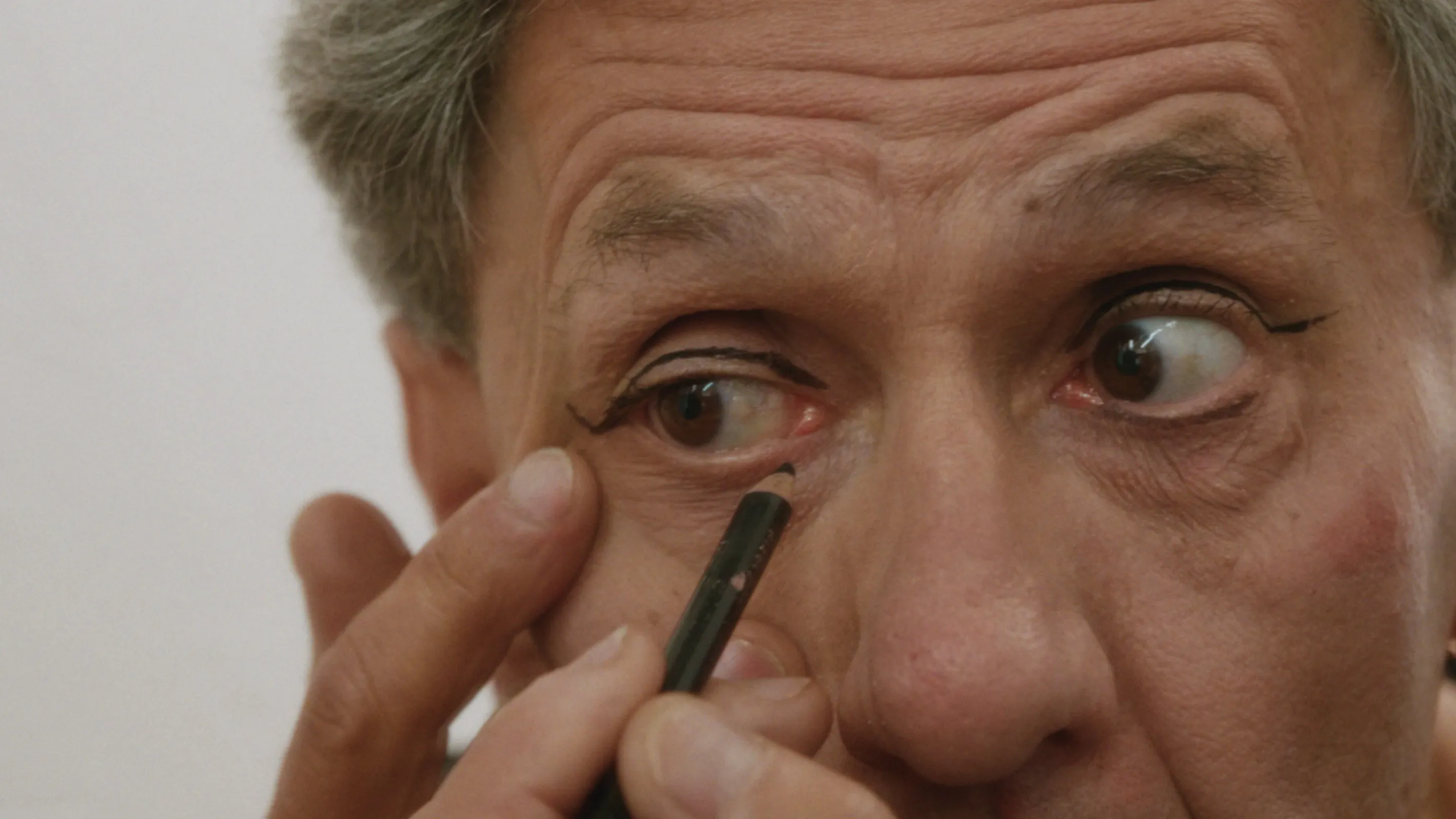
“In the space of four years, Lilou emerged from secrecy. She became a 64-year-old woman who enjoys DIY projects, gardening, cycling, and spending time with her grandchildren,” reads the synopsis for Un Coeur secret (A Secret Heart, 2026). “By documenting her transformation, I filmed a family healing its wounds and reinventing a place for each member. This family is my family; Lilou is my father”, explains 33-year-old director Tom Fontenille, who delivers a deeply moving portrait of a family grieving the loss of a mother.
Un Coeur secret is a rare, humble movie, born from the hope that a camera might rekindle strained family bonds and, in doing so, help repair them. Filmed over four years, the documentary is a child’s attempt to reconnect with a parent. It opens with a somewhat gruff, almost hostile father, who tells her son that she feels no emotions, that she has no sensitivity. “And when you dress as a woman?”, Tom asks. “That’s pleasure”, Lilou clarifies. In a remarkable display of trust, despite her rough exterior, she allows herself to be filmed experiencing that pleasure as she adorns herself with feminine clothing and accessories. Throughout her transition, the film gradually shifts into a portrait of her emancipation.
Capturing the complexity of this father without idealization or condemnation, Tom Fontenille’s camera never shies away from uncomfortable truth. Instead, the filmmaker throws himself into a long and demanding journey to connect with his father, as well as with the new person she is becoming. With the boldness, tenderness, and humor afforded by his dual role as son and documentarian, Tom persistently questions Lilou, encouraging her to open up and reversing the traditional parent-child dynamic. He also invites his sister Manon, whose wounds remain painfully raw, to reveal her own vulnerability before the camera. The film builds toward an emotional confrontation in which she finally pours out her pain and resentment toward a father who has remained emotionally unavailable to his children, even now as a woman, even now as someone learning to listen to her own deepest feelings.
Therein lies the film’s greatest singularity, offering a compelling reflection on gender: far more than a simple portrait of a transition, Un coeur secret reveals the redistribution of roles within a family where the mother is gone, and the father is now Lilou. Embracing her identity as a woman while continuing to be a father to children who have lost their mother is no easy task, and becoming a woman does not necessarily make her more emotionally available to her children. The empathy, tenderness, and affection the children once found in their mother are still missing. In this sense, the film reminds us that gender roles are social constructs, even for someone who is actively challenging them.
A healing debut feature, Un coeur secret is also a precious record of an extraordinarily generous and unconventional family. Selected for ACID, the film was awarded the inaugural Queer Louve prize at the Festival du Nouveau Cinéma in Montreal.
By Manon Marcillat
Edited by Anne-Christine Loranger
Copyright FIPRESCI 2026