
Seeing the Human: Reflections on the Selection of the 9th El Gouna Film Festival
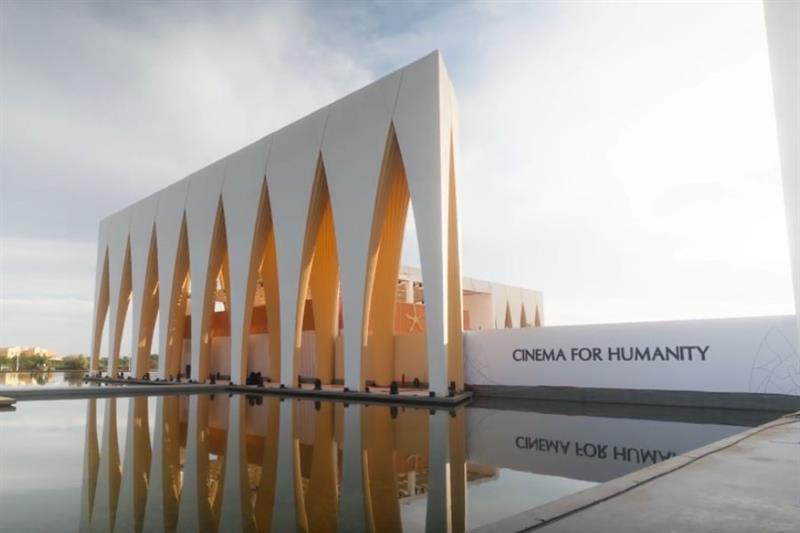
Tunisian film scholar Henda Haouala reflects on five films from the 9th El Gouna Film Festival, exploring how cinema transforms the act of seeing into an ethical and political encounter with violence, resistance, childhood and human vulnerability.
The challenges of writing, directing, producing and distributing films are hardly a secret to anyone working in the industry. Yet these difficulties are far from evenly shared between the northern and southern shores of the Mediterranean. While the film industries of the North benefit from greater resources and more established networks, Arab cinema continues to struggle to tell its stories, preserve its independence and make its voice heard. In this context, every film festival organised in the region becomes, in its own way, an act of resistance. The El Gouna Film Festival (GFF) is part of this ongoing effort. For its ninth edition, held under the slogan Cinema for Humanity, it brought together an international selection that invites us to return to a fundamental question: what does it mean to remain human in a world that seems increasingly determined to make us forget our humanity?
Cinema is, above all, an art of seeing. And we live in an age in which images have become omnipresent, circulating endlessly through social media and shaping the way we perceive the world. But amid this constant flow of images, what do we really see? Whose stories deserve to be seen on the big screen, and whose remain invisible? These questions may seem ambitious, but they stayed with me throughout the screenings. Twelve documentary and fiction feature films competed for the International Federation of Film Critics (FIPRESCI) Prize. In several of them, storytelling works through a kind of cinematic magic: the camera reveals something that was there all along, yet that we had not truly learned to see.
This is the idea I would like to explore through five films that transform seeing into an aesthetic, ethical and political act. From cameras confronting death in Citizen Ossema and American Doctor, to women’s voices resisting oppression in A War on Women, and finally to the intimate relationship between time, nature and childhood in The Calf Doll and Whispers in May, these films remind us that looking is never enough. We must also learn how to see.
Seeing Gaza Differently: The Camera Facing Death
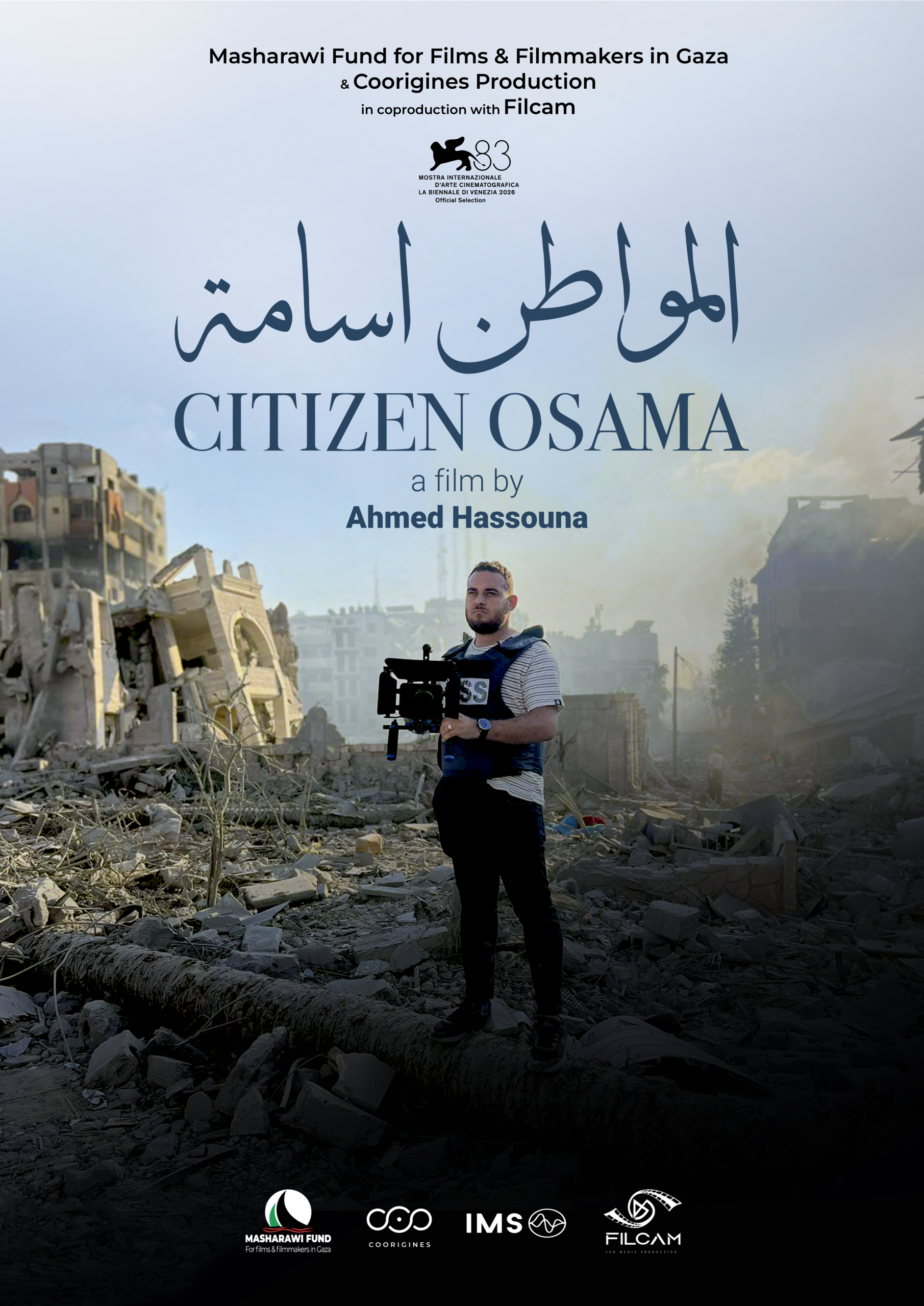 Ahmad Hassounah’s Palestinian documentary Citizen Ossema follows journalists who have been targeted and killed in Gaza by the Israeli army. At its centre is Ossema, a Palestinian journalist whose camera becomes an instrument of resistance in the face of almost certain death. Hassounah’s own camera follows Ossema’s, bringing two acts of filming into a fragile dialogue between private and professional life, love and hope, truth and death, humanity and cruelty.
What makes this documentary particularly powerful is that the camera does more than record events. It bears witness to the act of bearing witness itself. Hassounah does not simply seek to stage events (mise en scène); he seeks to bring forth their truth (mise en vérité). Through its cinematic apparatus, the film goes beyond the transmission of information to question how information is produced, circulated and received. The camera becomes both a witness to violence and a vulnerable presence within it.
We might think we have already seen everything there is to see of Gaza. The images of destruction, wounded bodies and overwhelmed hospitals have become painfully familiar. Yet American Doctor, directed by Poh Si Teng, challenges us to look again. The American documentary, which premiered at the Sundance Film Festival and has received several awards, including a human rights award, follows three doctors working in Gaza: Thaer Ahmad, an American of Palestinian origin; Mark Perlmutter, an American Jew; and Feroze Sidhwa, a Zoroastrian.
Their different religious, cultural and social backgrounds matter, but they are not what ultimately defines them. What brings them together is their commitment to human life. In Gaza’s hospitals, where the wounded arrive amid the devastation caused by Israeli military attacks, these doctors struggle to save lives and care for bodies shattered by war. Their work forms the emotional and ethical core of a documentary whose carefully constructed cinematic language never loses sight of the people at its centre.
The film does not merely ask us to witness suffering. It asks us to examine our own position as spectators. What does it mean to watch images of human suffering from a distance? Where does witnessing end and responsibility begin? Between mise en scène and mise en jeu, between the construction of a cinematic image and the personal involvement of those who produce and receive it, American Doctor invites us to reconsider the relationship between truth, representation and the human gaze.
The Voices of Women: A War on Women
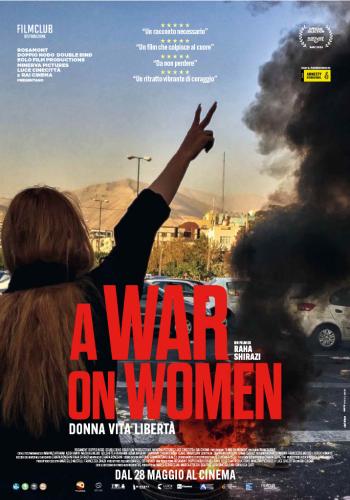 In A War on Women, Raha Shirazi offers a distinctly female perspective on a history of political and social struggle. Made by a woman and carried by women’s voices, this Iranian documentary examines the lives of Iranian women under the Shah and following the rise to power of Ayatollah Khomeini in 1979.
Through archival footage spanning more than five decades, the film traces the experiences of women who have been exiled, imprisoned, tortured, humiliated and killed. Their stories are not reduced to a single experience or a single political moment. Artists, students, a writer, a minister and other activists emerge from the archives as individuals whose lives have been shaped by their refusal to remain silent.
The strength of Shirazi’s film lies in the way it allows these women to speak for themselves. Rather than treating them as distant figures in a historical account, it brings their struggles into the present, reminding us that the fight for dignity and freedom is never merely a matter of the past.
What emerges is the portrait of a war waged against women in the name of religion, a war in which their most fundamental demand—to be recognised and treated as human beings—becomes an act of resistance. The film’s title is uncompromising, and so is its message. Behind the political slogans and official narratives are individual lives, voices and memories that refuse to disappear. By bringing them together, A War on Women turns the act of looking back into an act of listening, and listening into a form of recognition.
Time, Nature and Childhood: The Calf Doll and Whispers in May
Cruelty does not always announce itself through war or political violence. Sometimes, it takes quieter forms, hidden behind the promise of technological progress and the fascination with modernity. In this rush forward, entire ways of life risk being left behind: those of villagers who live far from cities, close to the land, making their own bread and growing or preparing their own food. Their world may appear remote from ours, but it is not necessarily less rich. Indeed, it may teach us something about what we have lost.
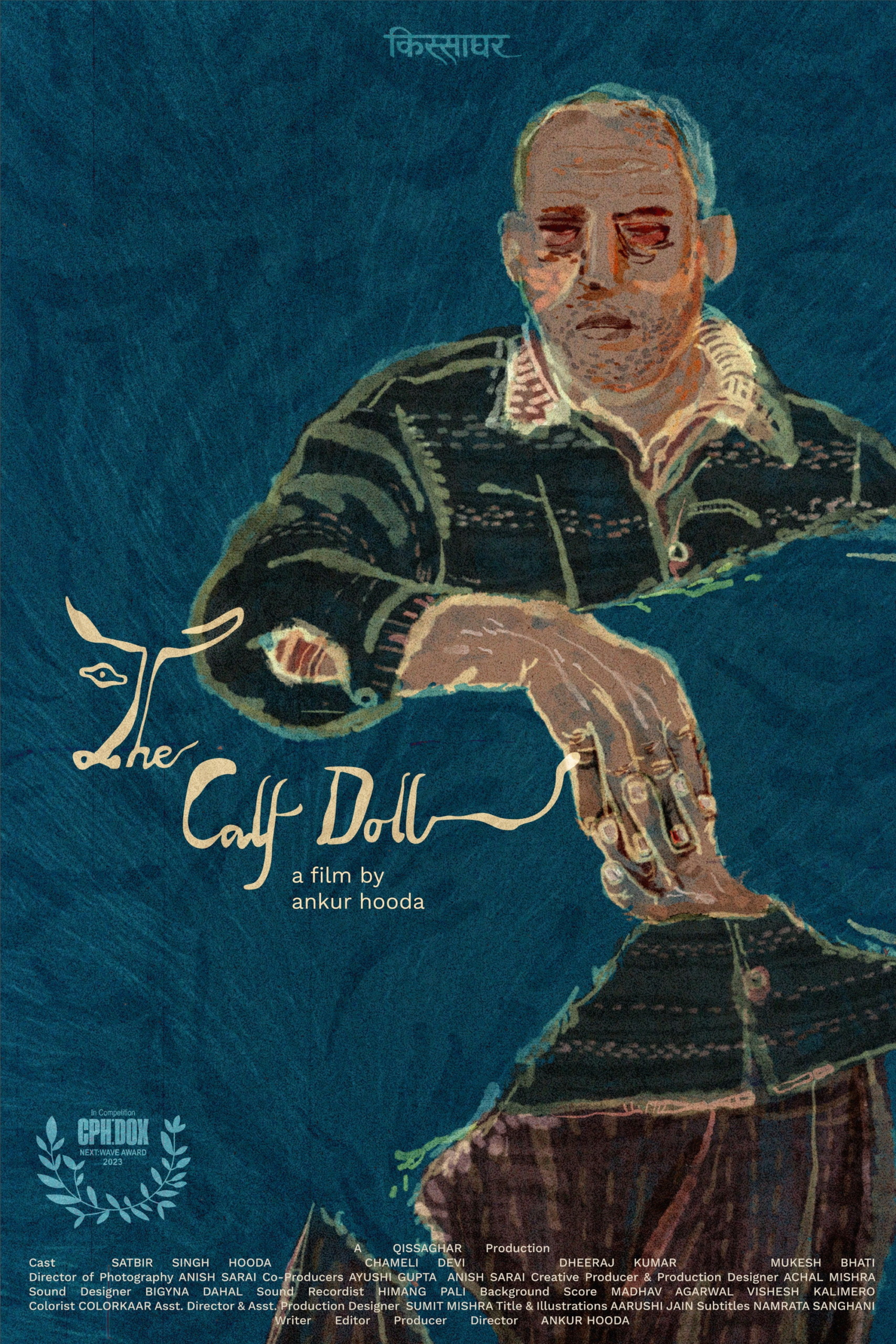 Ankur Hooda’s Indian documentary The Calf Doll approaches this world with remarkable sensitivity. Combining live-action footage with graphic animation, the film explores the possibilities of seeing through both the photographic image and the drawn line. Its narrative is deliberately restrained, its visual language contemplative, and its sense of time recalls the cinema of Andrei Tarkovsky.
The long takes allow moments to unfold without being hurried towards a dramatic conclusion. The earth, an animal, the rain and the fog are not simply elements of the landscape; they become part of the film’s way of thinking and feeling. The sequences were reportedly neither rehearsed nor shaped by a conventional script in advance. Hooda instead allows the moment to reveal itself before the camera, trusting the rhythms of the world rather than imposing his own.
This patience is central to the film’s beauty. In an age of accelerated images and constant distraction, The Calf Doll asks us to slow down. It reminds us that the world does not exist merely to be consumed as an image; it has its own rhythms, textures and silences. Through its attention to ordinary life, the film captures the vulnerability of human existence and our fragile relationship with the natural world. It does not need to make grand statements about humanity. Its quiet images are enough.
Nature also provides the setting for Whispers in May, directed by Dongan Chen, which received the FIPRESCI Prize. Here, the relationship between documentary and fiction is particularly delicate, as is the relationship between the filmmaker and the four young girls she films. Chen does not impose herself on their world. Instead, she seems to place herself at their level, allowing the camera to accompany them rather than dominate them. There is a sense of trust in this approach, a willingness to let the girls inhabit the film on their own terms.
Gradually, we forget the camera is there. We follow Qihuo, a fourteen-year-old girl who has just had her first period, as her community prepares to celebrate a traditional Chinese festival known as the “changing of the dress”. Along with her friends, she decides to cross the Langshan Mountains to collect the new dress. What begins as a journey through the landscape becomes something much more intimate: a passage through adolescence, marked by physical change, emotional uncertainty and the first difficult encounters with the realities of adult life.
As they walk along rough paths, the girls confide in one another, laugh, ask questions and share their dreams. Their conversations carry the awkwardness, curiosity and tenderness of an age in which childhood has not entirely disappeared, yet adulthood is already making its presence felt. The journey gradually becomes a metaphor for growing up, although the film never feels the need to explain its symbolism.
Poetic in its intimacy, almost like a diary, Whispers in May moves between close-ups of the girls’ faces and wide shots of a little-seen part of China. The landscape is beautiful, but beauty here is inseparable from hardship. Poverty, isolation and the harshness of everyday life exist alongside the girls’ laughter and their capacity to dream.
What makes the film particularly moving is its understanding that innocence is not simply lost in a single moment. It is gradually worn away by experience, by circumstances and by the things children begin to understand before they are ready to understand them. Whispers in May becomes a journey without a clear destination, an endless departure in which every step carries Qihuo further from childhood. Chen chooses to suggest the cruelty that awaits rather than expose it directly. Sometimes, what remains outside the frame is more powerful than what the camera shows us.
Learning to See
Seeing is never a neutral act. This is perhaps the thread that connects these five films. In Ahmad Hassounah’s and Poh Si Teng’s documentaries, the camera bears witness to violence while exposing its own vulnerability. In Raha Shirazi’s film, the camera restores a voice to women whose lives and struggles have too often been silenced. In Ankur Hooda’s and Dongan Chen’s work, it learns to look more slowly and more gently, allowing time, nature and human vulnerability to emerge without forcing them into easy explanations.
These films differ in subject, form and cinematic language, yet they share a belief that images can do more than inform or entertain. They can unsettle what we think we know, bring us closer to lives we might otherwise overlook, and challenge us to reconsider our place in the world. They remind us that seeing is not simply a matter of opening our eyes. It requires attention, empathy and, sometimes, the courage to face what we would rather not see.
During the festival, we filled the cinemas with our fears, desires, memories, hallucinations and demons. We came to watch films, but we also came to confront ourselves through them. We saw suffering that should never have become ordinary, voices that refused to be silenced, and fragile lives whose dignity survived despite the cruelty surrounding them. The films did not offer easy answers, nor did they promise that cinema could repair a broken world. What they offered was something perhaps more modest, but no less necessary: an opportunity to look again, to question our indifference and to recognise the injustice that threatens us all.
In a world where images are everywhere, perhaps the real challenge is not to see more, but to see differently. And if cinema still has the power to save something within us, it is because, for a brief moment in the darkness of a cinema, it reminds us how to recognise one another as human beings.
Henda Haouala
© FIPRESCI 2026