
Memories of a Forest (Erinnerungen eines Waldes) by Katharina Rabl is a major warning about the danger of the past
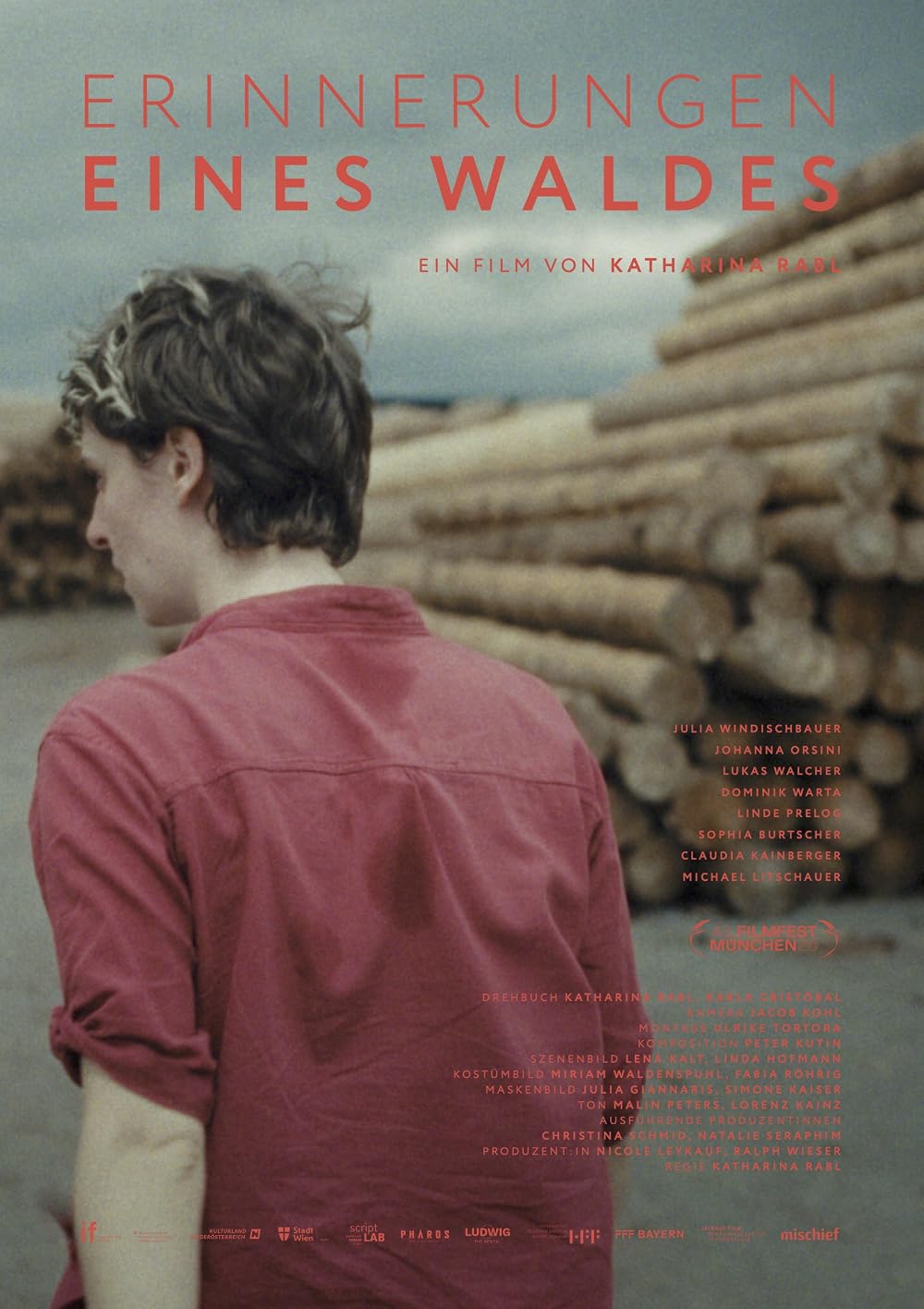
A co-production between Germany and Austria presented at this year’s Toronto Film Festival, Memories of a Forest (Erinnerungen eines Waldes) by Katharina Rabl also reached the Viennale in its 64th edition. This is a work that knows how to strike and hit the mark, and that has the merit of speaking to us about very deep, current, and interesting themes without being excessively overt and thus predictable. On the contrary, following Frieda (Julia Windischbauer), who is getting closer to finishing her PhD thesis in Vienna and is forced to return home due to the passing of her grandmother, we find ourselves involved in a universal story, despite its intimate component. Frieda returns to her native Austrian countryside, among woods, silence, lost roads, and a small community she had left behind to find a different life.
The welcome could not be more problematic: her mother (Johanna Orsini) treats her coldly and nervously, her father (Dominik Warta) has some health issues, and above all, the grandmother’s funeral has drained what was left of their finances. Wrapped in silence, in a life she thought she had forgotten –livened up only by the momentary closeness to former youth companions – Frieda is forced to shoulder her family’s difficulties, with her studies at risk and a 15-acre forest upon which the economic survival of them all might depend. Memories of a Forest places the past at the center of everything, both in a metaphorical sense and in a real, naturalistic sense, one might say.
The trees – symbols of centennial memory and witnesses of our lives – are there, intact, immutable, almost indifferently assisting the toil of this girl who is pursued by the ghosts of her past, by a life and reality she felt distant from. But that past can be a burden, especially when we lack the means to understand it; indeed, it can end up infecting what is healthy in the present, like certain parasites found under the bark. Embellished by a cold but very expressive cinematography by Jacob Kohl, Memories of a Forest is also a female-centric story of great importance for how it speaks to us about emancipation, independence, and changes. Frieda belongs to a generation of women who no longer have to answer to others, unlike their mothers or grandmothers. This too is a heavy legacy, a bequest that the film brings across in its incredible scope and relevance, but without predictability or rhetoric.
A minimalist story, made of silence and a difficulty in communication that is the great, gigantic stumbling block among the protagonists, Memories of a Forest is also undeniably a family melodrama. One of the most interesting aspects of its composition is how it shows the evolution of the protagonist, her success to eventually seeing herself as a woman and no longer as a girl prisoner to others’ griefs and sorrows. Katharina Rabl’s direction is perfect in alternating angles and distances, in varying the rhythm while speaking to us about secrets, grudges, and illusions. Hers is a story that not simply concerns the past – the legacy of the errors of the generations that preceded us, but also creates a precise critique of a specific collectivity, of the mountains, which is still particularly provincial today, or at least this is the idea we are given.
Wisely managing to be accessible when showing us the moments of greatest doubt and fragility of its protagonist, Memories of a Forest is also a story of the not-always-peaceful confrontation between man and nature, the purely material nature of existence that has now taken hold of us. Evil is always hidden under the rug, carrying with it the legacy of a defunct era whose ghosts do not stop pouring into the present. Death seems to hover a bit over everything and everyone in the film, as does the nightmare of old age with its deteriorating aspects, perhaps suggesting that age does not automatically create sageness. However, there is also a great deal of talk about loneliness, of not feeling understood, of change which is sometimes not what we had imagined. It is impossible not to admire Frieda, her vitality, her will nonetheless to leave nothing untried, her refusal to surrender and not seek the truth.
Memory, Rabl seems to remind us, is a double-edged sword; it can harm us, but it can also grant us the freedom we never imagined we could grasp again. Despite some partial uncertainties regarding fluidity in the central part, the film also manages to speak to us in a very intelligent and original way about forgiveness, empathy, and a generational clash that is now the order of the day in this year 2026. Even today, being a woman often means having to choose between one’s career, motherhood (which appears here mostly made of sacrifices), and self-determination. The cast is very convincing, above all Windischbauer, her often desperate, silent pace, not devoid of enormous intensity, in that forest that feels almost like a green prison around her. Specific as its setting may be, this is a work that cannot leave one indifferent, for the sea of emotions it manages to convey.
By Giulio Zoppello
Edited by Birgit Beumers
Copyright FIPRESCI