
A reality too scattered to fit a linear frame
There seems to be a new tendency in documentary filmmaking: telling a story in a scattered, inconclusive way, while shifting from character to character without choosing one specific narrative line or clear central focus. At the 39th edition of the International Documentar Film Festival (IDFA), which took place in The Netherlands from November 12 through November 22, 2026, many of the first features the FIPRESCI jury evaluated for its prize shared this tendency, which feels like a disquieting sign of the times.
You Don’t Die Two Times, by Algerian director Ager Oueslati, followed the complex travel path of a Nigerian woman through Africa in a seemingly random progression. Told through fragments which conveyed a sense of displacement and disorientation, which was partially the point of the storytelling, it left viewers confused and unclear as to the documentary’s ultimate purpose. Similarly, Cuban entry Bahia Honda, by Alejandro Alonso Estrella, set among a group of men who earn their living by dismantling ships in a ship graveyard on the island of Bahía Honda, in the lower Florida Keys, constantly shifts its focus from character to character and from place to place, never taking a definite point of view or a clear narrative position.
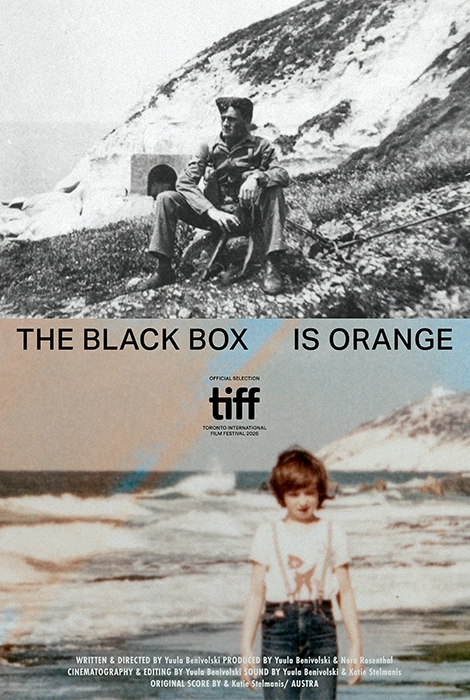
The Israeli doc The Black Box Is Orange, by Yuula Benivolski, breaks its storyline into chapters of different sizes and scope, creating a catalogue of fragments of various shapes without setting priorities or establishing a thread connecting the dots to form a cohesive picture. The Romanian entry A Modern Roma Fairy Tale, by Raluca Lupaşcu, portrays the lives of a Roma family without consistently choosing a central protagonist or showing clearly the dynamics among the group’s members, proceeding instead through disjointed episodes which never seem to find a unified directorial purpose.
My critical hunch is that these documentaries reflect the fragmented, incomprehensible reality in which we are all immersed, one where we find ourselves incapable of identifying a clear direction and remain uncertain of the moral position we ought to take in this general confusion. Although these directors appear deeply committed to their subject matter and protagonists, they seem unable to make heads or tails of their predicaments. Therefore they tend to gather, or even pile up, random moments, rather than clearly lining them up to help us decode the reality they are trying to represent.
If documentary filmmaking is a mirror of present dynamics, IDFA’s first features selection is a fitting representation of the state of a contemporary world too chaotic and erratic to be easily decoded or properly assessed—and too frightening to face. However, the FIPRESCI jury decided to award Hazara Town, by Khadim Dai, which, by contrast, presents its characters clearly and follows a linear path. This straightforward yet delicate and unobtrusive narrative structure works particularly well by contrasting the harsh reality it portrays, one of displacement and dismemberment, both of a family and an ethnic minority. Because even if you can’t bring order to the chaos of the present, you can certainly clarify where you stand morally.
By Paola Casella
Edited by José Teodoro