

FIPRESCI – The International Federation of Film Critics – and the Polish Film Festival are pleased to announce the selection of authors for a joint publication dedicated to the legacy of Krzysztof Kieślowski.
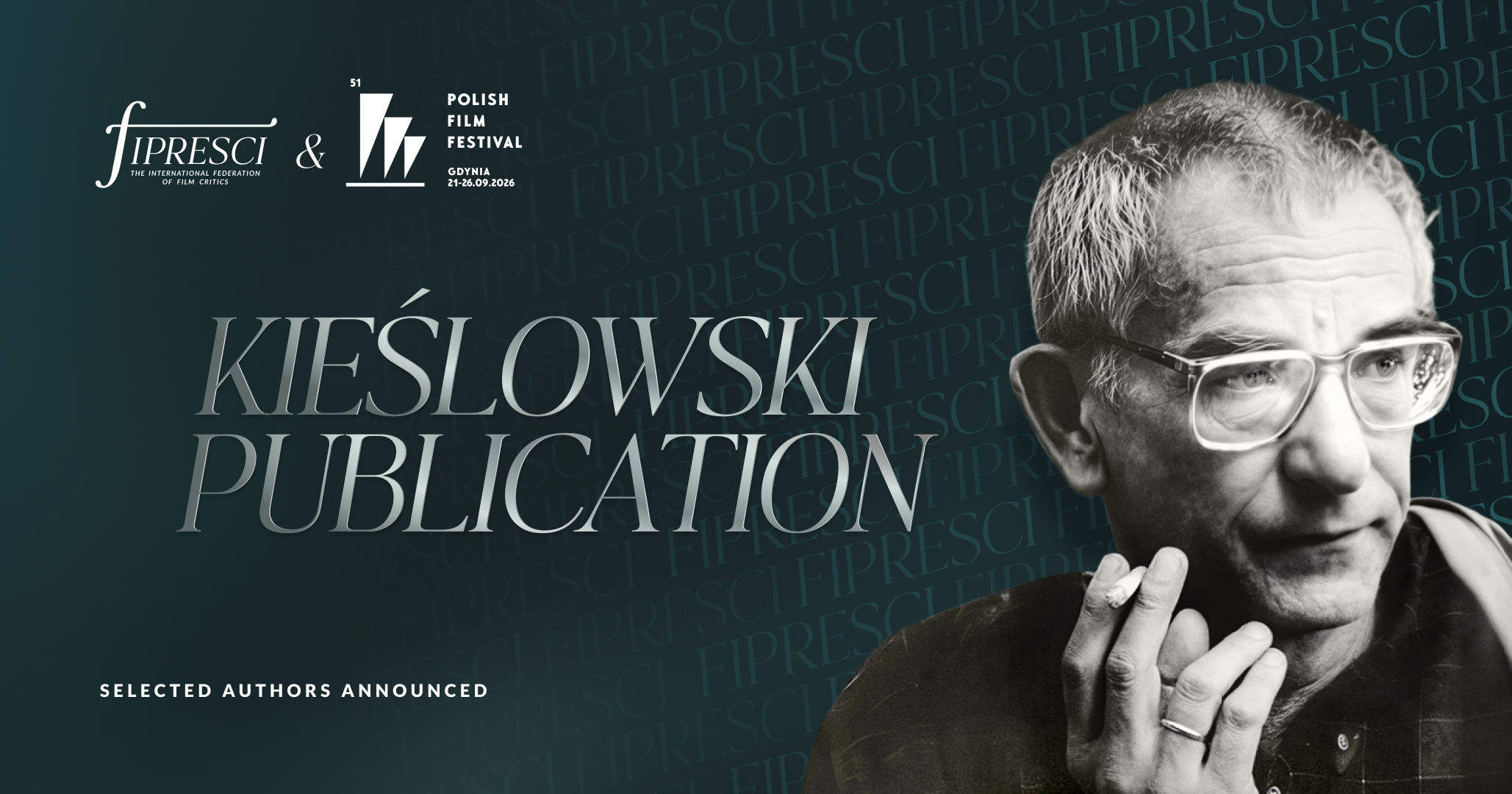
The initiative was launched to commemorate the anniversary of the celebrated Polish filmmaker’s passing and to reflect on the enduring impact of his work on cinema, film criticism, and contemporary culture. Bringing together international critical perspectives, the publication seeks to demonstrate how Kieślowski’s films continue to inspire new interpretations, provoke debate, and resonate with audiences and critics across generations and geographical boundaries.
Founded in 1925, FIPRESCI is a global network of professional film critics and film journalists from more than 80 countries. The Gdynia Film Festival, Poland’s leading national film festival, has long played a central role in promoting Polish cinema and preserving the country’s rich film heritage. Both institutions are delighted to continue their fruitful collaboration through this special project dedicated to one of the most influential filmmakers in European cinema.
The open call attracted over 40 proposals from critics representing countries across the world. The remarkable diversity of submissions testified to the continuing relevance of Kieślowski’s artistic legacy and the wide range of perspectives his work continues to generate nearly three decades after his death.
The selection process was guided by several criteria, including originality of approach, depth of analysis, relevance to the publication’s theme, and geographical diversity. Particular attention was given to proposals that offered fresh insights into Kieślowski’s cinema and explored the many ways in which his work continues to shape contemporary film culture.
The selected authors and articles are:
- Bijan Tehrani (Iran) – Krzysztof Kieślowski and Iranian Intellectual Cinema: A Legacy Beyond Borders
- Michela Manente (Italy) – The Colors of Chance: Krzysztof Kieślowski’s Enduring Legacy in Contemporary Cinema, from the Three Colours to Modern Italian Auteurs
- Martin Botha (South Africa) – Isolated Individualism vs. Communal Ubuntu (Interconnectedness) in Krzysztof Kieślowski’s Three Colours: Blue
- Malik Berkati (Germany) – The Double Life of Kieślowski: Irène Jacob and the Afterlife of a Transnational Gaze
- Virat Nehru (Australia) – Documentary as Historical Recordkeeping: Kieślowski’s Early Approach to Documentary and Its Afterlife in Hindutva-Era Right-Wing India
- Steven Yates (United Kingdom) – Notions of Intertextuality in the Cinema of Krzysztof Kieślowski
- Letícia Alassë (Brazil) – The Invisible Threads: From Kieślowski’s Polish Shorts to the Heart of Brazilian Cinema
We would like to thank all members who submitted proposals. The quality of applications made the selection process particularly challenging and demonstrated the richness of critical engagement that Kieślowski’s work continues to inspire around the world.
The completed publication will be made available digitally on both the FIPRESCI and Polish Film Festival websites, published at the beginning of the upcoming festival edition (September 21–26, 2026) In addition, all articles will be collected in a downloadable PDF edition, providing readers with a multifaceted international reflection on the artistic legacy of Krzysztof Kieślowski.
©FIPRESCI 2026