
In French filmmaker Félix de Givry’s debut film, a 14-year-old boy’s failed suicide attempt evolves into a magically atmospheric coming-of-age love story, one that feels as though it was made in a different century. This nostalgic register is a double-edged sword for Goodbye Cruel World, serving as both its greatest strength and its weakness.
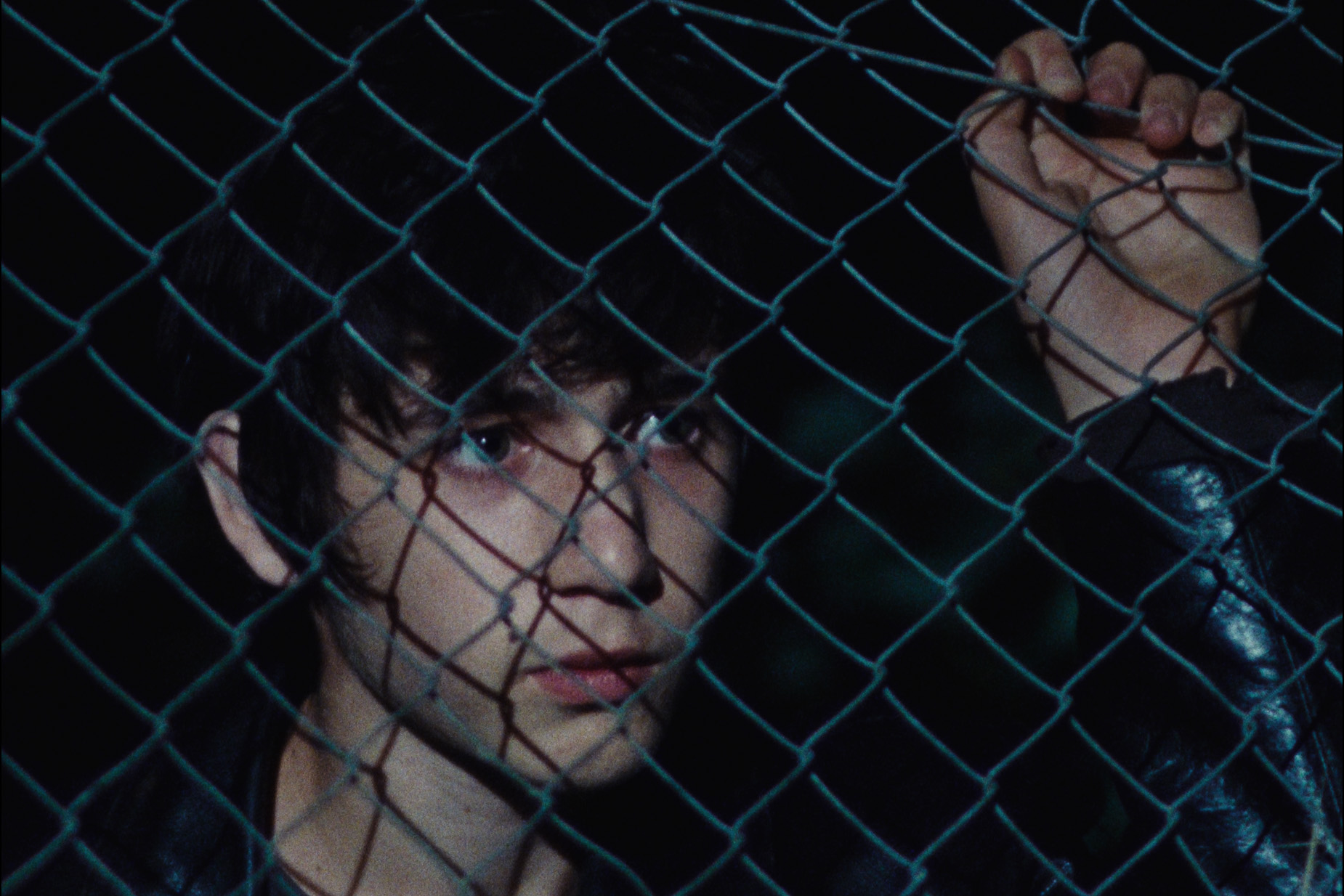
The lushly orchestrated film score strikes up in the opening scenes and reaches to a grand emotional scale. Combined with Françoise Lebrun’s voiceover and the masterfully employed light-and-shadow contrasts of the Super 16mm cinematography, it is clear the weighty themes of the story will not be grounded in a realistic narrative style.
As the emotionally shattered and bullied Otto, young French actor Milo Machado-Graner (Anatomy of a Fall) carries the film’s entire emotional weight with naturalness. Delivering an understated yet charismatic performance, Machado-Graner hauntingly evokes the protagonists of Truffaut and Bresson (not only because he bears a remarkable resemblance to Jean-Pierre Léaud). His gaze weighs upon our hearts like an invisible burden of conscience as he prints his farewell letter or prepares to leap from a railway bridge near the small Normandy town.
But the jump will not prove fatal, and the tragedy will not come to pass. That is, assuming it is not tragic enough in itself that a 14-year-old boy sees no other way out of his suffering. Driven by shock, shame, and growing anger, he decides to simply vanish from the world. He hides in the forest and takes shelter in abandoned buildings at night, until a schoolmate, Léna––portrayed by Jane Beever with equal subtlety and emotional depth–– spots him. Léna quickly feels an emotional bond and a shared sense of destiny with Otto, thus, instead of alerting the townspeople desperately searching for the boy, she helps him hide in an empty room of her mother’s motel.
It is here that we are drawn into Léna’s inner world. “I’ve thought about suicide, too. I think it’s completely normal,” the girl says, delivering a harrowing summary of her generation’s state of mind. It becomes clear that their bond is rooted in the possibility of liberation from constant loneliness. Their conversations finally begin to reveal what led to Otto’s decision, yet the gravity of the revelation is diminished by the soothing grace of their blossoming love and the romantic naivety surrounding the idea of escape.
No matter how likable the two captivating protagonists are, or electrifying the evocative cinematic style is, the fact remains the film started from a point where a boy wanted to kill himself. This places a burden of responsibility on the narrative that cannot be resolved by the adventurous spirit of a first love. A sense of generational crisis and depression is reflected not only in the media, but wherever we look. Therefore it is no surprise that total hopelessness at the threshold of adulthood has become a recurring theme in debut feature films currently. Thus, the subject calls for nuanced screenwriting and deep understanding rather than merely serving to lend a melancholic charm to a teenage romance.
Director: Félix de Givry
Writer: Félix de Givry, Marie-Stéphane Imbert
Cast: Milo Machado-Graner, Jane Beever, Françoise Lebrun, Maïa Sandoz, Emmanuelle Destremau
Running time: 93 mins.
Country: France, Belgium
Year: 2026
Rating: 3.5
Boldizsár Forró
©FIPRESCI 2026