
Meltdown: What Lies Beneath the Ice
Manuela Martelli’s The Meltdown, winner of the FIPRESCI Prize at Cinehill Film Festival, transforms the framework of a missing-person mystery into a subtle coming-of-age story about silence, memory, and the moral compromises that linger after dictatorship. Nataliia Serebriakova examines a film where political history and personal awakening gradually emerge from beneath an immaculate surface.
The Meltdown, directed by Manuela Martelli, which received the FIPRESCI Prize at Cinehill Film Festival in Fužine, resists the easy categorization suggested by its premise. At first glance, it appears to lean into the familiar mechanics of a disappearance thriller: a remote alpine hotel, a missing teenage girl, and a tightening circle of suspicion. But Martelli is far less interested in narrative resolution than in the slow, almost imperceptible shifts occurring within her protagonist—and within a society learning how to live with what it has chosen not to say.
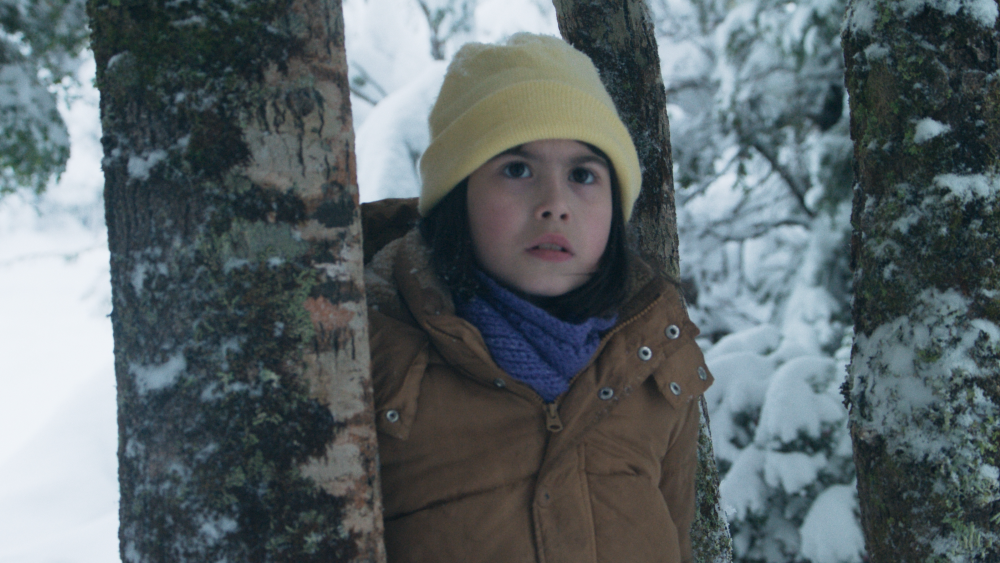
Set in 1992, in the fragile aftermath of Chile’s transition away from dictatorship, the film unfolds at the Vista del Volcán Hotel, an isolated resort suspended between breathtaking natural beauty and quiet, suffocating tension. At its centre is Ines, played with remarkable precision by Maya O’Rourke. Her performance is extraordinary: alert without being precocious, emotionally open yet increasingly guarded, she anchors the film with a presence that feels both entirely natural and deeply unsettling. Ines is not simply observing the world—she is absorbing it, processing contradictions that no child should have to carry.
Her parents are away in Spain, representing Chile at Expo ’92 in Seville, where the country famously exhibited a massive block of Antarctic ice as a symbol of its technological ambitions and global aspirations.
Ines’s unexpected friendship with Hanna, a German teenage skier, becomes the film’s emotional entry point. Despite the gap in age and experience, the two recognise something in each other: a shared sense of displacement and of being slightly out of step with the structures surrounding them. Their bond is quiet and tentative, yet it carries an emotional weight that lingers long after Hanna disappears.
From that moment, the film subtly shifts register. The search for Hanna is never treated as a conventional mystery to be solved. Instead, it becomes a catalyst, exposing the fault lines within the hotel, within the family that runs it, and within the broader cultural moment. Because of her fluency in English, Ines is drawn into the investigation as an intermediary between adults and children, locals and foreigners, truth and its strategic concealment.
Language functions not merely as a tool but as a mechanism of power. It grants Ines access while simultaneously burdening her with responsibility. She becomes a conduit through which information flows—and, crucially, through which it can also be withheld. This tension feeds directly into one of the film’s central concerns: the ethics of silence. The adults around her, particularly her grandmother, insist on discretion, prioritising the potential sale of the hotel over transparency. What emerges is a quiet yet incisive exploration of everyday corruption—not overt criminality, but the normalisation of compromise and the willingness to suppress uncomfortable truths in the name of stability and profit.
At the same time, The Meltdown operates on a deeply intimate level, examining mother–daughter relationships through multiple generations. Hanna’s mother arrives as a figure of raw grief and disorientation, searching not only for her child but also for something stable in a world that has shifted beneath her feet. Ines, drawn to her, begins to navigate a complex emotional landscape shaped by empathy, curiosity, and the projection of her own experience of parental absence.
The film carefully parallels this relationship with Ines’s own mother—physically absent and emotionally distant—and with her grandmother, whose authority is simultaneously protective and deeply compromised. These overlapping dynamics create a network of maternal relationships defined as much by absence and substitution as by care itself.
Martelli’s direction is patient and controlled, allowing atmosphere to carry much of the narrative weight. The snow-covered landscape, bright almost to the point of abstraction, becomes a visual counterpoint to the moral opacity of the story. Beneath the immaculate whiteness, something is always dissolving. The recurring motif of ice, subtly connected to Chile’s international self-image and its desire to present a polished face to the outside world, reinforces the notion of a reality that cannot retain its shape forever.
If the film occasionally edges toward more conventional suspense—supported by a score that briefly gestures toward thriller conventions—it ultimately resists those impulses. What matters is not the procedural explanation of Hanna’s disappearance but what her absence reveals. Ines’s journey is not about solving a mystery; it is about confronting the limits of understanding and recognising the gaps between what adults say, what they mean, and what they deliberately refuse to acknowledge.
The melting ice at the centre of the film becomes its most powerful metaphor, reflected in the title itself. As winter gradually yields to spring and the frozen landscape begins to transform, hidden truths slowly emerge. Yet the revelation remains painfully incomplete: only Ines understands what has truly happened, while the adults continue protecting their own versions of reality. The thaw brings change, but not necessarily justice or understanding.
By the end, The Meltdown abandons the very idea of resolution. What remains is something far more unsettling: the image of a child standing on the threshold of awareness, beginning to understand the structures of silence that define her world. In doing so, Martelli creates a film that is both politically attentive and emotionally precise—a coming-of-age story shaped not by revelation but by the recognition that truth is often negotiated, deferred, or quietly erased.
At certain moments, the film recalls the atmosphere of Evil Does Not Exist, directed by Ryusuke Hamaguchi, not through direct narrative parallels but through a similarly uneasy coexistence between humans and nature. This is especially evident in scenes of Ines alone in the forest: her small figure surrounded by trees, the overwhelming silence of the landscape, and the constant sense of an invisible threat create a fragile balance between the human and natural worlds. Martelli treats nature not simply as a backdrop but as an active presence, reflecting the characters’ inner lives and concealed conflicts.
The film’s visual language is further enriched by its bold combination of image formats. Martelli blends traditional cinematography with VHS footage, creating a layered sense of memory, fragmentation, and subjectivity. This stylistic choice never feels like a superficial exercise; instead, it reinforces the film’s central concerns with the persistence of the past, the return of personal and collective memories, and the impossibility of fully erasing traumatic experience. The result is a distinctive arthouse work that exists simultaneously as an intimate coming-of-age story, a political allegory, and a meditation on trauma, disappearance, and memory.
It is precisely this tension—between visibility and concealment, innocence and complicity—that gives the film its lingering power. And it is Maya O’Rourke’s luminous, deeply intelligent performance that ensures we feel every fracture as it slowly forms.
Nataliia Serebriakova
© FIPRESCI 2026