
The Blow: The Body's Unbearable Memory
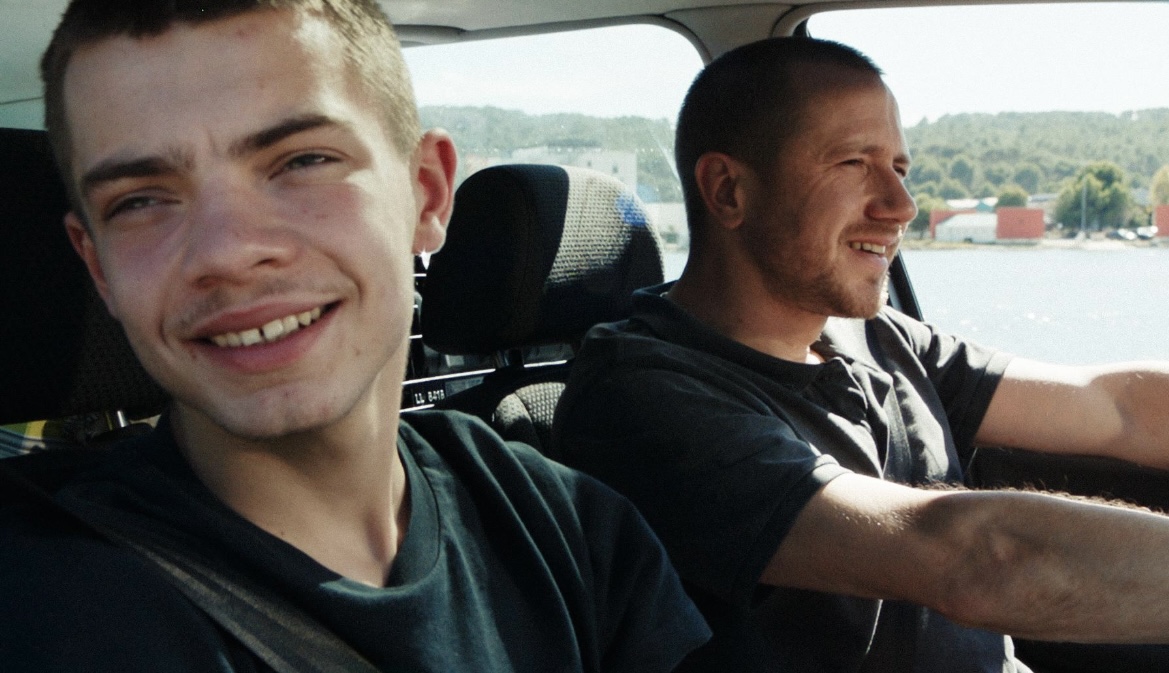
Norwegian film critic Britt Sørensen examines Julien Gaspar-Oliveri’s The Blow, winner of the FIPRESCI Award at the Festival del Cinema Europeo in Lecce, exploring how childhood trauma survives in the body and shapes the fragile bonds between siblings and their abusive father.
Calm breathing from two sleeping people, while the camera glides slowly and closely over human skin. Tender, tactile and intimate, the opening scene heralds some of the film’s themes: the body, protected by skin and at the same time unprotected and vulnerable. Two people’s close relationship with each other. That, too, is vulnerable.
The two are the young adult siblings Enzo and Carla Comini. She is a student; he tries to make a living by selling electrical items at the market in Marseilles. They live together in a simple apartment. We don’t learn anything about their mother. It may seem strange that she is not mentioned, but in my eyes it is a wise choice by the director and screenwriters. With a more or less present mother figure in the picture, the theme could partly have shifted to her co-responsibility for the siblings’ fate and situation. Now the responsibility is distilled to where it belongs. That is, with Carla and Enzo’s father, Anthony.
Just released from prison after five years, Anthony is invited by Enzo to live with them. Carla reacts with fury. Gradually, we understand why. At first, through subtle details – a line, a comment, a facial expression – the film moves towards a scene that, in all its unpleasantness, recreates Anthony’s sexual abuse of Enzo and Carla when they were children.
With their father back on the scene, Carla rejects him completely and moves into a dormitory. Enzo apparently reacts with the loyal child’s desire to love his father despite what happened. His approach to Anthony is as heartbreaking to witness as the psychological pain and repressed rage that gradually rise to the surface before exploding, brutally.
One of the film’s many qualities is how Julien Gaspar-Oliveri manages to find an exquisite cinematic language for the difficult, taboo subject he treats. The camerawork and editing alternate between raw, energetic scenes, often filmed in close-up, and slower scenes filmed from a distance. One bathing scene in particular makes an impression through the stark way it shows Enzo’s incipient regression. While Anthony, muscular and masculine, swims effortlessly in the sea, Enzo stands at the water’s edge, thin, freezing, uncertain, with his arms protectively crossed over his slender chest, like an overgrown child. Afterwards, they sit on the beach. Here, too, Anthony is relaxed and laid-back, while Enzo sits almost at his feet, like a little child begging for attention and recognition, with loneliness lying like an aura around his body.
The bathing scene is one of several that also show Gaspar-Oliveri and cinematographer Martin Rit’s effective use of the landscape in and around Marseilles. A dark theme bathed in light, in sun and natural beauty, in contrast to the less beautiful sides of human nature.
Diego Murgia and Romane Fringeli impress in the roles of Enzo and Carla. The film’s style, and their acting style, is naturalistic, restrained and extremely believable. Fringeli in particular brings Carla to life through small but effective gestures that give the character warmth and vitality. The siblings, and the depiction of their often conflictual but always caring relationship, are the film’s anchor. Anthony remains almost in our peripheral vision, yet in Bastien Bouillon’s no less impressive interpretation, he almost sucks the air out of the room.
Several of the films at this year’s Festival del Cinema Europeo were about toxic masculinity, and Bouillon’s contribution was perhaps the most disturbing. With exquisite, equally restrained means, Bouillon plays a character who can occasionally display flashes of charm, but whose coldness and social incompetence are always just behind a smile that rarely reaches his eyes. It is a precise, brave, eerie portrait of a man, just as Gaspar-Oliveri’s film is a precise, brave, genuinely cinematic and sensitive depiction of the physical, psychological and relational consequences of adults’ abuse of children’s bodies, and of their love and loyalty.
Britt Sørensen
© FIPRESCI 2026