
Truly Naked: Pornography, the Male Gaze and the Limits of Desire
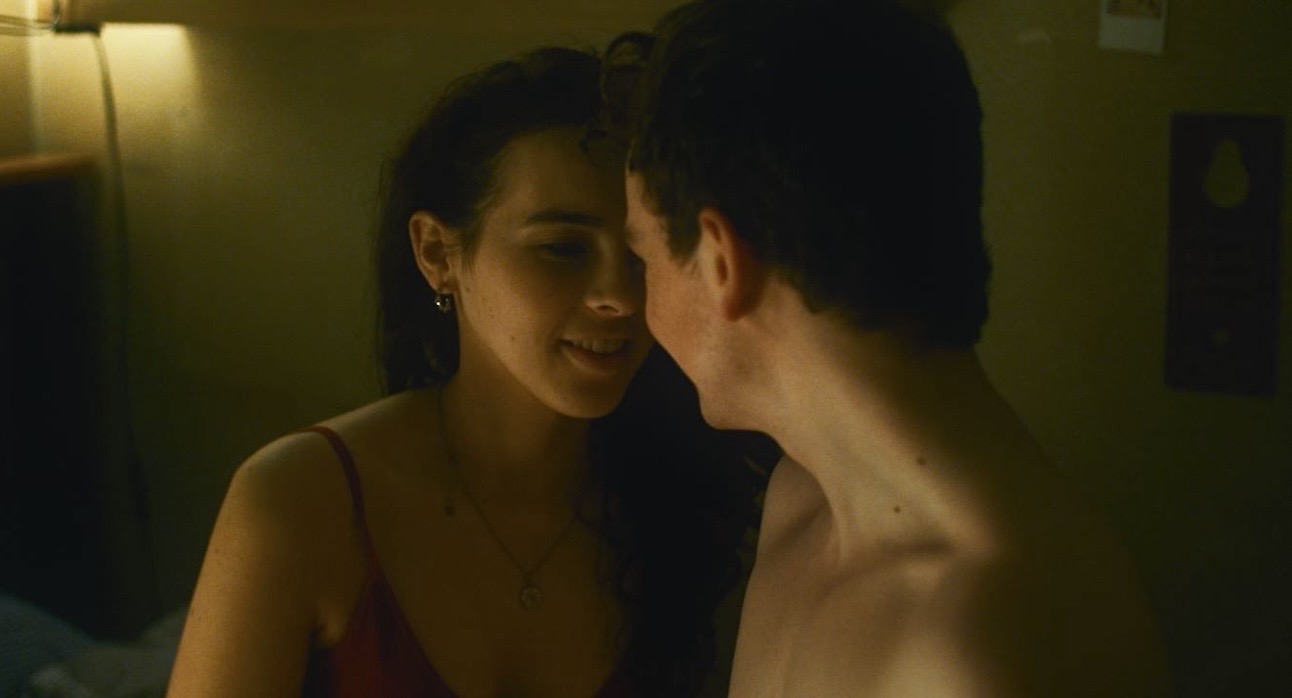
Argentine film critic Emiliano Basile examines how Muriel d’Ansembourg’s Truly Naked challenges the male gaze, exploring the power relations behind pornography, sexual desire and the representation of women.
Winner of the Best Screenplay Award at the 41st Mar del Plata International Film Festival, Truly Naked (2026) uses the world of pornography to examine the power structures that shape sexuality from a predominantly male perspective. Through an unconventional family story, the film explores the ethical and moral boundaries of desire, the exploitation of the body and the construction of a gaze that turns women into objects of consumption.
The story follows Alec (Caolán O’Gorman), a teenager with a taboo job: he films and edits his father Dylan’s (Andrew Howard) pornographic productions in an unusual family business operating inside their own home. There, he observes how his father, an apparently kind and affectionate man in the domestic sphere, struggles to maintain his career as a porn actor and attract followers to his adult content channel. The self-exploitation encouraged by social media, with its constant demand for new and increasingly extreme material, creates growing pressure within the household. Dylan needs to take pills, acquire new accessories and experiment with different ideas to maintain his subscribers’ interest. Yet behind this apparent commercial freedom lies a hierarchical structure: he runs the business, understands the preferences of male consumers and occupies the central position in the sexual performances. Women, by contrast, are subjected to a dynamic in which their bodies must meet the expectations of those watching and consuming the content. Although Alec is not entirely free from his father’s demands, his position behind the camera makes him a witness to the contradictions and abuses within this world. His encounter with Nina (Safiya Benaddi), an independent and unconventional schoolmate, radically changes his understanding of sexuality.
Nina plays a fundamental role in the film. She represents a generation that questions the consumption of pornography as a normalised practice and challenges the power relations embedded within it. When she becomes involved with Alec and his father, she constantly defies the rules governing their world. Her determination to see herself as a subject of desire and action, rather than accepting the passive position of an observed object, sets her apart from traditional representations of women in pornography. The issue is not simply rejecting a particular image of femininity, but challenging who controls one’s body, who decides how it is presented and from whose perspective desire is constructed. In this sense, Nina embodies a form of emancipation that does not depend on male approval or the gaze of the consumer.
Through this contrast, Truly Naked shifts the discussion away from the explicit representation of sex towards the problem of the gaze itself. The film draws a significant distinction between sexual desire and the desire for domination that may lie behind certain forms of consumption. From whose perspective do we look? What position do we occupy when participating in an industry that reproduces unequal relationships? To what extent are those who film, perform and consume part of the same power structure? Alec’s journey involves precisely the process of recognising what the camera cannot capture: intimacy, vulnerability and the possibility of establishing a relationship with another person without turning them into an image available for consumption.
Although the film initially presents itself as a transgressive proposition, its resolution ultimately moves towards a more conventional resolution of the conflicts, softening some of the radical implications of its premise. Nevertheless, Alec’s dramatic arc finds its transformation through his encounter with Nina and his discovery of a different way of relating to others. The real rupture does not lie in abandoning an activity considered socially taboo, but in questioning the power relations that sustain it. The strength of Truly Naked lies in this reversal of perspective: no longer filming women as objects, but recognising them as subjects. Emancipation does not mean finding a place within male desire; it means having the freedom to decide how, when and from what position to desire.
Emiliano Basile
© FIPRESCI 2026