
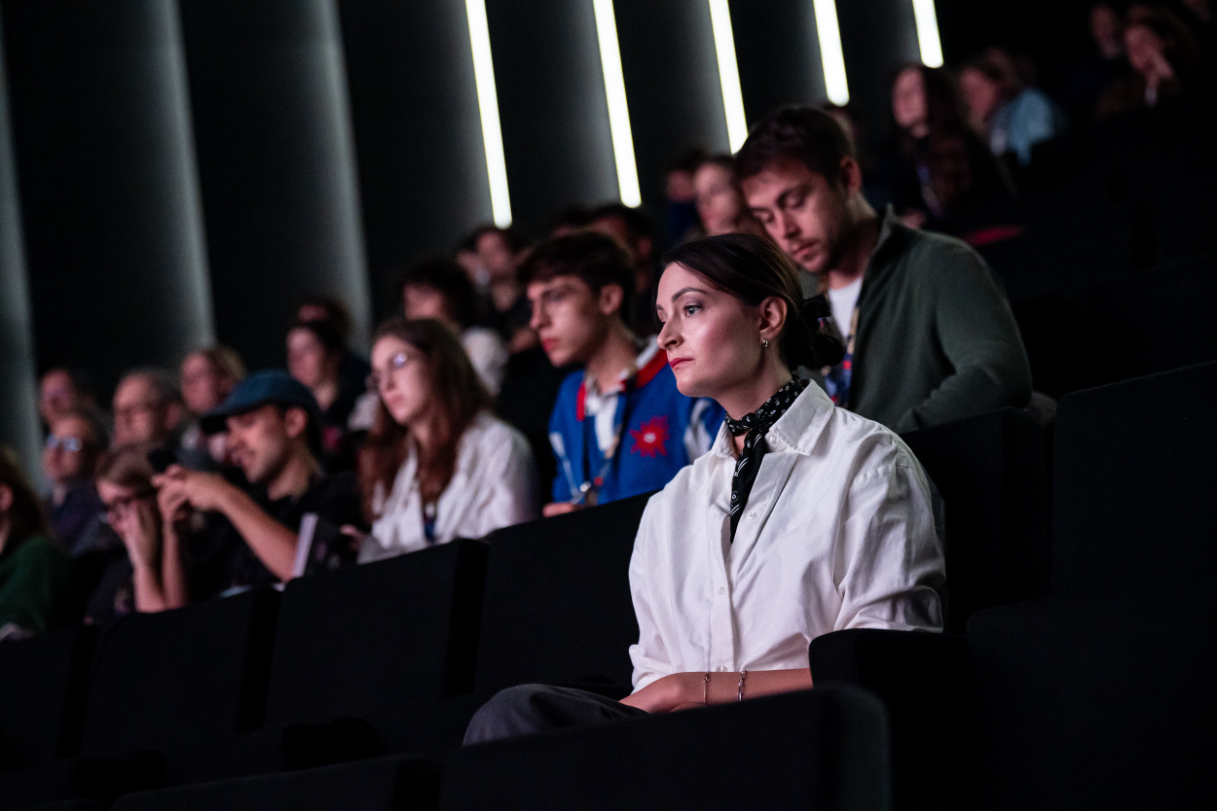
A panel titled “How Can Stories Travel” was held on October 14 at the 42nd Warsaw International Film Festival, in the underground cinema hall set up in the Polish capital’s Museum of Modern Art. The discussion explored the potential for international reach, the role development process plays in shaping stories that resonate across borders while remaining authentic to their local context, and also how feedback following international meetings and pitches alters the fabric of a story.
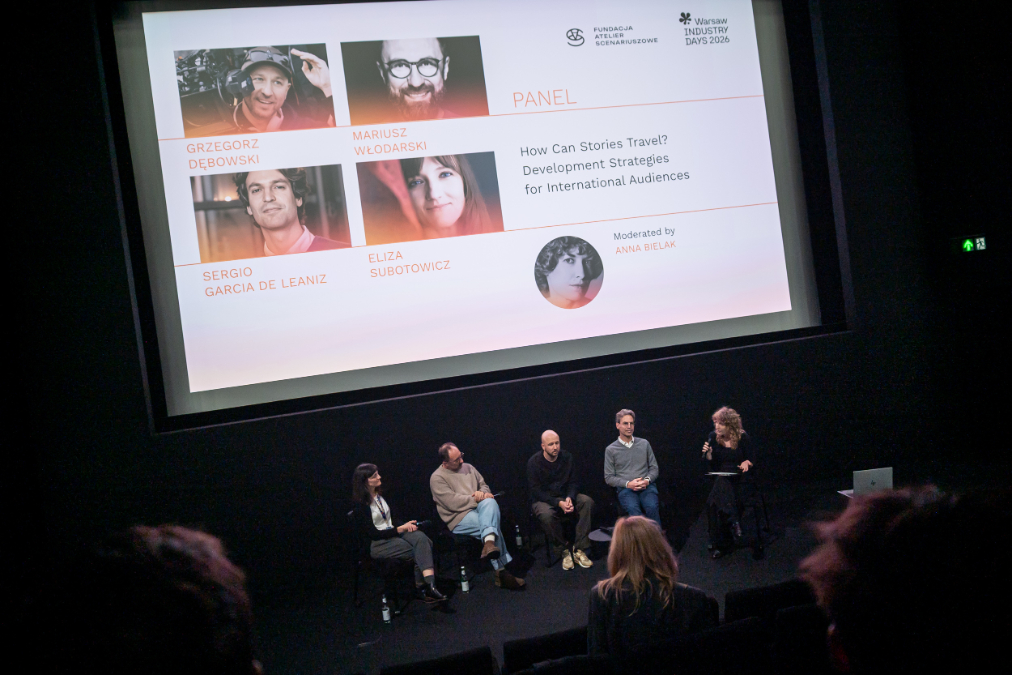
A highly qualified group of experts discussed the topic on stage: Film director Grzegorz Dębowski, whose second feature film What Belongs to Others premiered at this year’s Venice International Film Festival and competes in the Warsaw festival’s International Competition; Sergio Garcia De Leaniz, an Eurimages project manager who worked on productions including Sentimental Value and Fjord; Mariusz Włodarski, producer of internationally acclaimed films such as the Oscar-nominated The Girl With the Needle; and Eliza Subotowicz, director, writer, script consultant, and artistic director of HerArts Filmlab. Screenwriter and script consultant Anna Bielak moderated.
Participants were asked to identify a single key factor that allows stories to thrive across borders. Their answers rapidly showed, as is often the case in filmmaking, there are no universal or foolproof formulas. While Dębowski highlighted honesty, Subotowicz pointed to the existence of universal themes that can be understood by everyone, regardless of language or cultural background. “There is a character who might live in Africa but what she’s going through is exactly how I feel, and I think that is the greatest power of cinema”, she added. Włodarski added that storytelling is an activity that has been fundamental to human existence for ages: “I don’t read stories as a producer, it would be completely wrong… when a story moves me, I would like to think it will move everybody else as well.” De Leaniz offered a more practical take on the topic, pointing out that films resulting from cross-national collaboration reach “three times as many locations as singularly domestically produced works.” Thus, an international dimension can also serve as a means for a story to travel far.
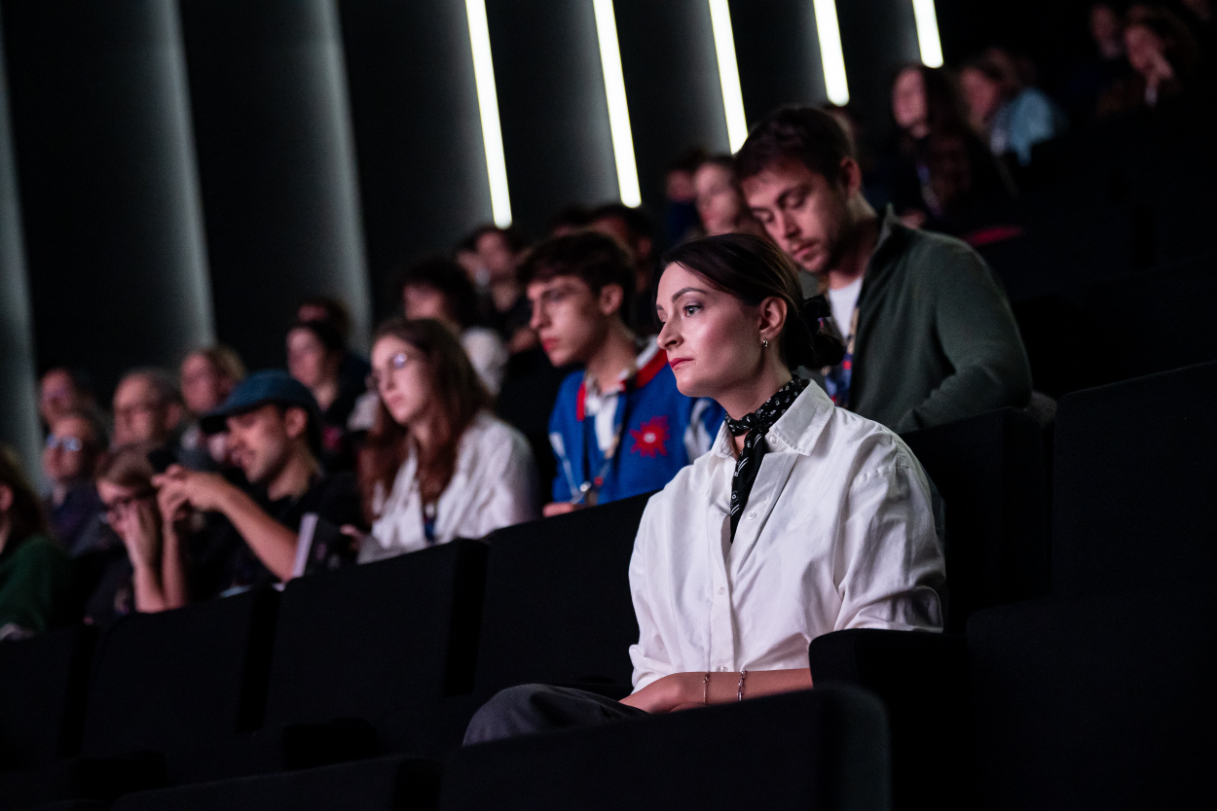
Bielik steered the conversation towards pitching before an international audience. Włodarski brought an interesting perspective here, as he believes that universality – understood as an influence of other cultures on your story – begins well before the actual pitching. After all, for an application to be considered it has to catch the selectors’ attention first. This sparked further discussion; Subotowicz stressed that feedback is great, but sometimes you must know when to reject it, and accept alienating some audiences. Włodarski expanded on that: “You are the gatekeeper of your own story”. But this “pitching and shared expectations” approach did not satisfy everyone. Dębowski’s counter was searching for the unexplored: “Go to two-three festivals, watch about 60 movies, and you will feel what kind of films are missing; what movies you should make”.
Returning to the point that the how is just as important as the what when telling a story, Białek raised the question of how genre can influence a film’s accessibility for audiences and its chances of securing financing. De Leaniz admitted that it can have an impact, as some genres “travel more easily” than others. However, he suggested that understanding the target audience is more important. “Even films that are less accessible or aimed at niche audiences may find similar audiences in different countries. Genre serves as a simplifying label that helps connect these potential audiences with the films themselves.”
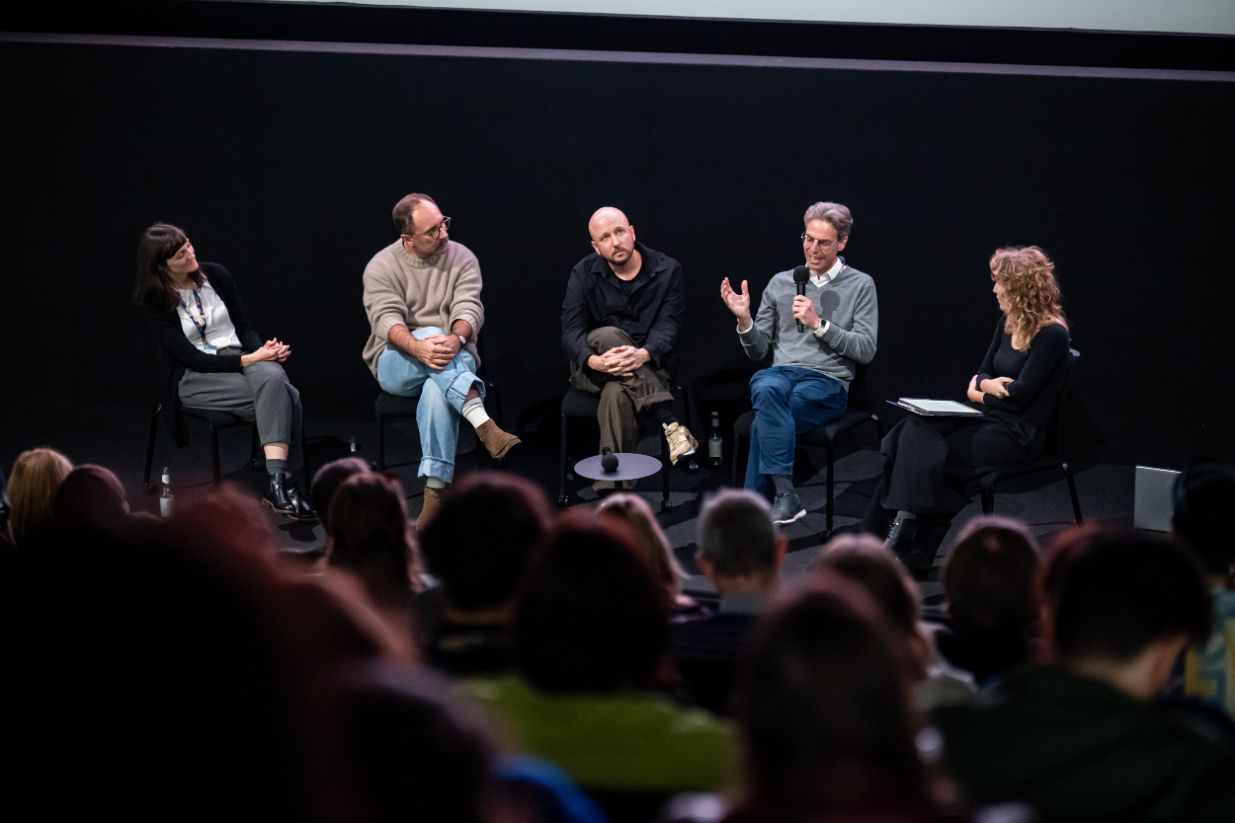
In Subotowicz’s view, the choice of genre should feel organic, as excessive calculations could easily work against a project. Dębowski likewise acknowledged the paralysing force of genres – for him there was a point when he stopped being afraid of thinking in such conventions. “When I was graduating film school, I still thought genre was a set of rules that you must follow. But then I started watching Korean films. Those guys are decades ahead of us, not afraid of mixing genres scene after scene.” Reflecting on his experience producing The Girl with the Needle, Włodarski argued that horror films travel most easily across borders, as they have a stable audience worldwide drawn to the core emotion of fear.
Subotowicz suggested clarifying the initial question. What exactly do we mean when we say that films travel? Are we referring to the visibility they gain at international festivals or the success of their distribution? De Leaniz clarified that at Eurimages the term does not necessarily refer to the commercial circuit, a note that drew emphatic support in the room.
When it came to the role of film festivals, however, the participants offered different perspectives. Włodarski described festival selectors as gatekeepers, responsible for their audiences as viewers place trust in their choices. De Leaniz, by contrast, saw selectors more as connectors between local audiences and filmmakers. “It’s fascinating, as a social experiment, to see how different audiences at film festivals choose to watch films they often know nothing about beforehand, in languages they don’t speak, with only subtitles.” He appreciates festivals for creating such opportunities, rather than focusing on financial returns, highlighting how enriching they can be.
The talk raised a lot of questions, with requests for tips and directions pouring in from the audience. What stuck out, however, was a question about the relationship between a story’s international appeal and controversy. Subotowicz answered, invoking Fjord, a movie about a conservative family’s conflict with the Norwegian social services that are trying to take away their children. Its seeming incompatibility with political labels provoked a sizable online discourse. De Leaniz offered a similar example with Sundays, a Spanish movie following a young woman who wants to become a nun, which was championed as a landmark of conservative and anticlerical cinema both – depending on the viewer’s political standing.
The discussion culminated in a flipped version of the opening question: “how to make a story that travels?” The answers formed an evergreen advice: stay true to yourself (Dębowski), be open (Subotowicz), remember that film is a collective effort (de Leaniz), and work with the right people (Włodarski).
Stories travel in many ways and through many outlets: you might seek international voices, rely on word-of-mouth, or target novel interpretations of known themes. They all come down to affect, however, so it’s no wonder that the subject of emotions underpinned most of the speaker’s points.
by Łukasz Al-Darawsheh, Lehel Fazakas, Boldizsár Forró
©FIPRESCI 2026