
From Contestation to Containment? Reflections on MIFF 2004–2026 and the Changing Space of Documentary Cinema
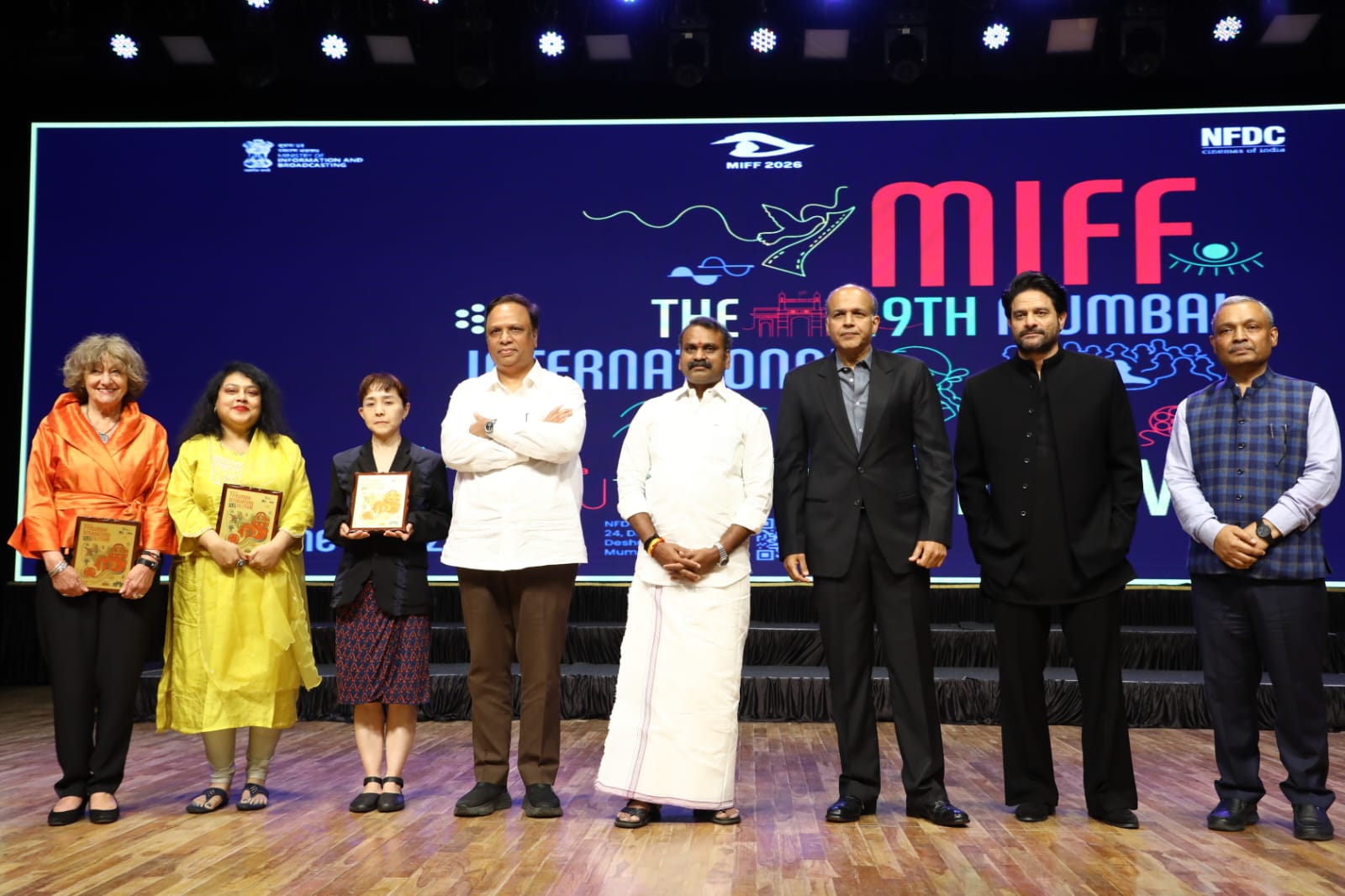
Having served on the first FIPRESCI jury invited to the Mumbai International Film Festival in 2004, Barbara Lorey de Lacharrière returns for the festival’s 19th edition with a unique long-term perspective. Looking beyond the films themselves, she reflects on more than two decades of institutional change and considers how the spaces in which documentary cinema is presented—and discussed—have evolved.
Returning to Mumbai for the 19th edition of MIFF in 2026 was, for me, more than a return to a festival. It was a return to a place that occupies a particular chapter in my own journey as a film critic.
For decades, MIFF has presented itself as one of the largest and most prestigious festivals dedicated to documentary, short, and animation cinema, bringing together filmmakers and professionals from across the world while fostering exchange, debate, and creative dialogue. It is precisely this ambition that has made the festival an important reference point within Indian documentary cinema—and one that FIPRESCI has accompanied, if at times along a rather bumpy road.
In 2004, I had the privilege of serving on the first FIPRESCI jury invited to MIFF. It was a moment when the festival became the stage for a major debate about documentary cinema, freedom of expression, and the relationship between independent filmmakers and state institutions.
Following the introduction of a requirement that all Indian entries obtain certification from the Central Board of Film Certification, hundreds of documentary filmmakers protested by withdrawing their films. Across the road from the official venue, the independent initiative Vikalp: Films for Freedom, organised by the Campaign Against Censorship, became an alternative festival in its own right. There, films excluded from the official programme found an audience, and debates about documentary cinema unfolded publicly and passionately. The tensions surrounding MIFF were visible, explicit, and impossible to ignore.
Ten years later, in 2014, MIFF’s collaboration with FIPRESCI came to an end. The interruption lasted a decade, until the welcome return of a FIPRESCI jury in 2024, celebrated as a renewed commitment to international critical dialogue.
During those years, the institutional framework surrounding the festival also underwent a profound transformation. Following the merger of the Films Division into the National Film Development Corporation (NFDC) in 2020, MIFF became fully integrated into the institutional framework of the Ministry of Information and Broadcasting. The festival’s evolution over the past decade cannot be understood without taking this structural change into account.
This shift was not merely administrative; it inevitably altered the institutional context in which the festival now operates.
Returning more than twenty years after my first visit, I therefore encountered a very different landscape. The question is no longer simply one of visible confrontation or direct censorship. Rather, it concerns the ways in which cultural space is organised, curated, and presented.
The result is not necessarily the absence of debate, but a different form of negotiation around what becomes visible within the official festival space. The 2026 programme reflected a strong emphasis on themes of national heritage, technological innovation, and institutional achievement. While this programming strategy undoubtedly reflects contemporary priorities, it also seemed to leave less room for the socially and politically investigative documentary tradition that has historically distinguished Indian non-fiction cinema.
Yet documentary cinema has a remarkable capacity to create spaces of truth even within constrained environments. Among the twenty-six films viewed by the FIPRESCI jury, several works powerfully demonstrated that independent cinematic voices continue to emerge.
Our FIPRESCI Award went to Hug of Emptiness, directed by Pradeep Kenchanuru, a deeply moving portrait of a solitary struggle for justice. With remarkable restraint, the film follows a man who, having lost everything, gradually rebuilds his life over more than two decades. Without dramatic gestures or rhetorical emphasis, it transforms endurance itself into a quiet act of resistance.
Another memorable discovery was Waai, directed by Sainath S. Uskaikar and recipient of the Silver Conch for Best Indian Documentary. Beautifully photographed, the film follows the last four Waai singers of a Muslim nomadic community in Kutch, capturing both the poetry of their wandering lives and the fragility of an oral tradition on the verge of disappearing.
Equally compelling, Jatra Pala: The Echoes of an Open Stage, directed by Arghhya Mukherjee, celebrates the resilience of Bengali folk theatre and the determination of those who continue to preserve this living cultural heritage despite the pressures of the digital age.
Ultimately, however, the vitality of MIFF does not reside only in its official ceremonies, institutional structures, or programmed selections. It also lives in the conversations, encounters, and unexpected exchanges that take place around them—in the corridors, cafés, and informal gatherings where filmmakers, critics, and audiences continue to share ideas freely.
Perhaps this is precisely why the return of FIPRESCI matters. Not because international critics possess any special authority, but because dialogue between festivals, filmmakers, and independent critical voices remains one of the essential conditions of a living festival culture. Institutions evolve. Festivals change. Yet the responsibility of criticism remains the same: to observe carefully, to engage honestly, and to keep open the spaces where cinema can still surprise, question, and challenge us.
Barbara Lorey de Lacharrière
Edited by Robert Horton
© FIPRESCI 2026