
Each Has a Different Color”: Flying Ideas in a Stable Land
Two Turkish features in the FIPRESCI competition, Cinema Jazireh and On the Dry Rock, stand out as films that entangle human and place into a complex relationship. Flying Broom International Women’s Film Festival offers audiences a chance to discover works especially by female Turkish filmmakers, who are often less globally renowned than their male counterparts.
When I attended the Flying Broom International Women’s Film Festival in Ankara, Türkiye, it was my first time visiting the country, but certainly not my first time watching Turkish cinema. I have explored a lot of Turkish films before and seen the authentic details and symbols in their cinematography. The unique thing about the Turkish films that were selected for this festival is that these films were directed by female filmmakers.
There are many famous male Turkish directors like Nuri Bilge Ceylan, but female Turkish filmmakers rarely achieve global fame. While some female directors like Deniz Gamze Ergüven, Pelin Esmer, and the iconic Bilge Olgaç have made a name for themselves, many Turkish female filmmakers are still steps behind their male counterparts in the international film industry.
From this point comes the importance of the Flying Broom International Women’s Film Festival, which gives female filmmakers from Türkiye and several other countries a platform to present their point of views and perspectives about cinema and life. “Each Has a Different Color” was the title of the competition from which the jury chose the winner of the FIPRESCI Prize. With a variety of voices and spirits, there were eight films from different countries: Afghanistan, Paraguay, Belgium, Tunisia, the USA, Pakistan, Brazil, and, of course, Türkiye.
There were two Turkish films in this competition: Cinema Jazireh (2025), a feature film directed by Gözde Kural and the documentary On the Dry Rock (2026, Kuru Taşın Başı), directed by Yeşim Ustaoğlu and Jasmin Selen Heinz.
After her debut film Dust (2025), Turkish filmmaker Gözde Kural came again to Flying Broom, where the festival screened Cinema Jazireh, her second feature. This film follows Leila (Fereshteh Hosseini), an Afghan young lady who loses her son. After her husband is killed, Leila is forced to search for her son alone in Afghanistan, where the women fight daily against the upper hand of the Taliban. The film had its world premiere at the Karlovy Vary International Film Festival in 2025.
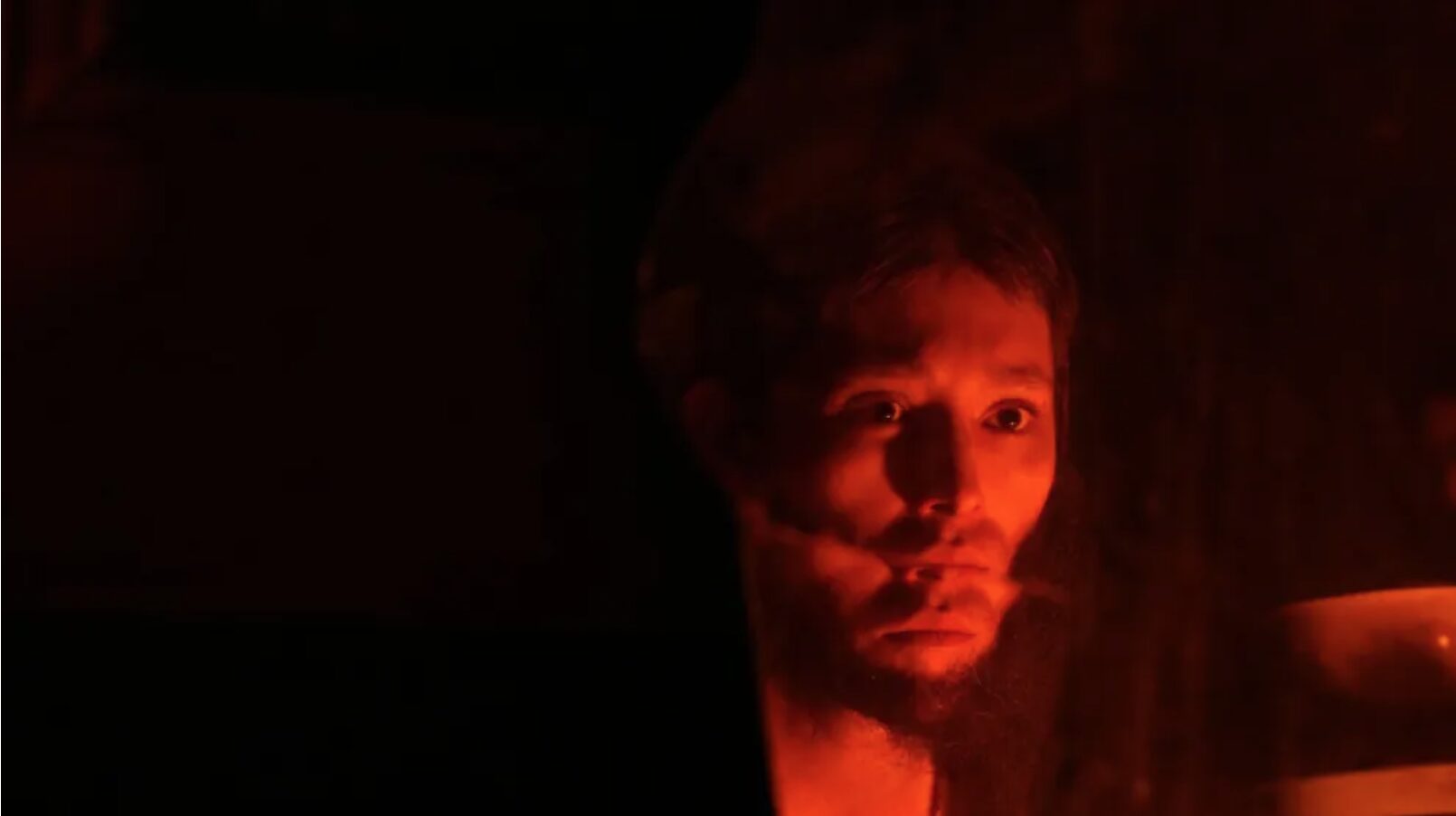
Kural’s camera shows the complexity of this hard journey. Leila seeks her dead husband’s help by cutting off his beard and using to look like a man. Then, there is the titular Cinema Jazireh, a place in the desert where men go to have fun. These patrons solicit services from Zabur (Mazlum Sümer), a young man raised there who works as a dancer and sex worker.
Leila goes to Cinema Jazireh as she thinks her son is there, but then she meets the young Azad (Ali Karimi), marking a new chapter of both of their lives. Their stories begin to run parallel, where destiny crosses their paths and forces them together into an unknown future. As a director and scriptwriter, Kural presented her perspective at the festival by showing close-up shots that catch Leila’s fearful expressions.
Flying Broom followed up with the fresh documentary On the Dry Rock by Turkish filmmaker and screenwriter Yeşim Ustaoğlu and emerging Turkish director Jasmin Selen Heinz. The co-directors capture an authentic topic that took place in the Defne district of Türkiye’s Hatay Province, where a flood flowed through the land and the people lost both their houses and their identities. It was presented with an angry political voice.
On the Dry Rock features long shots of this deluged land as a visual elegy by showing the landscape before the flood and after it. The film presents the struggles of the people who live there, who move to new homes but without memories, so they go back to their land, which also holds their identities.
There is a common point between Cinema Jazireh and On the Dry Rock: the relationship between humans and place. This relation is not complicated without the presence of Cinema Jazireh itself as a place and without Hatay’s Defne district. Although Cinema Jazireh and On The Dry Rock are different genres and have different forms (documentary and feature), their filmmakers try to show the audience their perspective of cinema and life from the female gaze, whether it is in Türkiye or Afghanistan.
While Ustaoğlu and Heinz’s film follows real life, Cinema Jazireh shows a story based on true Afghan women’s experiences. Kural ends her film with written messages from Leila to her son, and perhaps to other Afghan mothers, as Leila is just one case that we see onscreen. Like the people of Hatay’s Defne district, all of them struggle in different places and are seen through the female gaze.
Omnia Adel
Edited by Olivia Popp
©FIPRESCI 2026