
A Fine Balance Among the Lakes
Between the Screening Room and the Campfire: Notes on the 2026 Edition of Cinehill Film Festival
At Croatia’s Cinehill Film Festival, critic Petra Belc Krnjaić reflects on a festival where arthouse cinema, genre filmmaking, and communal experiences coexist in rare harmony. Set amid the forests and lakes of Gorski kotar, Cinehill demonstrates how a carefully curated programme and a distinctive festival atmosphere can transform filmgoing into a shared cultural experience.
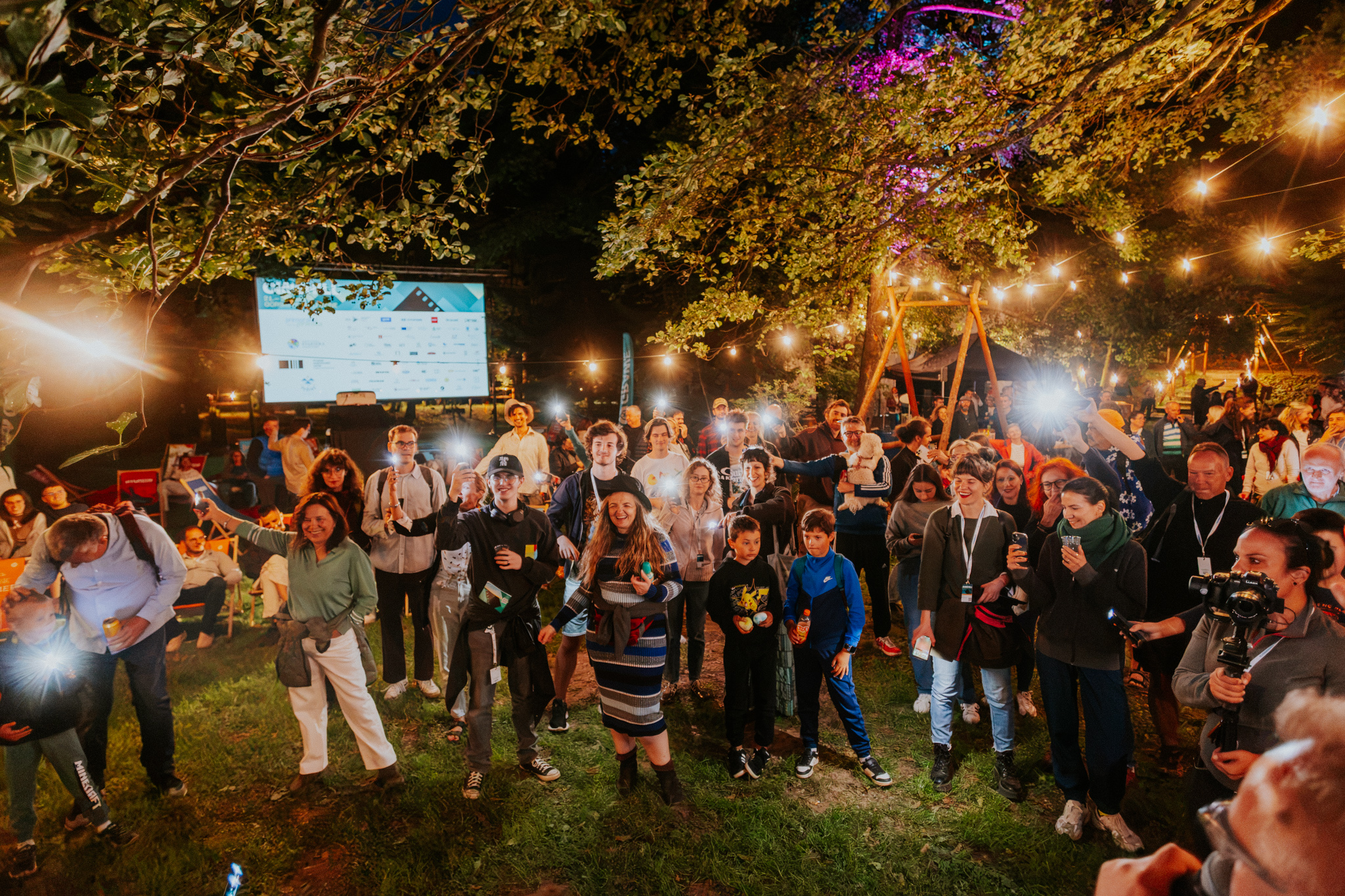
Cinehill is not just a film festival, it is a cinematic event. For the last two years the festival has been taking place at the end of July in a little town of Fužine, located 730 meters above sea level in the Croatian mountain region of Gorski kotar (the Mountain Region) with two large lakes spread out in around the town. Unlike the majority of other festivals, Cinehill’s philosophy is to integrate cinema in a local environment, creating cinema halls where no one ever thought they might exist, and giving its audience a larger experience of communal film watching. Besides the main competition program and screenings of short films, the festival combines the discursive program with various workshops and communal events for children and adults, featuring local gastronomy and culture, alongside pop-up events in the main festival venue located in the scout centre in the woods.
The films in this year’s festival program spanned a broad arc with several distinctive poetic traits, reflecting complementary differences in the festival programming shaped by the four selectors’ voices. The arthouse films such as Emmanuel Marre’s A Man of His Time (Notre Salut), Andrey Zvyagintsev’s Minotaur, Fernando Eimbcke’s Flies (Moscas), winner of the Great Propeller, and Manuela Martelli’s Meltdown (El Deshielo), which took the FIPRESCI prize, were screened back-to-back with the nerve-wracking thriller Los Tigres by Alberto Rodriguez, Anke Blondé’s narrative drama Dust and the meta-slasher Teenage Sex and Death at Camp Miasma by Jane Schoenbrun. The poetic divergence of the films did not create a feeling of dispersion or unbalanced programming, but quite the opposite— this pairing of different sensibilities enabled each film in the program to shine with its uniqueness and particularity, creating at the same time a fine balance of entertainment and intellectual musing attuned to the numerous sensibilities which undoubtedly always mark the contemporary festival audience.
Contemporary Cool
French director Emmanuel Marre, who stands behind A Man of His Time, seems to have made a rare gem among the period-piece dramas focusing on the World War II. The film won an award for the best screenplay at this year’s Cannes main competition program, but after watching the film one gets an impression that the work’s qualities move well beyond its written script. A Man of His Time is based on the correspondence between the author’s great-grandparents during the years of Vichy France, and its epistolary form anchors the narrative of the film. Henri Marre (Swann Arlaud) is a seemingly idealist middle-aged engineer who wrote a political manifesto, somewhat of a plan on how to save the country. By trying to climb up the social ladder he is trying to secure himself a position in the Vichy administration in order to implement his vision, all the while his wife Paulette (Sandrine Blancke) struggles with the constraints of motherhood and war-time poverty, eagerly awaiting Henri’s success in whom she invested her entire inheritance. The slow-paced narrative unfolding plastically fleshes out the ambiguities of political situations which characterised the European Nazi-puppet regimes, while the cinematic space which Emmanuel Marre manages to create, both stylised and hyper-real at the same time, lends a unique quality to the depiction of an individual engulfed by his ideals and constrained by his mediocrity. The texture of the image resembles a 16mm blowup with occasional use of direct flash, the film features stylised cinematic excursions with soundtracks of Alphaville (Sounds like a Melody), Hot Butter (Popcorn) and Opus (Life is Life) which bring an unexpected yet well balanced contrast to the hyper-real documentary camera modelled in the style of the well-known series The Office. The latter is an interesting aesthetic choice, grounded in the fact explained by Marre himself in an interview describing his research into the archives of the Vichy Ministry of Labour / The Unemployment office, where he found almost Kafkaesque details of labour force evaluation, presented also in the film itself. At the same time historically interesting and contemporarily appealing, A Man of His Time stands out for its aesthetic choices and obvious self-awareness of the medium in which it was made.
Another example of an interesting treatment of cinematic storytelling is Jane Schoenbrun’s Teenage Sex and Death at Camp Miasma, a meta-commentary on the culture of slashers and a love letter to the genre, including a critical reflection on the transphobia inherent to horror. Schoenbrun uses feminist film theory in their storyline, in particular Carol Clover’s Final girl theory. As proposed in her 1987 essay “Her Body, Himself: Gender in the Slasher Film”, Clover analyses slashers as a symptom of the 1970s and 80s fear of liberated teenage sexual practices, with the chaste and prudish final girl overpowering the male killer. Schoenbrun’s film revolves around a young director Kris (Hannah Einbinder) passionate about doing a remake of the fictional Camp Miasma slasher which became a cult-classic franchise, and the original Miasma final girl Billy Preston (Gillian Anderson) whom Kris wishes to be a part of the remake. Clover’s essay invokes Laura Mulvey’s concept of the male gaze which, as the film progresses, switches the focalisation to the female perspective, and Schoenbrun explicitly picks upon these theoretical points in order to subvert the rules of the genre and use them as narrative devices in their plot. After Kris visits Billy, who strangely remained living in the deserted camp where the original Miasma was shot, Schoenbrun takes the viewer on a dizzying ride through an amusing theoretical deconstruction of horror and the slasher, merged with experimental cinematic procedures and the flesh of a 35mm celluloid on which the film is shot. The Killer’s gaze is transgender, the Final girl begins enjoying her sexuality once she explicitly assumes the Killer’s gaze, and the ending leaves us not with one but two lesbian Final girls. Locations and characters verge on the border of plausibly horrific and aesthetically fantastic and no one is spared in the process — including the fictional Hollywood producers of the film.
Tight Narratives and Gripping Stories
On the other side of the spectrum are full-blooded storytelling pieces such as Los Tigres or Dust. Although different in their aesthetics and the cinematic treatment of time and space, both films are plot driven psychological dramas circling around financial problems pressing their main characters. In Los Tigres it is the siblings, Antonio (Antonio de la Torre) and Estrella (Bárbara Lennie), whose diver father heavily conditioned their lives, that find themselves in an unwanted situation of owing a large amount of drugs to the narco mafia. After being unable to find a consensus with his ex-wife over spending time with their daughters, divorced professional diver Antonio decides to recoup the costs of alimony by selling cocaine he accidentally discovers being smuggled at the bottom of an oil tanker he regularly maintains. Estrella helps him with the plan, but both of them are running against their own physical conditions — Estrella is unable to dive below 20 meters as a result of a mistreated childhood diving accident, while Antonio reached a point of high-risk if he continues to dive, due to his body being heavily affected by severe cardiovascular strain and cellular hypoxia caused by decades of high-pressure deep-sea diving. The nerve-wracking cinematic experience is not caused solely by this tight running against odds with every plunge Antonio makes. A large portion of the film takes place underwater, shot by Spanish cinematographer Pau Esteve Birba, and depicts heavy industrial diving in Ría de Huelva which is an industrial estuary in the southwest of Spain housing a large petrochemical complex. Set against this bleak industrial background, Los Tigres is at the same time a grim reminder of the dangerous and toxic practices needed to sustain humanity’s contemporary lifestyle.
Dust moves in an opposite yet equally dramatic direction. The film is inspired by a corporate scandal of the Belgian software firm Lernout & Hauspie in 2000, and depicts 24 hours in the lives of Luc (Jan Hammenecker) and Geert (Arieh Worthalter) as they are trying to navigate corporate fraud and financial collapse. A software programmer and a manager desperately roam around the vividly depicted Flanders countryside, named the Flanders Language Valley for the ambitions of the L&H company, each with his own set of issues they need to settle both with their imminent environment and themselves on the eve of their arrest. Their hopeless rush is interspersed with flash backs in warm tones, while the “present-day” storyline uses slightly desaturated cold tones and glassy feel which mimics the corporate aesthetic of the late 1990s. Quality and framing resemble high-end television dramas, and with its tight editing and strong directing Dust functions unexpectedly well on the big cinema screen.
Arthouse Authorial Genre and Punk Catholicism
FIPRESCI-awarded Chilean drama The Meltdown by Manuela Martelli, also moves along the genre-defined borders, elevating the frame of mystery thriller and a mother-daughter relationship to a modernist reflection on the Chilean troubling post-Pinochet era. Just as in Zvyagintsev’s Minotaur, The Meltdown enshrines the collective within the individual, and the viewer is left with an emotional and intellectual task of unpacking the nuances and repercussions of the characters’ ethical decisions. The Altar Boys (Ministranci) by the Polish director Piotr Domalewski opened this year’s festival while Teona Strugar Mitevska’s Mother screened after the award ceremony. Both films enter the territory of punk Catholicism, showing that Christianity still carries significant weight in the contemporary secular society but is no longer sacred and allows for some individual fine tuning. The Altar Boys is a warm comedy drama focusing on four altar boys who decide to follow Christ’s philosophy of rebellion and misbehaviour in order to rectify the flawed nature of priesthood, while Mother depicts the final days of Mother Teresa (Noomi Rapace) before leaving to establish her own order. Mitevska’s Teresa is as uncompromising as she is deeply human in her struggle to find a balance between divine calling and the guild-ridden human nature, with the director’s use of subtle stylised framing and metal and rock music, accentuating the complex nature of embodied divinity.
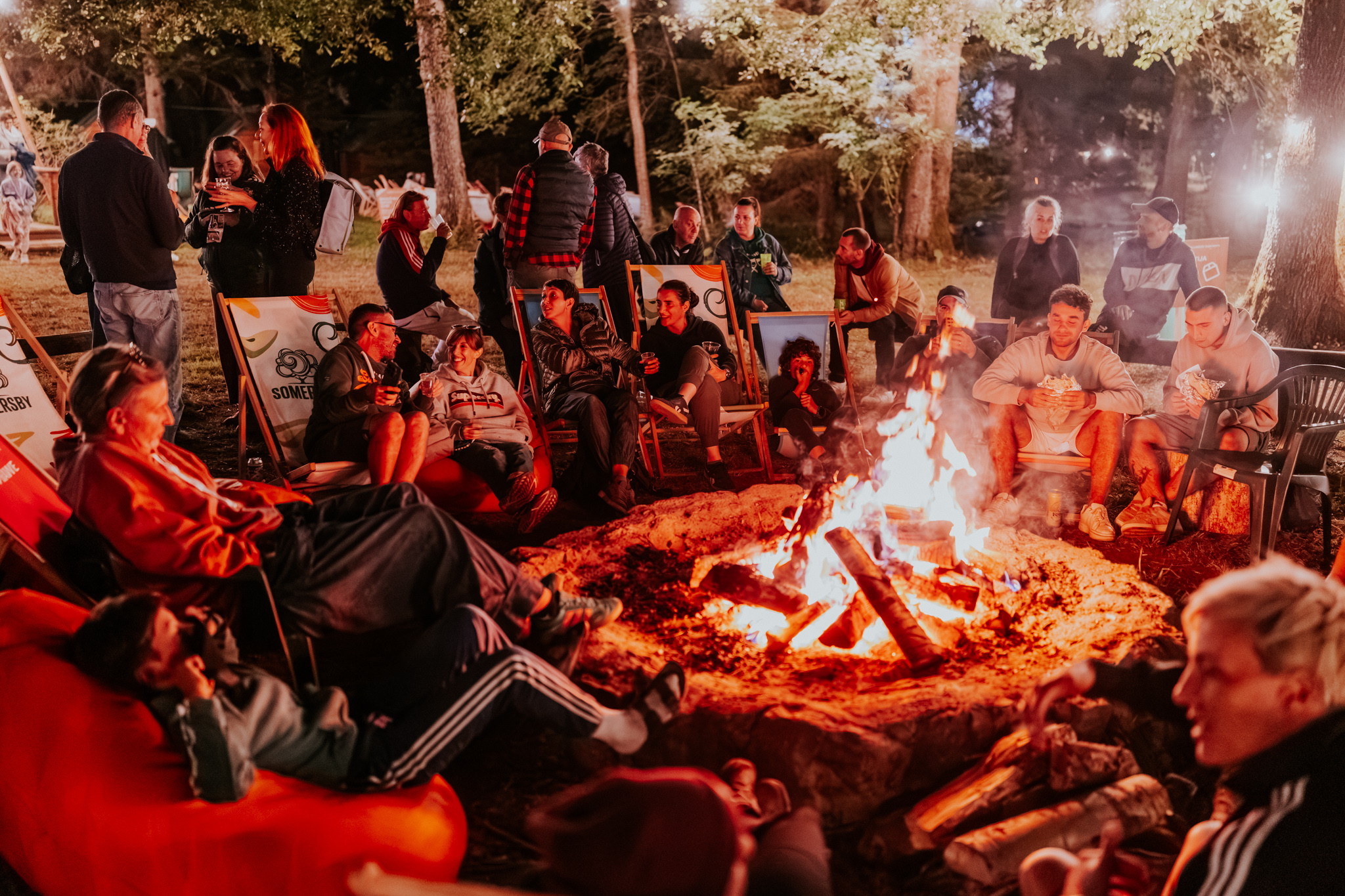
The variety of films shown in the main competition program and side-screenings — such as Damjan Kozole’s OHO Film about the Slovenian Yugoslav avant-garde collective, a selection of contemporary films from Greenland and Montenegro, Edward Berger’s Conclave and All Quiet on the Western Front (Im Westen nichts Neues), a presentation of the Canadian AI film festival Cinema Shift and a program of the 1970s home movies directed by the Rijeka-native Marjan Štimac from the home cinema collection of the Slovenian Cinematheque (curated by the author of this text) — testifies to a curatorial vision broad enough to accommodate every sensibility in the audience, without ever trading rigour for accessibility. To honour the spirit of the festival location, the evening program titled “Meet the Festival Guests” featured a bonfire lit by festival guests, such as German filmmaker Edward Berger or Palestinian producer Baher Agbariya. After the screenings people would gather around the fire chatting, roasting marshmallows and exchanging ideas. A strong tradition of the festival is its focus on the student audience, and given that the students budgets tend to be limited, the organisers always integrated the camping location for a budget-friendly variant of the festival accommodation. Camping in the woods beside the lake was paired with sports activities such as morning forest workouts, SUP courses and hiking trails, something that provided a much needed counterpoint to the long sitting hours spent in front of the cinema screens.
Petra Belc Krnjaić
© FIPRESCI 2026