
Teenage Sex and Death at Camp Miasma: the Slasher Never Dies
Jane Schoenbrun’s film Teenage Sex and Death at Camp Miasma, part of the Cinehill Film Festival’s main programme, skillfully blends a love for horror cinema with the ability to convey a message of sexual liberation. Moreover, it seems like the perfect film to embody the spirit of a youth-oriented, cinephile festival unlike any other. Gabriele Barrera analyzes this joyful cinematic mix through the director’s queer lens.
A full moon in the black sky. A big lake. The wind blowing over the campsite in the woods. Young men and women. No, this isn’t the opening of a slasher movie like Friday the 13th, directed by Sean S. Cunningham. This is the setting for the 28th Cinehill Film Festival, held amidst the mountain woods of Fužine, Croatia, featuring screenings under the stars and a large campsite. It comes as no surprise that one of the most thrilling films seen in the main programme was the intelligent horror movie Teenage Sex and Death at Camp Miasma (2026, United States)—a sensual explosion of blood, colour, cinephilia, and directorial skill.
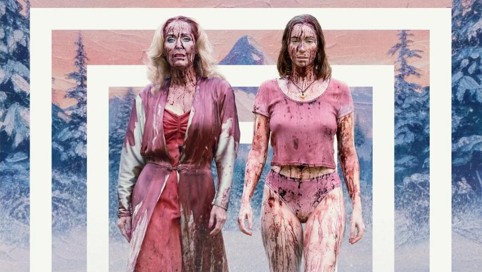
Director Jane Schoenbrun—the creator of the small indie gems We’re All Going to the World’s Fair (2021) and I Saw the TV Glow (2024)—possesses the ability to couple fun with the enduring appeal of gory horror films while prompting reflection on the dynamics of cinephilia.
We thought we knew everything there was to know about the lively slasher genre and its franchises, if only from studying J. A. Kerswell’s The Slasher Movie Book (2012). But it turns out we didn’t. Teenage Sex and Death at Camp Miasma manages to be hugely entertaining while teaching us something new about the sexual implications of pop cinema.
Here is the plot. Young queer director Kris (Hannah Einbinder, Emmy winner for Hacks) is obsessed with the fictional horror franchise Camp Miasma and plans to direct a reboot. The screenplay is quite dated, yet a genuine cult following has grown around the Camp Miasma serial killer—known as Little Death (a term that means orgasm in French).
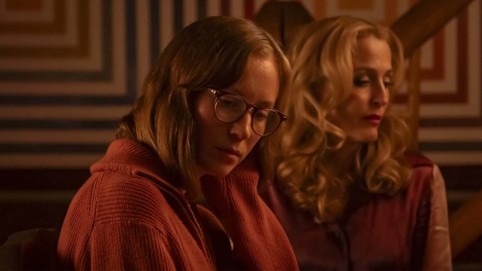
Kris arranges a meeting with a former movie star—the lead of the first film in the Camp Miasma franchise—Billy Presley (played by Gillian Anderson, Emmy winner for The X-Files). Kris falls under the spell of the aging star, who played the “final girl”—the character (almost always a virgin) who manages to defeat the killer in horror movies. The term was coined by American writer Carol J. Clover in her book Men, Women, and Chain Saws: Gender in the Modern Horror Film (1992), a cult reading for every cinephile.
But something more than mere charm is about to blossom: sexual attraction. And so, the initial horror changes into a highly original film that blends Neve Campbell—the final girl from Scream, directed by Wes Craven—or Jamie Lee Curtis—the final girl from Halloween, directed by John Carpenter—with none other than Gloria Swanson from Sunset Boulevard, directed by Billy Wilder. The fundamentally misogynistic and male-chauvinist cinematic trope of the final girl gives way—in the film’s second half, about which it is best to say nothing—to a realm where a new kind of sexual liberation reigns. It is no coincidence that the film won the Queer Palm at the 2026 Cannes Film Festival (Un Certain Regard).
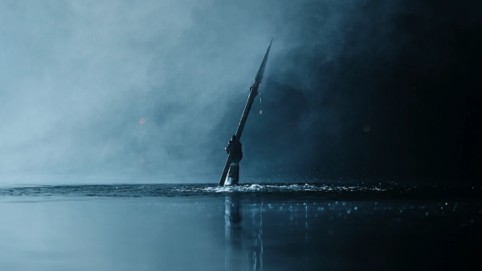
As graphic, postmodern-style violence, complete with blood and guts, fills the screen, Schoenbrun shatters homophobia and transphobia, centring on the transgender, implacable villain Little Death (played by Jack Haven): a sort of Jason Voorhees figure who, instead of a hockey mask, wears a small air vent (or perhaps a projector?) on his head. Little Death, like the Freudian id, lies at the bottom of the lake, ready to emerge with its spear—and, above all, it never dies. Just like the slasher genre, doesn’t it?
The cinematography by Eric Yue is brilliant and pleasantly surreal, reminiscent of a David Lynch film. The soundtrack is by Alex G, featuring some truly remarkable musical choices. The cast also includes Patrick Fischler—a subtle nod to the Lynch of Mulholland Drive. But above all, it is one of the most incredibly entertaining and intelligent horror films seen in recent times. And it has a transfeminist perspective—the kind of thing to fire up the young audience at a festival like Cinehill.
Gabriele Barrera
© FIPRESCI 2026