
Beyond Borders: Yrupé Moves Beyond Documentary’s Common Borders, Indeed
Candela Sotos’ doc is a rare balancing act between science, political history and individual memory—and a delight for inquisitive cinephiles also.
Yrupé, the debut feature-length work by Spanish visual artist and filmmaker Candela Sotos, unfolds five distinct lines of inquiry:
An investigation into the flower of the same name—a large, majestic, and resilient water lily native to the Amazon that reveals its snow-white blossoms for just one night a year to attract pollinating insects before sinking back beneath the water. This is an inquiry of a botanical kind.
A second line of inquiry—this one ethnological—focuses on the Guaraní people of Paraguay and the legend they wove around this exquisite plant. According to the myth, the water lily is the reincarnation of a young woman who drowned in the Amazon while attempting to reach her beloved moon by chasing its reflection in the river.
In the 1950s, the pioneering Spanish naturalist, photographer, and filmmaker Guillermo Zúñiga attempted to dramatize this legend in the form of a short scientific documentary, La Flor di Irupé (The Flower of Irupé). Only a few frames survive from that film, which was completed but had been lost until recently. Thus, this also constitutes an inquiry into film history.
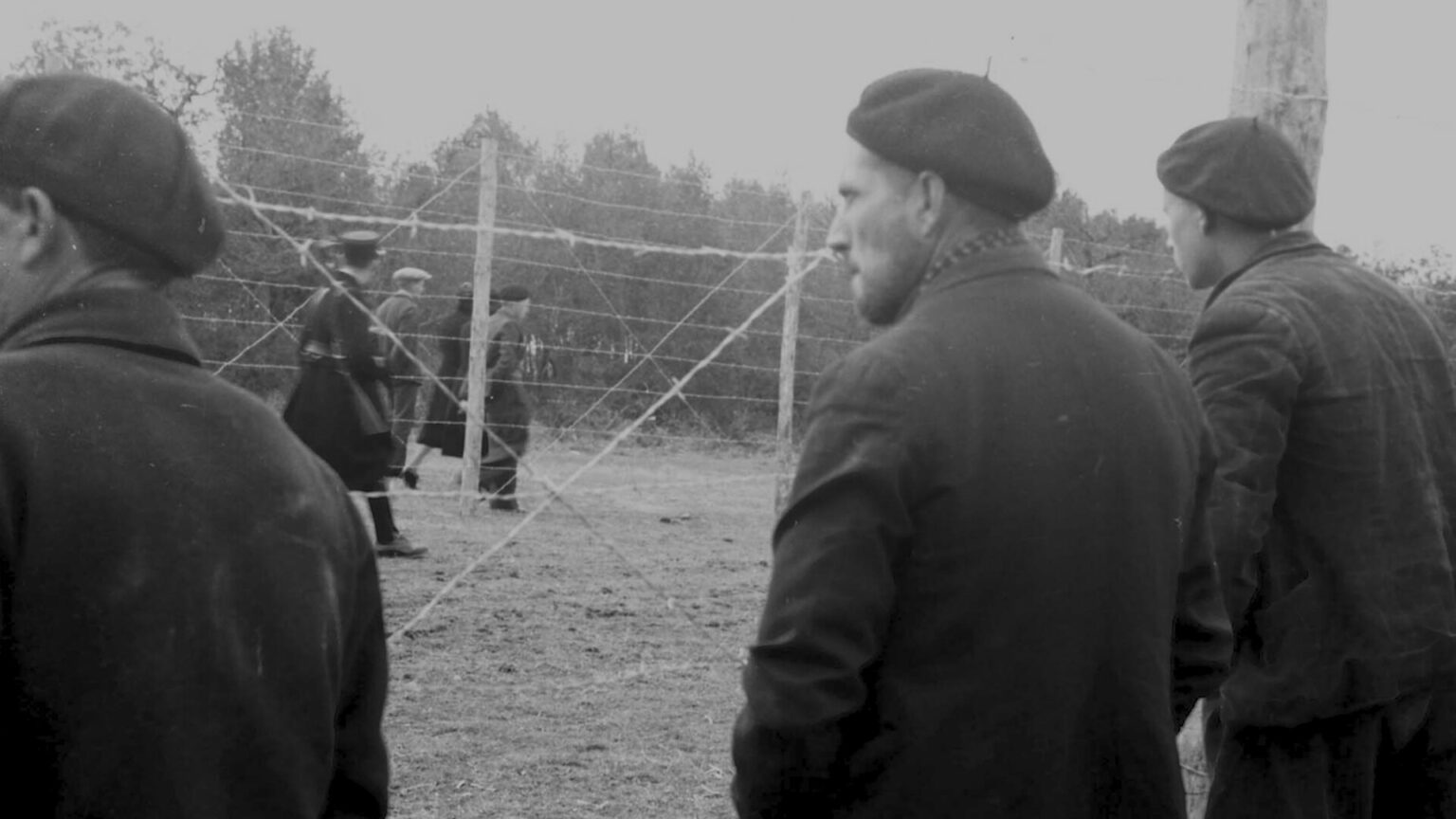
A filmmaker for the United Socialist Youth and a Franco dissident during the Spanish Civil War, Zúñiga fled to France following the imprisonment of his resistance-fighter stepfather; he passed through three internment camps before escaping the last one and living underground for years under an alias, eventually going into self-imposed exile in Argentina, where he resumed his career as a director. It is a personal odyssey set against an ideological backdrop—one that naturally progresses like an investigation into political history.
The fifth line of exploration is the creator’s own inquiry into… herself. Candela Sotos is Guillermo Zúñiga’s niece. Consequently, tracing his life becomes a personal reckoning for the director with her own past and present—with her family, memories, and heritage, as well as her position and role as a contemporary artist. This is not merely a practical matter, but, above all, a psychological one.
These various investigations might well have given the impression of a collage of disparate projects, were it not for the way they interweave, each becoming an integral part of, and a prerequisite for, the others. Much like in Nostalgia de la Luz (Nostalgia for the Light), that 2010 documentary by Chilean filmmaker Patricio Guzmán, remarkable for its balance and stunning imagery, where science and politics, heaven and earth, and personal and collective history engaged in a profound dialogue, so too in Yrupé, meanings and images are twisted with fluidity, insight, and discretion, as well as genuine love. It is a rare feat of cinematic balancing.
Not that we fail to appreciate docs that skillfully handle their material, shock us with the immediacy of their imagery, or meticulously organize their context—to speak of most of the competing feature-length titles in this year’s Beyond Borders lineup. Here, however, we are dealing with neither gimmicks nor a mere journalistic presentation of testimonies and documents. We are speaking of a visual act that juggles the distinct elements of its material through a dialectic that elevates it far beyond the realm of current affairs and mere information, lifting it into the existential sphere. It is a film where form and content remain inextricably linked—a truly cinematic documentary in every sense of the word.
Robenson Eksiel
© FIPRESCI 2026