
The Incomer: Civilisation, Otherness and the Right to Belong

Displacement, exclusion, and belonging are examined in The Incomer at the 9th Brussels International Film Festival through a meeting of two fundamentally different worlds. The Incomer (United Kingdom, 2026) a film directed by Louis Paxton, won the festival’s FIPRESCI Award. The film excels at uniting two parallel realms that would traditionally be labeled as civilised and uncivilised, without creating a fixed hierarchy between them. Rather, it unveils over time the contradictions inherent in the concept of civilisation itself: the world deemed rational is not automatically more humane, while the world deemed primitive may retain bonds, communal living, and a sense of belonging that contemporary society has increasingly forfeited.

The Incomer revolves around an encounter with the unfamiliar. However, Paxton does not regard the strange merely as something to be explained, corrected, or assimilated. The meeting turns mutual: the outsider steps into an unknown realm, yet this action causes the seemingly known to appear odd as well. This turnaround constitutes one of the film’s most fruitful concepts. The “other” serves not only as the target of our attention but also as a mirror that reveals our own social norms, institutions, and assumptions. Here, The Incomer also builds its comprehension of coexistence. The film does not conceive of accepting the foreign as merely a matter of tolerance. Rather, it suggests a more challenging prospect: coexisting with difference without an immediate expectation for that difference to vanish. The film’s characters dwell in systems of knowledge, behavior, and belief that are incompatible with one another, yet it permits these systems to maintain contact with each other. The resulting tension often has a comic aspect, but underneath the humor lies a profound philosophical inquiry: can a society embrace the unfamiliar without first changing it into something familiar?
The Incomer confronts displacement through absurdity, estrangement, and social confrontation rather than replicating the well-known political iconography associated with modern cinema. It feels purposefully anti-trend and perhaps anti-festival in this way. displacement is not transformed into an easily readable moral stance or a convenient symbol. Rather, the film explores what occurs when ownership, territory, and the ability to choose who can stay become issues of belonging.

Paxton’s use of exoticism is just as fascinating. The film does more than just exoticize a remote island for the sake of admiring something out of the ordinary. Instead, it produces a kind of progressive exoticism where the odd gradually moves from one side to the other. When examined from a different perspective, bureaucracy, technology, institutional language, and modern social standards take on a ridiculous appearance. As a result, exoticism becomes reciprocal, with each world viewing the other as peculiar. The formal structure of the film incorporates this concept. Without needless stylistic embellishment, The Incomer has created its own cinematic language and syntax. Its mise-en-scène, production design, and landscapes are active components in the creation of its social universe rather than just backgrounds. The characters’ movements, conversations, and mutual understanding are all influenced by their physical surroundings. In this regard, garment design is especially significant. The characters’ history, loneliness, and eccentricity are carried into every area they occupy via their costumes, which essentially serve as movable extensions of the set. Clothing becomes a component of the film’s material architecture rather than merely serving to distinguish people, contributing to the creation of a world where the distinctions between an individual, their surroundings, and their cultural identity are not rigid.
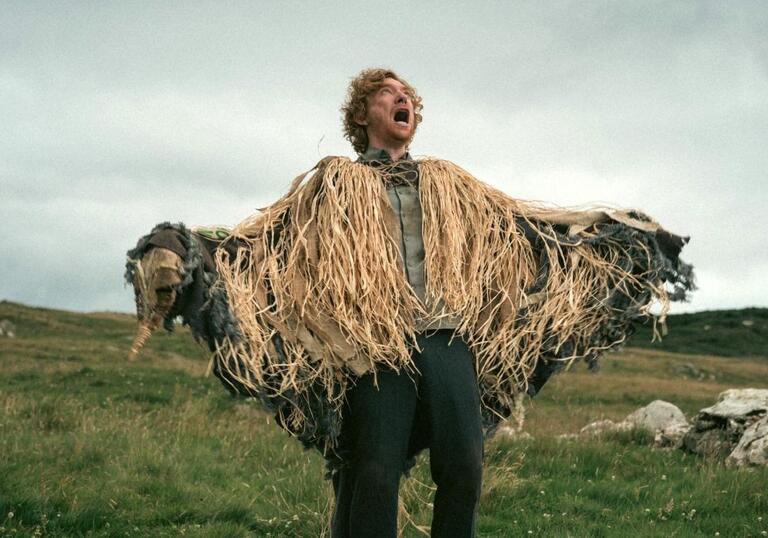
The performances function with a great deal of accuracy within this meticulously crafted material reality. The actors do more than just portray quirkiness; they also highlight the social and psychological effects of extended seclusion, relocation, and interaction with strangers. Their physical presence is essential to both the comic and the film’s more sombre examination of how people act when the institutions that often define their identities start to crumble. The conclusion of the film expands on this idea to encompass a more expansive vision of the world: one in which every person has the fundamental right to exist and live in the world, irrespective of their nationality, gender, origin, social standing, or cultural heritage. Because it undermines what we have come to accept as usual, Paxton recognises that the strange can be politically illuminating.
As a result, the film goes beyond a straightforward conflict between insiders and outsiders. It poses the question of whether civilisation itself may depend on our ability to come into contact with things we do not comprehend, to live in harmony with things that do not resemble us, and, in the end, to acknowledge that the unfamiliar need not necessarily become familiar in order to fit in.
By Hamed Soleimanzadeh
Edited by Savina Petkova
Copyright FIPRESCI 2026