
Women, Resistance and the Politics of the Body at the Mar del Plata International Film Festival
Argentine film critic Emiliano Basile examines three award-winning films from Mar del Plata’s International Competition—The Night Arezou Disappeared, The French Teacher and Truly Naked—exploring women’s resistance to political repression, religious conservatism and the male gaze.
Women’s resistance and the struggle for bodily autonomy were among the recurring concerns of the International Competition at the 41st edition of the Mar del Plata International Film Festival. Three films recognised by the jury and international critics approached these issues from different perspectives: The Night Arezou Disappeared (2026), by Iranian director Arian Vazirdaftari, received the award for Best Film; The French Teacher (A Professora de Francês, 2026), by Brazilian filmmaker Ricardo Alves Jr., received the Special Jury Prize as well as the FIPRESCI Prize, awarded by the International Federation of Film Critics; and Truly Naked (2026), the feature debut of Muriel d’Ansembourg, won the Best Screenplay Award. Although their settings and narrative approaches differ, all three films examine the social, political and cultural mechanisms that regulate female identity and perpetuate unequal power relations.
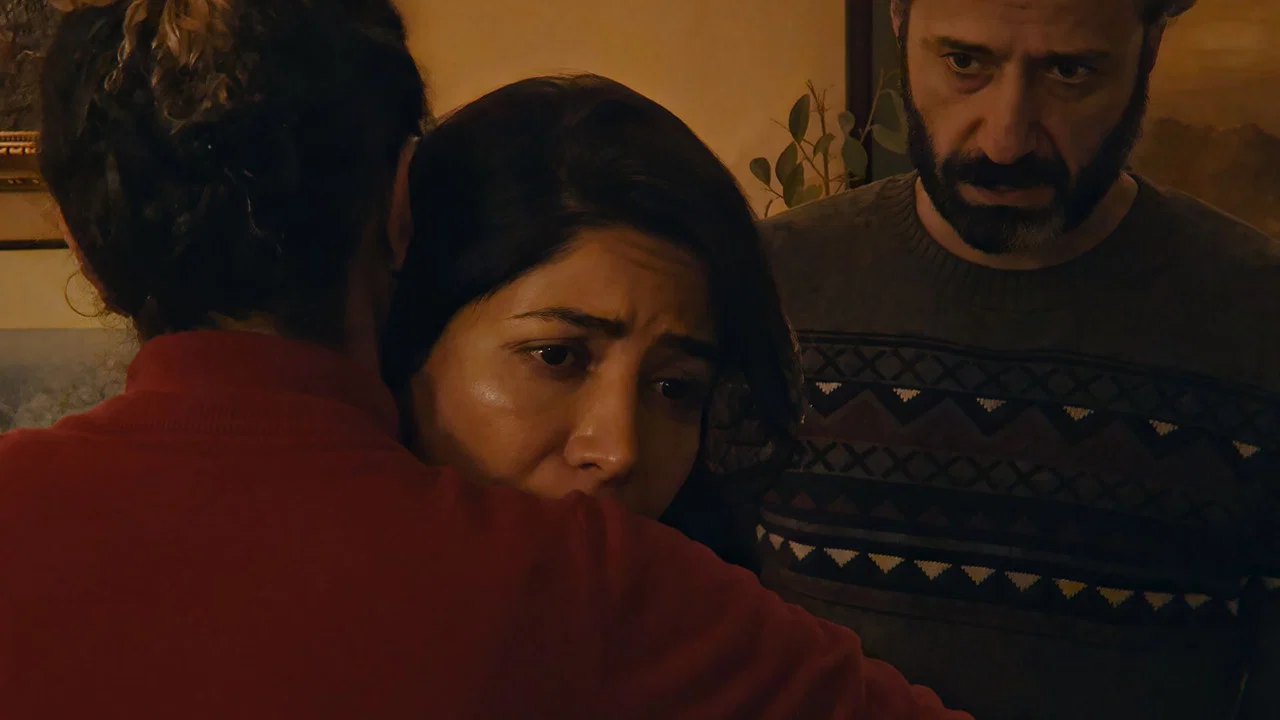
In contemporary Iranian cinema, the representation of women’s resistance has acquired particular significance since the Woman, Life, Freedom movement emerged in 2022 following the death of Mahsa Amini while in police custody. Against this background, The Night Arezou Disappeared, winner of the festival’s Best Film award, approaches state repression through a family thriller. Rana, a piano teacher, receives the news that her teenage sister, Arezou, has disappeared. The possibility that the young woman has been detained because she appeared in a photograph taken during a demonstration turns the search into a confrontation with fear and the regime’s surveillance mechanisms. The central question is no longer simply where Arezou is, but what she has done that could make the state consider her a threat.
Directed by Arian Vazirdaftari, the film avoids reconstructing the protests through images of street violence and instead relocates the conflict to the domestic sphere. An injury to Rana’s foot restricts her movements, transforming waiting into an experience of confinement. Institutional power remains off-screen, yet it constantly penetrates the home through telephone calls, contradictory testimonies and fragmentary information. Meanwhile, Arezou’s intermittent, almost spectral appearances introduce a dreamlike dimension that destabilises the investigative narrative. The young woman’s absence thus acquires a collective meaning: she represents a generation whose demand for freedom persists even as repression attempts to silence it.
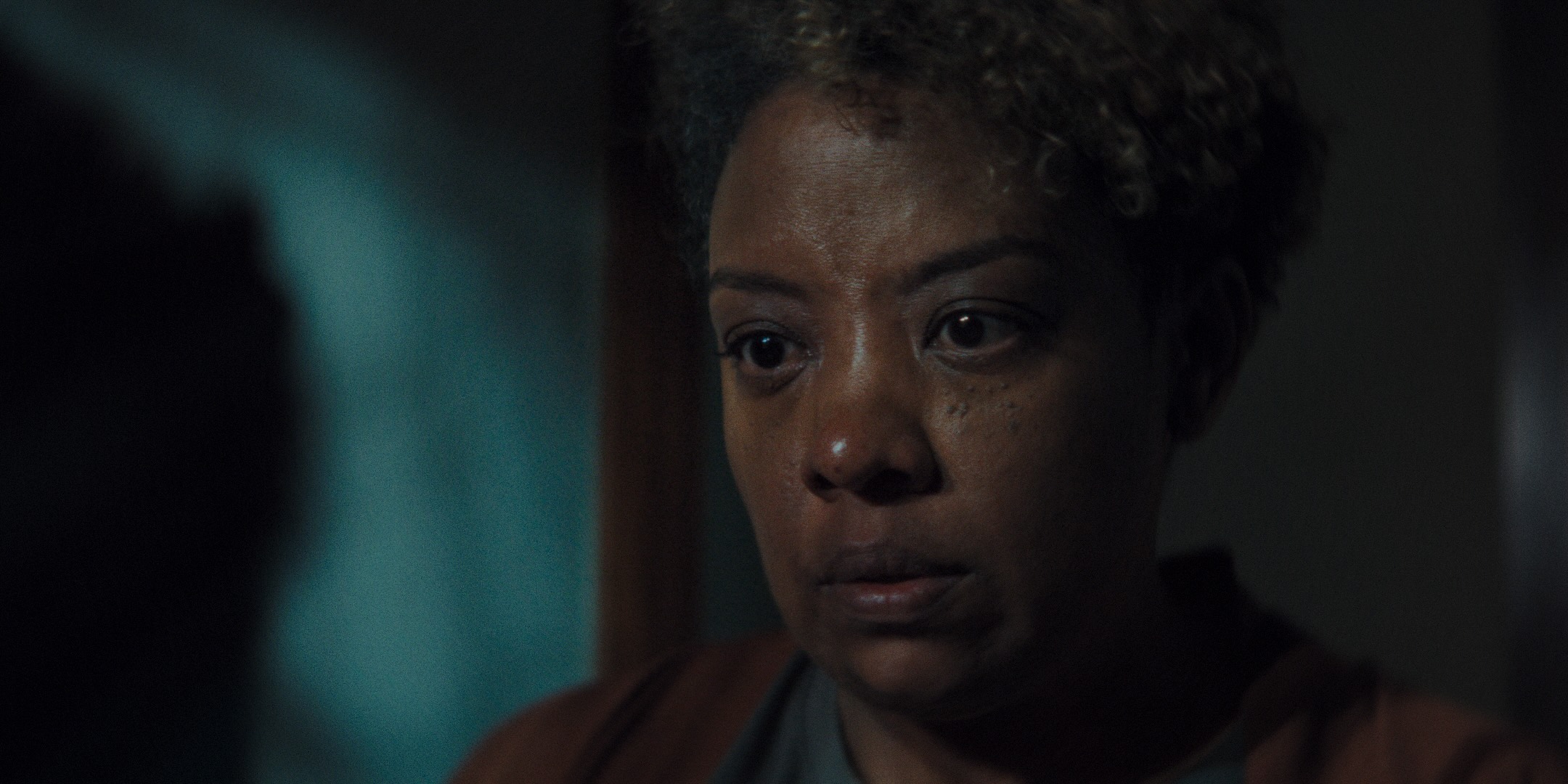
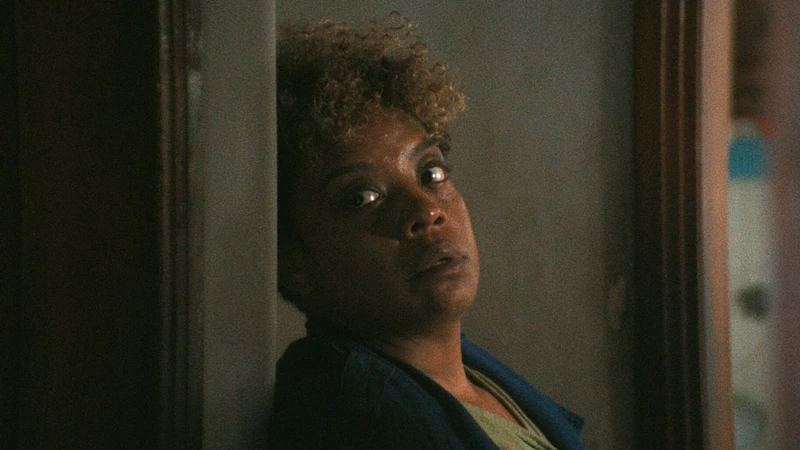
A different approach emerges in The French Teacher, recipient of both the Special Jury Prize and the FIPRESCI Prize. This Brazilian, French and Portuguese co-production combines psychological thriller, horror and fantasy to explore the impact of religious conservatism on sexual identity. Graça (Grace Passô), a French teacher living in Belo Horizonte with her girlfriend, returns to her family home when her father suffers a medical emergency. There, she receives help from a neighbouring family connected to a religious congregation, whose apparent hospitality soon reveals an intention to impose a particular model of behaviour.
Written by Germano Melo, the film places the protagonist’s identity in conflict with the moral expectations of her community. Her relationship with another woman becomes a source of hostility, exposing how religious beliefs can operate as instruments of social discipline. The story also establishes a connection with Brazil’s political climate during the rise of conservative right-wing movements and Jair Bolsonaro’s presidency. However, Alves Jr. avoids developing his argument through explicit explanations. Realism gradually gives way to fantasy and horror, while everyday customs take on an increasingly threatening dimension. The film’s genre experimentation is not merely an aesthetic device; it becomes the means through which the instability and oppression experienced by Graça are conveyed.
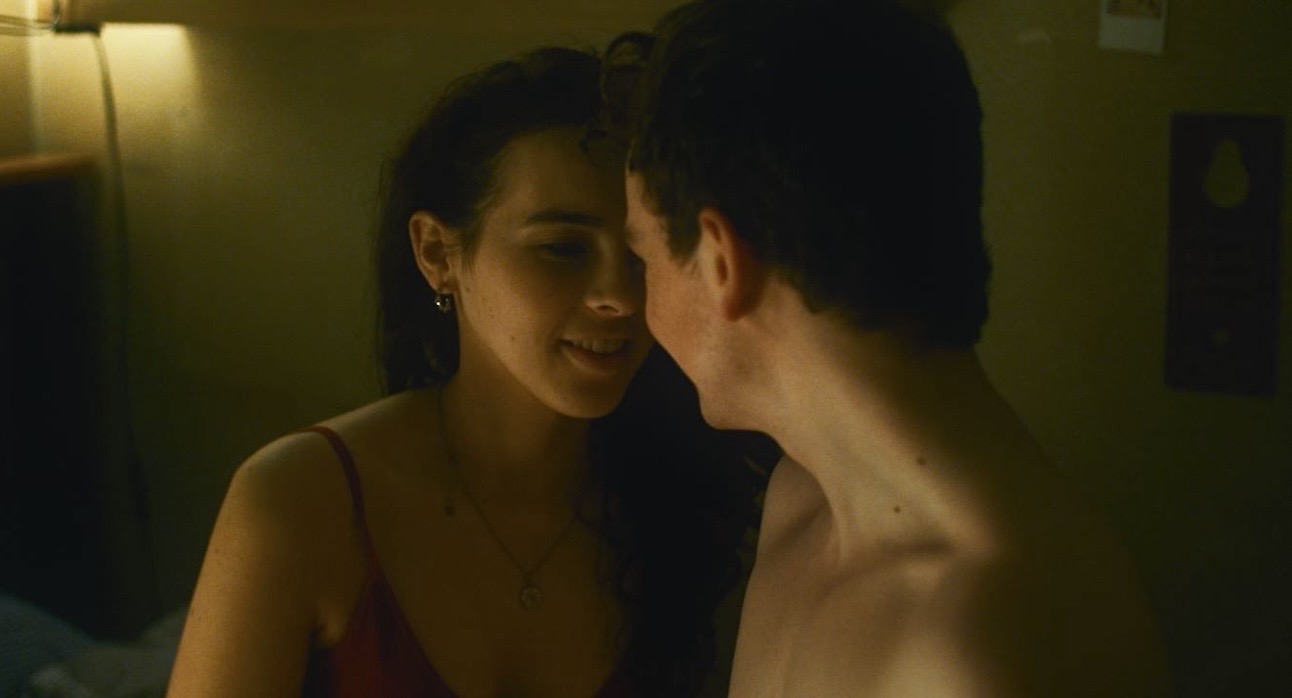
Truly Naked, winner of the Best Screenplay Award, shifts the discussion towards the pornography industry and the construction of the male gaze. Muriel d’Ansembourg’s feature debut follows Alec (Caolán O’Gorman), a teenager who films and edits his father Dylan’s productions. Dylan (Andrew Howard) is a porn actor attempting to sustain his business through the constant publication of adult content. The apparent freedom of the commercial enterprise conceals a hierarchical structure: the father directs the productions and understands the expectations of male consumers, while women’s bodies remain subject to the demands of those watching them.
The arrival of Nina (Safiya Benaddi), an independent and unconventional schoolmate, changes Alec’s perspective. Her character challenges the representation of women as passive objects and proposes a different relationship with sexuality: recognising oneself as a subject of desire, deciding how to be seen and asserting control over one’s own body. Through this contrast, the film shifts the debate away from the explicit depiction of sex towards the power relations governing its consumption. The camera, initially an instrument of recording and exploitation, becomes a metaphor for who has the authority to construct another person’s image. Although the resolution softens some of the radical implications of its premise, Alec’s journey highlights the difference between turning someone into an object of observation and relating to that person as a subject.
Taken together, the three films offer distinct perspectives on a shared concern. In The Night Arezou Disappeared, resistance confronts state repression; in The French Teacher, it challenges the moral impositions of religious conservatism; and in Truly Naked, it questions the objectification of women’s bodies within an industry organised around male desire. The police thriller, horror and fantasy, alongside the exploration of pornography, become cinematic tools for questioning structures that extend beyond the individual stories.
The selection also broadens the discussion to conflicts affecting different societies. Gender discrimination, sexual intolerance and the appropriation of women’s bodies are not confined to a single national context. By placing women at the centre of their narratives, these productions avoid reducing them to figures of victimhood and instead explore their capacity for action, decision-making and resistance. The recognition received by all three films, particularly the FIPRESCI Prize awarded to The French Teacher, highlights the presence of works that connect cinematic experimentation with a critical reading of contemporary society.
Ultimately, the three films converge on a fundamental question: female autonomy cannot be separated from the struggle over who has the power to define an identity, regulate a body or construct an image. From political repression to sexual consumption, through religious control, their protagonists challenge the boundaries others seek to impose upon them. In each case, resistance begins when women refuse to occupy the place assigned to them.
Emiliano Basile
© FIPRESCI 2026