
On Driving as a Metaphor: Cars and Movement in the films of LIFFE’s ‘Perspektive’ Section
German film critic Holger Heiland examines the Ljubljana International Film Festival’s Perspektive selection through a recurring cinematic motif: the automobile. From status symbol and protective cocoon to instrument of violence, the car becomes a metaphor for contemporary anxieties, social divisions and the search for freedom.
Looking at the films in the ‘Perspektive’ section of the Ljubljana International Film Festival, a recurring motif stands out: driving and cars – large, sturdy SUVs in particular. This is especially striking given that ‘Perspektive’ showcases the visions of young filmmakers, a generation from whom one might expect the cultural dominance of the car to be fading. In light of the climate crisis and the fact that awareness of it is still growing (in some places), one might assume that other objects of desire and status symbols might be better suited to expressing our place in the world and our relationship with it.
On the other hand, even last year’s big Oscar winner One Battle After Another by Paul Thomas Anderson culminated in an extended car chase – one of the most spectacular in film history. So, are there still good reasons to make cars the focus of the narrative? What do the films in the ‘Perspektive’ series draw our attention to? What they have in common is a broadly anti-urbanist stance. At their best, they use this to develop either nihilistic fantasies in the face of the inevitability of the impending catastrophe (Manhunt) or revel in manic laughter and cathartic exaggeration (Too Many Beasts). Or they develop a wholly unique, headstrong form of resistance (London, 17).
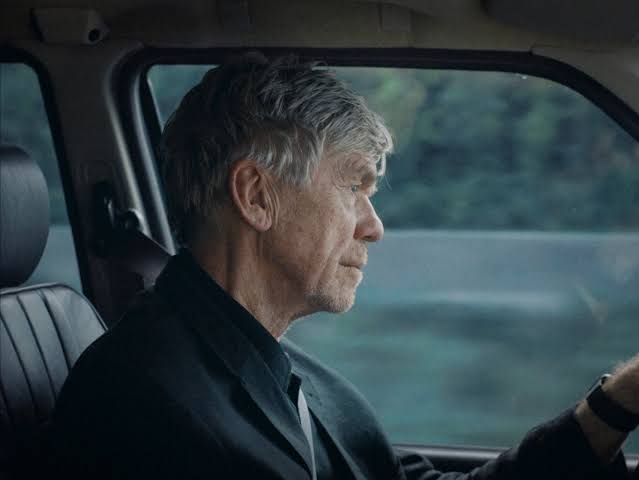
In London, directed by Sebastian Brameshuber, we meet Bobby (Bobby Sommer). We find him behind the wheel of his sturdy vehicle, driving relentlessly back and forth between his home in Vienna and Salzburg to visit an old friend who has fallen into a coma. Along the way, he picks up rideshare passengers to cover the cost of petrol. Set largely within the protective confines of the SUV, the film gradually reveals the stories of the travelers and their driver through conversation. Through its cast of characters – mostly from the margins of society – it paints a portrait of contemporary Europe, speaking to its migration flows, haunted memories, and expectations. From inside this vehicular cocoon – at once a space of comfort and a threshold between past and future – the film also reflects on how the choices we make in life carry lasting consequences.
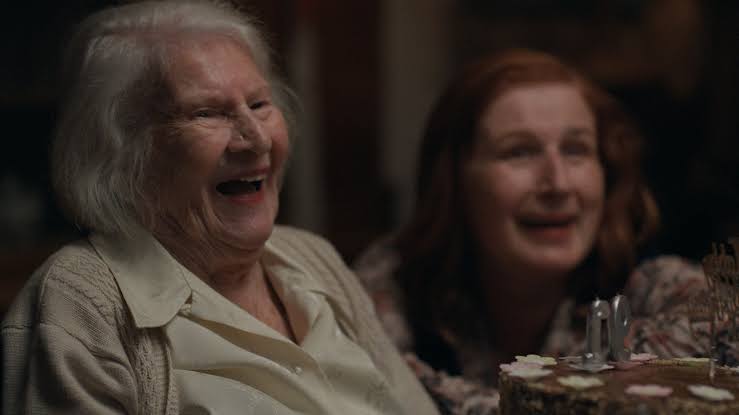
Croatian director Igor Jelinović’s debut feature, Honey Bunny (Koke), opens with a car functioning as a status symbol, sparking a heated debate over the price the protagonist, Tonina, is willing to pay for it. Offering a naturalistic portrait of a family feud, the film follows two middle-aged Croatian sisters as a dispute erupts over the inheritance of a house on a Dalmatian island. Centered on Tonina – an affectionate yet stubborn accountant and mother – and her more easygoing younger sister, Tajana, the story asks how much one must contribute to family life and care work to earn the right to make decisions about shared property. Throughout the narrative, Tonina’s car repeatedly takes center stage, becoming an object to be admired, mocked, and damaged.
Alongside our chosen FIPRESCI winner, Kosara Mitić’s 17, one of the most unsettling and thought-provoking films in the program was undoubtedly Canadian director Wayne Wapeemukwa’s Manhunt. Inspired by real events that unfolded in British Columbia in 2019, the thriller sheds new light on the story of two teenage boys who murdered three strangers and, through the artistry of its narrative approach, transforms a grim true-crime case into a haunting parable of contemporary masculinity.
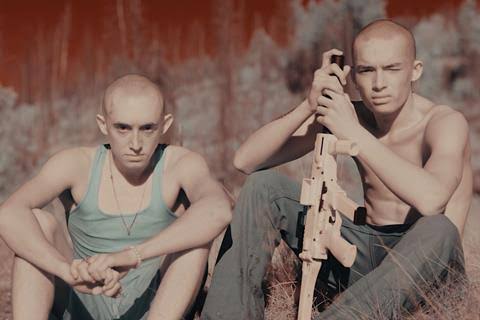
Manhunt portrays a generation raised more by digital media and gaming than by their families or caring adults. Offering a striking portrait of boys haunted by loneliness and confusion, the film follows their journey as they set out in a frantic search for meaning. Once they leave their homes behind, their off-road vehicle – alongside a 3D-printed gun – becomes their most vital asset. When the gun proves too weak and fails them, their search for a more powerful replacement triggers a deadly killing spree. Instead of finding salvation in the wilderness of the northern frontier, they find only violence and despair – a grim outcome that feels almost inevitable, given that the outside world, which they can only observe from the insulated safety of their car, is already ablaze.
In Urša Menart’s Everything That’s Wrong With You, journeys are primarily undertaken by public transport. Even so, the antagonistic father’s large car looms as a potent status symbol – one that the female protagonist is only too happy to appropriate for her own ends. Here, returning to the Slovenian homeland after living abroad as a foreigner in Germany feels truly conceivable only if one has earned the proverbial BMW.
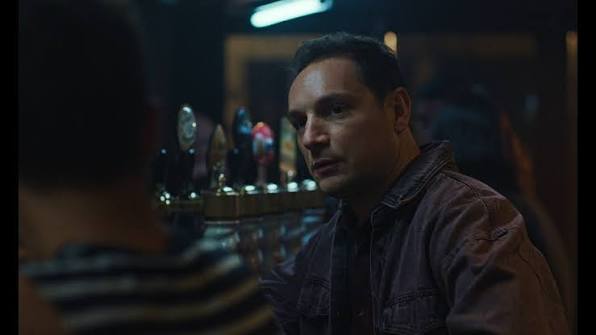
A great deal of driving – and therapy – is also required in Sarah Arnold’s black comedy Too Many Beasts (L’espèce explosive). Set in the French countryside, the film tackles an explosive surge in oversized wild boars, entrenched corruption, feuds among farmers, hunters, and state officials, and a tangled string of murders. The bloodshed begins with boars being run over by desperate farmers who, seeing no other way out of their predicament, turn their vehicles into weapons. Dropped squarely into the middle of this chaos are the film’s protagonists: a broken policeman from Corsica with a history of stalking his ex-girlfriend, and a police psychologist trying to outrun her own past of violent behavior back home in Paris.
Here again, the opposing factions are defined not least by the cars they drive – convoys of rugged off-road vehicles for the hunters, contrasted with noticeably more fragile police cars for the film’s unlikely heroes. And as is customary in rural life, constant driving back and forth between scattered locations frames automobiles as the essential spaces through which – and inside which – people interact with both their environment and one another.
The dual nature of the car – as both a lifeline of transport and assistance and an immediate source of danger – is vividly illustrated in a symbolic scene in Liz Sargent’s Take Me Home. Running late for an appointment, the father of the disabled protagonist, his adopted daughter, hurries her into the vehicle. As she climbs in, her drinking cup slips from her hand and rolls underneath the car. Unable to reach it from above, she crawls beneath the chassis to retrieve it. No longer able to see her, her father starts the engine and begins to pull away. Encapsulating the film’s central theme of wanting to help yet falling short, the moment erupts in startled screams – though this time, both escape with nothing worse than a fright.
17 is the only film in the lineup whose narrative journey unfolds aboard a cramped, noisy bus. Here, the vehicle – much like the hotel rooms to which it carries the protagonists of this ruthless coming-of-age story – symbolizes social confinement and the impossibility of escaping the crowd and its pressures while navigating adolescence, excitement, violence, and real-life body horror. 17 does not merely illustrate its themes; it makes the audience viscerally feel the protagonist’s struggle and pain in a way that lingers long after the credits roll. And to achieve that, no car is needed.
Holger Heiland
Edited by Yael Shuv
© FIPRESCI 2026