
Don't Let Me Die Review: Against Transparency, Darkness, and Uncertainty
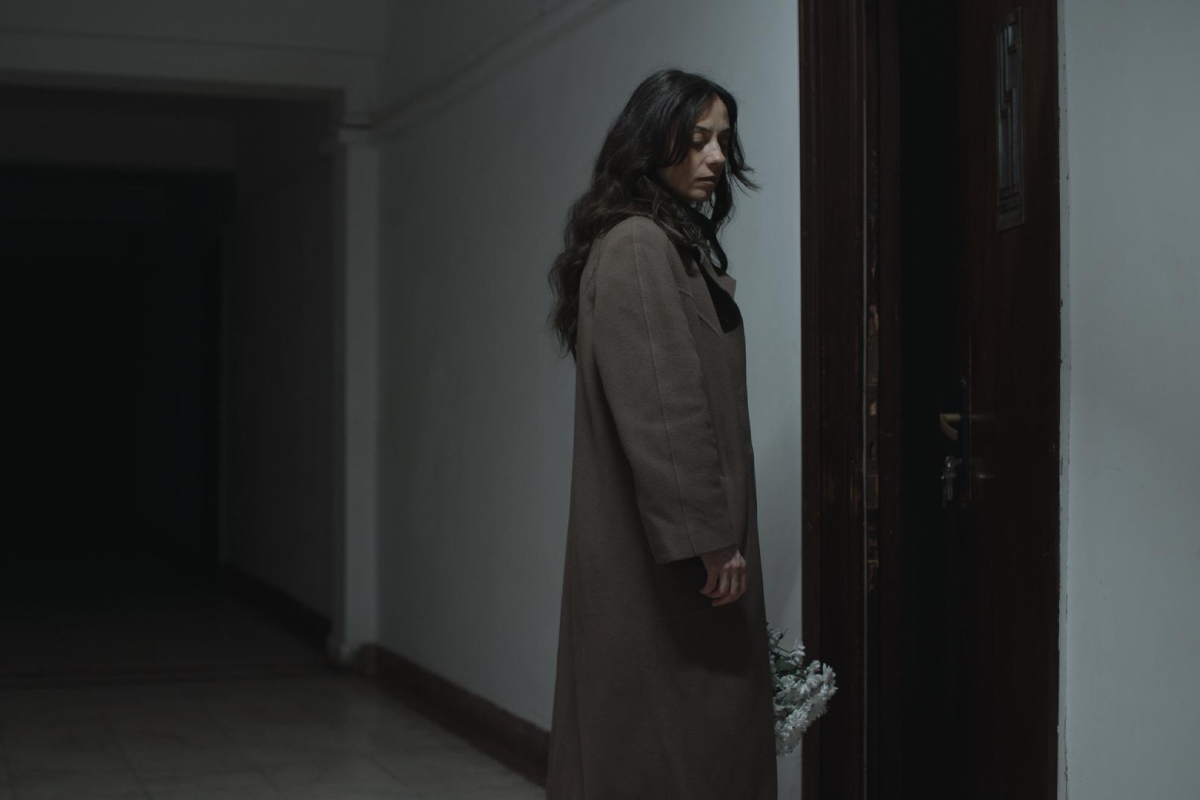
Romanian director Andrei Epure’s Don’t Let Me Die (Nu mă lăsa să mor), winner of the FIPRESCI Prize, transforms Transylvanian vampire mythology into an unsettling meditation on grief, perception, and the limits of human understanding. Danish critic Steffen Moestrup examines a film that embraces ambiguity where contemporary cinema so often seeks explanation.
The most powerful cinematic experience of the festival—and ultimately the film we awarded the FIPRESCI Prize—was undoubtedly Andrei Epure’s Don’t Let Me Die (Nu mă lăsa să mor). It is a work of allegory, executed with considerable refinement and cinematic elegance. Where many contemporary arthouse films seek meaning through explicit symbolism or narrative clarification, Don’t Let Me Die insists on the opposite: ambiguity, partial concealment, and experiences that ultimately resist language.
The film opens in near-total darkness. We can barely make out what is happening on screen. Darkness becomes the film’s most tangible visual component. A figure moves through the night. Reduced to a silhouette, it drifts along an avenue, almost absorbed by its surroundings. Only when it passes a parked car with its taillight illuminated do we gain a fleeting point of orientation—a brief flash of visibility that allows us to situate ourselves within the frame.
From the outset, Epure establishes the film’s central strategy. The spectator is deprived of the visual certainties that ordinarily organise our encounter with the world. We are constantly searching for signs that might stabilise reality: contours, faces, spatial relations. We attempt to assemble fragments into a coherent world. Yet the film refuses us this comfort. It offers only traces, suggestions, and remnants. Reality appears not as something directly accessible, but as something that must be reconstructed through uncertain acts of interpretation.
Gradually, it becomes clear that Don’t Let Me Die is deeply rooted in Transylvanian mythology. The vampire haunts the film, but not as the spectacular monster of genre cinema. On the contrary, the vampire is reduced to an absence, a shadow, a rumour—something that may or may not exist, something that manifests itself only through its effects upon the living.
The figure knocks on a door but is denied entry. The following morning, it is found dead outside the apartment building. Yet in Epure’s universe, death is not a final condition. Rather, it marks the beginning of another form of existence. The film unfolds within this liminal territory between life and death, presence and absence, memory and material reality.
The vampire motif thus becomes less a question of supernatural horror than a metaphor for the logic of grief. Grief is precisely the experience of something that has partly vanished yet continues to exert force in the world. The dead remain active within us, shaping our actions, our thoughts, and our perception of reality. They never entirely leave. They continue knocking at the door.
A woman living in the apartment building gradually emerges as the film’s central figure, but Don’t Let Me Die is not a character-driven work in any conventional sense. Epure shows little interest in psychological explanation. His characters function less as individuals than as existential positions. Perhaps she is a daughter mourning her mother. Perhaps she is someone burdened by a loss she has never fully assimilated. The film refuses definitive answers. It insists on the indeterminacy of experience itself.
This is where Epure’s particular gift becomes evident. He creates a cinematic language in which what is merely glimpsed becomes the foundation of the filmic world. Just as the fog that repeatedly envelops the landscape allows reality to be sensed without ever being fully revealed, the visual style is built upon an aesthetics of insufficient visibility. In several of the film’s most striking long shots, the figure is reduced to a nearly invisible point within the landscape. We cannot determine what we are looking at. Is it a human being? An animal? Something monstrous? Something imagined? We simply do not know.
This uncertainty generates a persistent unease. Not the shock-driven fear characteristic of commercial horror cinema, but a more fundamental ontological insecurity. The film reminds us how fragile our access to reality actually is. We never see enough to know with certainty. Consequently, we interpret. We project. We construct narratives capable of filling the voids.
In this sense, Don’t Let Me Die is not ultimately about vampires, grief, or Transylvanian folklore. It is about the conditions of perception itself, about humanity’s need to generate meaning when confronted with that which resists understanding. In an era saturated with information, transparency, and explanatory discourse, Epure’s film feels almost radical in its insistence on uncertainty as a legitimate mode of experience. It reminds us that not everything can be rendered visible, and that some of life’s most decisive experiences persist precisely as shadows within consciousness.
Perhaps this is why the film continued to haunt me long after the screening had ended. Like its vampiric presence, it survived beyond the frame as an unfinished thought, a shape glimpsed through fog, a disturbance that remained with me on the flight home. I did not expect that. Yet perhaps this is the most precise definition of great cinema: works that do not end when they end, but only begin their real work within us afterwards.
Steffen Moestrup
Edited by Birgit Beumers
© FIPRESCI 2026