
Drama 2026: Fresh Films and the Power of Youthful Vision
Greek film critic Tasos Dertilis surveys the international and national competitions at the Drama International Short Film Festival, where a new generation of filmmakers turns its attention to artificial intelligence, migration, disability, labour, war, queer visibility and uncertain futures.
Having beautiful Drama as a canvas in the background, with its waters flowing restlessly from the springs of Agia Varvara, powerful and youthfully vibrant images of films participating in the various programs of this Macedonian town’s exceptionally hospitable Film Festival, flow too endlessly onscreen.
This is a festival born in this historic city of the Greek North out of the love and dedication of the members of a film club—a festival that has continued to grow and strengthen ever since and which, despite approaching half a century in age, never ceases to be a source of youth, much like the city that gave birth to and hosts it.
“Welcome home!” was the motto of this year’s edition. Where “home” is the art of cinema itself, the cradle for all of us who love moving images and the stories they tell. And young filmmakers from Greece and all over the world responded to the call, bringing films made with love, light, and a fresh gaze on today’s turbulent world. A gaze that returns to us, processed and settled, a comprehensive, critical reflection of the present.
There were many remarkable films across all sections of the festival—films aesthetically complete, self-sufficient in both form and content, which conveyed to us a captivating abundance of images and information regarding the themes that concern young filmmakers today. A special mention is due to the youngest segment of these filmmakers who participated in the student sections with impressively mature and wholehearted cinematic proposals.
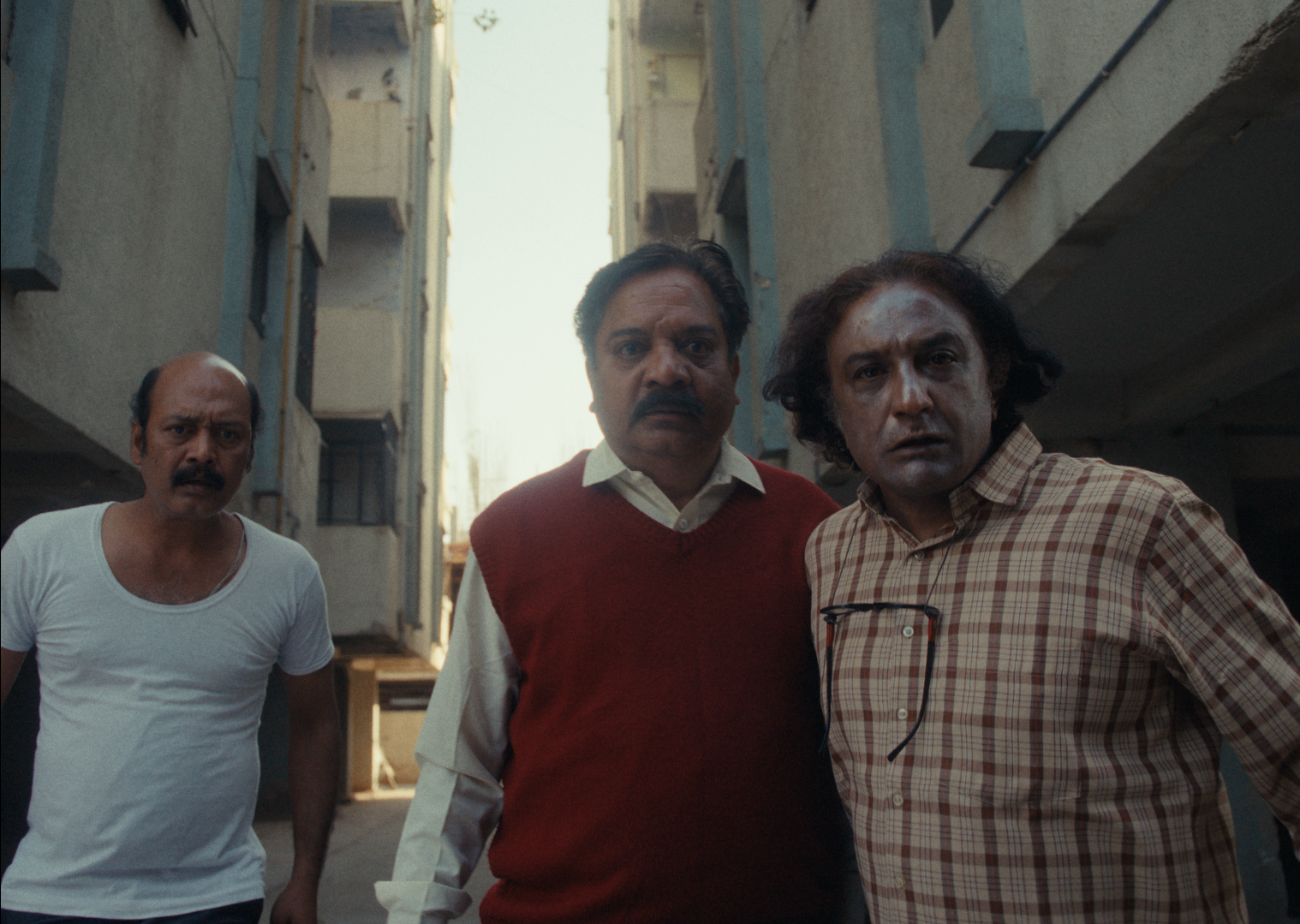
Starting from the international competition section, one cannot help but admire the lighthearted and humorous take on the anxiety of a group of middle-aged men facing the onslaught of artificial intelligence, which has rendered them unemployed and professionally redundant, in Pranav Bashin’s We Were Here from India, which won the FIPRESCI award. The anxiety of the average person who fears they will soon share the fate of the dinosaurs is disguised in the form of a social comedy with a sweet and sensitive heart. On the other hand, in Azul by the Mexican filmmaking collective known as Algoritmo Malvado, the grim contemporary reality of cartels and mass murder is transplanted into a dystopian future. In this future, a fully electronically controlled, totalitarian world reaches its limits when a young man seeking revenge for his father’s death discovers another, different world on the fringes of metaphysical and artificial intelligence. Another alternative world is also to be discovered in the Greek film The Great Organ (directed by Roxanne Krimizi & Michalis Kimonas) by a young worker at the autism spectrum and a girl with Tourette’s—a couple deemed “maladjusted” and “invisible” by their social environment. They decide to abandon this reality, which is dystopian for those who are different, escaping into another “visible” dimension in a low-toned, narratively complete, and deeply human film.

Returning to our world, we are transported to the wonderful artificial paradise of Free Eliza (Notes on Αn Αnatomical Ιmperfection)—a co-production between Cyprus, Greece and France, directed by Alexandra Matheou—and the global tourism industry, where everyone must be happy and helpful as they serve the entertainment of others. Everyone except Eliza, who works in a hotel complex and whose “flaw” is her sullen face. Although Eliza performs her duties with mechanical precision, she cannot perform her occupational role; she is a mammal in captivity, like Willy the whale, seeking her release. The wonderful Grigoria Metheniti was honored by the festival for her performance in the titular role. Equally low-toned was Nadine Misong Jin’s USA-produced Silent Voices, which won the Best Director Award. In this film, the members of a Korean family living in the States each walk their own uphill emotional path separately, caught between immigration and their ties to the homeland.
Immigration as a lifelong dream also dominates What Do the Maknines Dream Of (À quoi rêvent les Maknines), a film from France directed by Sarra Ryma, where two teenagers from Algiers try to escape by selling captive songbirds in order to pay for their illegal journey to Europe and its promise of prosperity. Which is preferable: escape or staying behind? To sing in captivity or to fly into the unknown? A sense of captivity and a clash of generations also lingers in the air of Kentucky Gaza from Jordan directed by director Omar Rammal, which transports us in a humorous way in Gaza just before the destruction. In it, two brothers decide to boost their father’s struggling fast-food business in an inventive way. Within the narrative framework, there is an indefinite sense of resignation and decay despite its humor and optimism, as the two young men decide to take matters into their own hands and give the business a boost.
A boost to their consumer product is also what the employees at a future fertility center want to achieve in Silje Baer’s take on futuristic black comedy Spermatheca from Norway, where the solution to the effectiveness of male sperm is sought in… a wrestling sports magazine from the past. The future of humanity hangs in the vacuum of space in a sinisterly funny way. One way or another, however, youth will find its path or its method, as demonstrated by the festival’s most popular Greek film, Vicky Anastasiadou’s Wheel to Live. Its hero is a young man learning to adapt to his new reality after an accident left him paralysed. Inclusion, visibility and authenticity come together perfectly in the screenplay written by the protagonist himself, Nikos Tsongidis, resulting in a film that serves as a hymn to friendship and companionship.
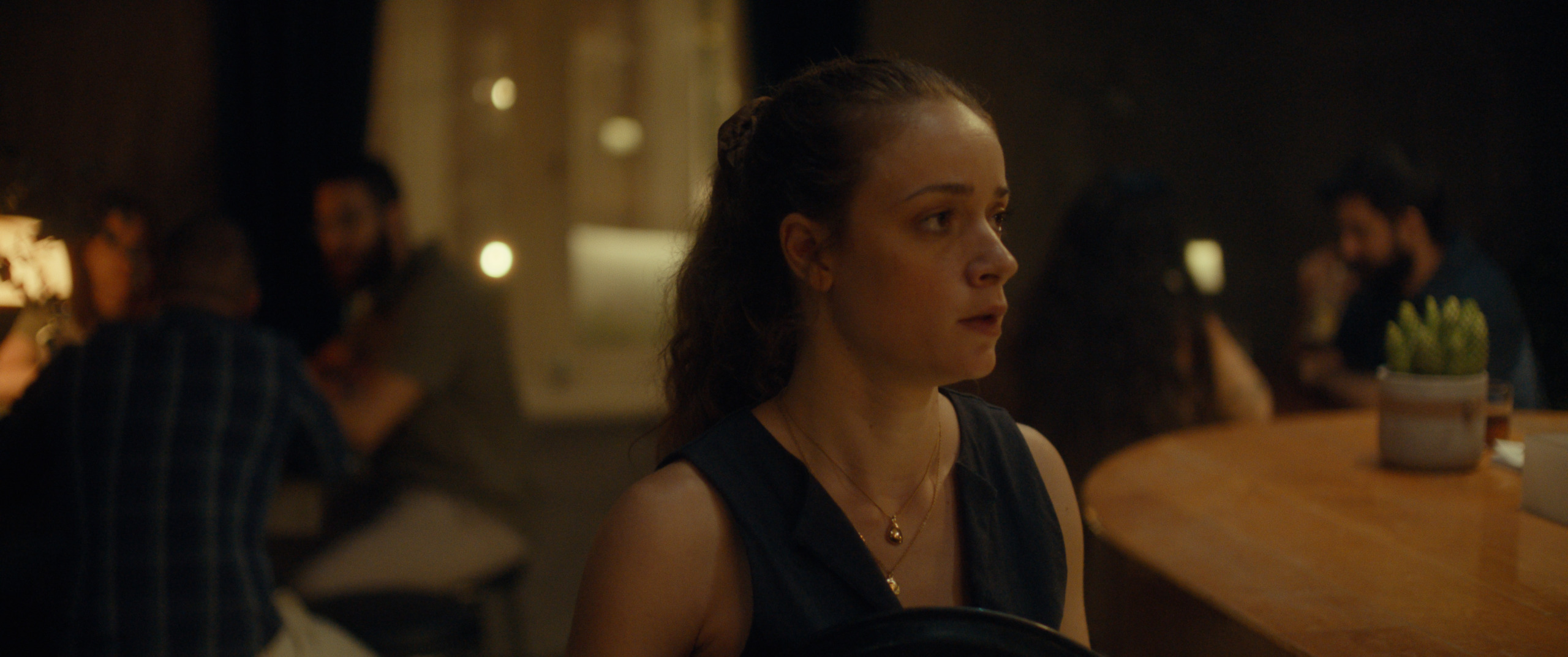
Moving on to the Greek sections, we detect an overarching anxiety among film makers about the future, expressed through narratives centered on family, labor, love, and queer visibility. In Ioanna Skylogianni’s Shift, a waitress in a bar-restaurant confronts management injustice as well as a lack of solidarity from her coworkers, struggling to live her life with dignity in an increasingly competitive environment. A series of wonderful long takes narrates a single evening, a single shift, and a profound social disappointment in a film that could easily claim Ken Loach and the Dardenne brothers as its godfathers. Trypes (The Holes), a film by Petros Kalfamanolis, transports us to a cinematic desert where the tropes of Westerns are invested in an absurdist narrative akin to Samuel Beckett’s “Waiting for Godot” and friendship proves to be as vivid as a Western sunset. It is a film of impressive visual maturity and deep affection for cinematic genres. A deep love for the cinematic genre of vampire stories—along with the aesthetics and technique to justify it—is also possessed by Maria Chatzakou’s Starflyer, where an amusement park becomes the field of action for two unusual girls of the night.
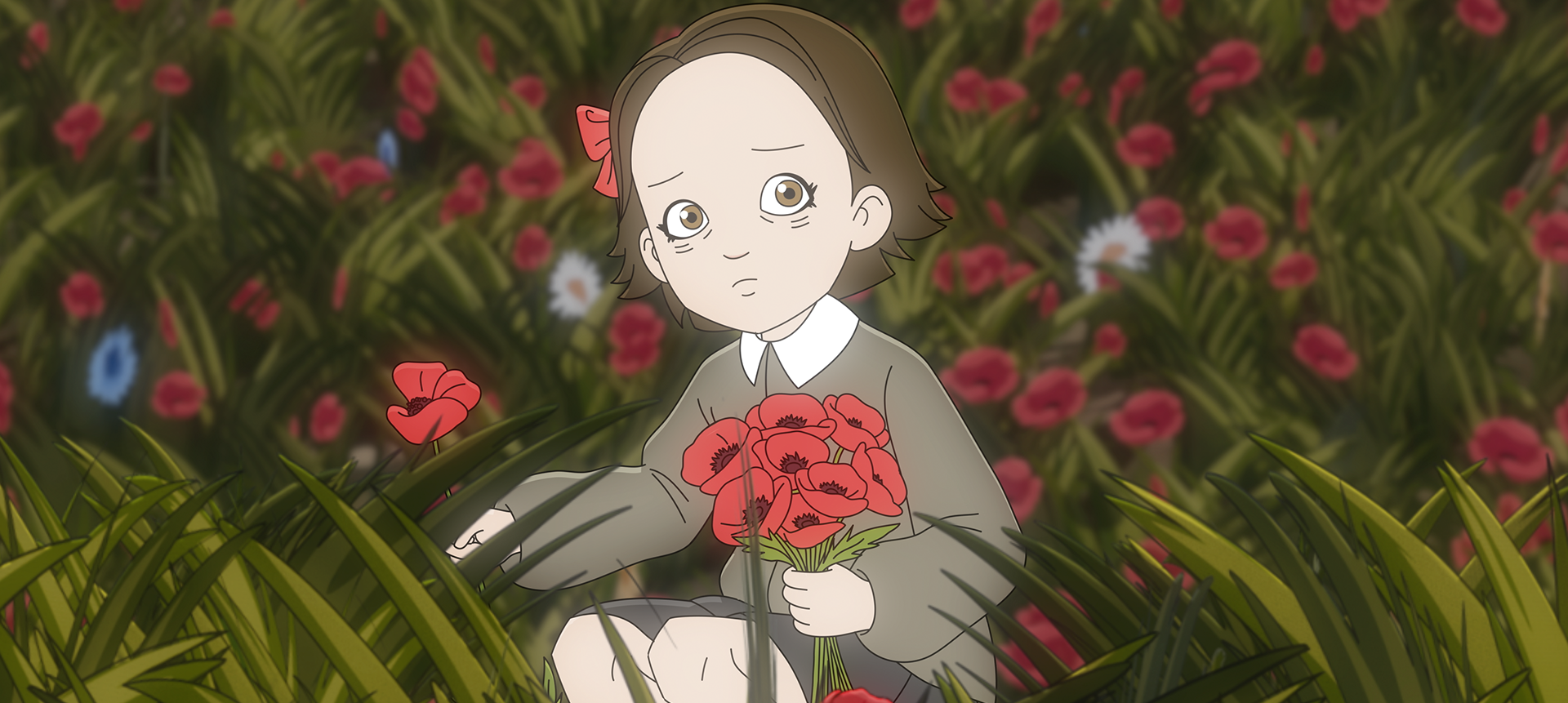
We also walked away with a highly positive impression from the several animation films we watched, considering Loukia Tzortzopoulou’s Good Friday from Greece to be the standout among them. It successfully put the aesthetics of Japanese manga at the service of a true story of Nazi atrocity during the occupation period. The atrocity of war through a child’s eyes is rendered with lyricism and pure childhood innocence. In Konstantinos Demis’s Dog, hunger and deprivation strip the hero of the mantle of social civilization, gradually driving him to, shall we say, wild situations. Bea Lema’s Corpus Christi from Spain is a dazzling embroidery (literally) of images concerning religion, psychoanalysis and the deeper social causes behind a mother and wife’s mental illness. In Joachim Hérissé’s French The Flesh Dress (La robe peau), we notice the creator’s influences from Tim Burton’s classic animation, as a seamstress returns to life again and again until her husband manages to complete her life’s work—a dress inseparable from the body that will wear it. Finally, in Zhenia Kazankina’s City of Owls (a co-production between France, Italy and Germany), we enjoy a beautiful allegorical fairy tale about human alienation caused by war and destruction.
These and many other interesting films set the tone for yet another successful rendezvous of short films and their makers with picturesque Drama, the quiet city of waters.
Tasos Dertilis
Edited by Savina Petkova
© FIPRESCI 2026