
We Were Here: Humanity in the Age of AI
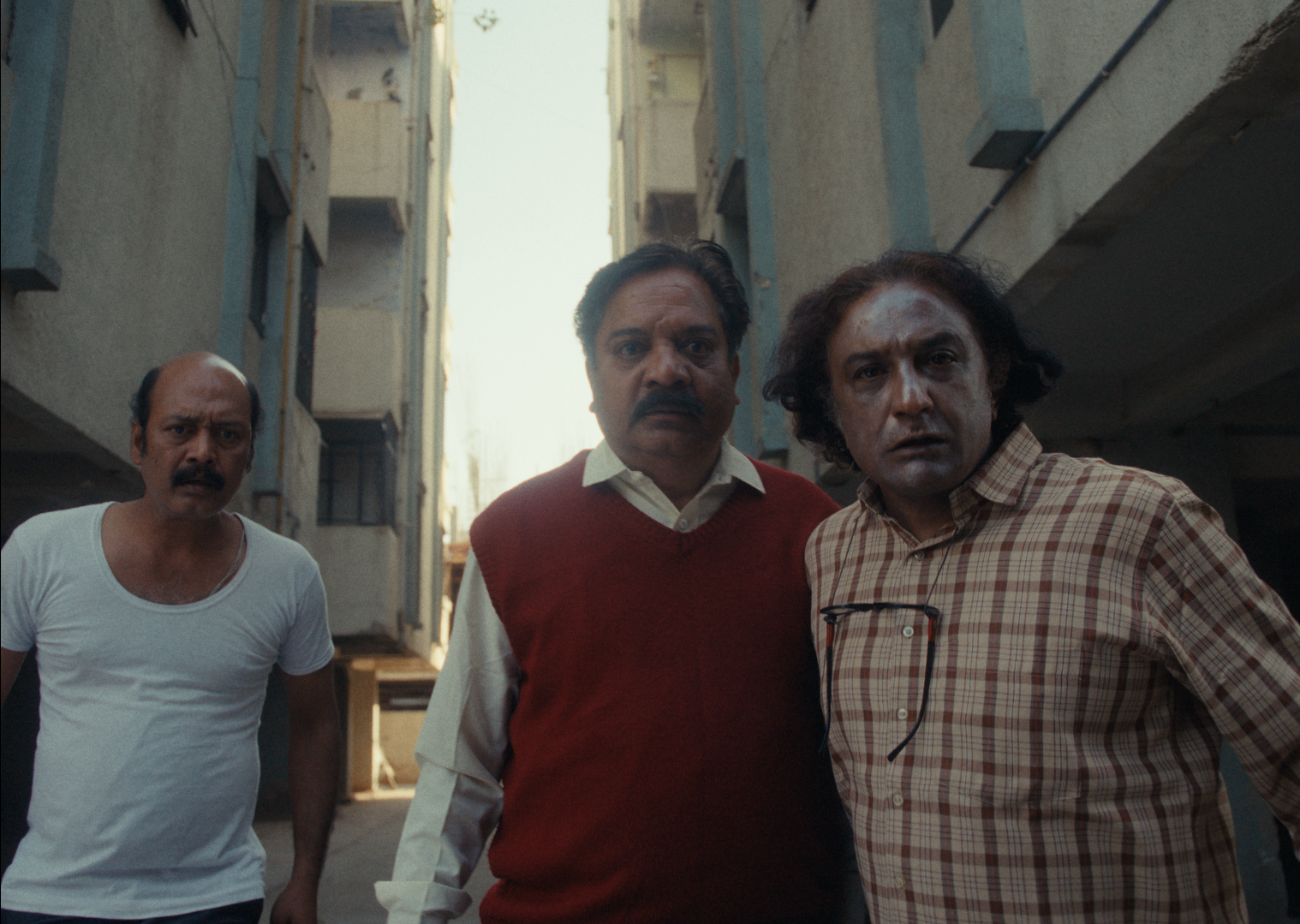
Pranav Bhasin’s short film, We Were Here, awarded the FIPRESCI Prize at the 49th Drama International Short Film Festival, turns the fear of artificial intelligence into an affectionate reflection on what makes us human.
What makes us human? It may sound like an old question, but in the age of artificial intelligence, it has acquired a renewed urgency. As AI increasingly enters the ways we work, communicate and create, the traces of human imperfection that once seemed inevitable, and annoying, are becoming increasingly negotiable. In We Were Here, Indian director Pranav Bhasin approaches this anxiety from an unexpected direction: three retired men in a small Indian town decide to fight back against the machines by taking over their jobs.
The men begin posing as household appliances, attempting to replace microwaves, antennas and other devices that have gradually taken over tasks once performed by people. Their campaign gradually becomes more radical: they sabotage existing machines by whispering incorrect information to them, hoping to make their predictions unreliable and, in doing so, make human beings necessary again.
The film’s mockumentary form is crucial to this approach. Bhasin presents the characters with the observational logic of a documentary, allowing their comic actions to unfold while treating the absurd as a part of everyday life. Their rebellion is treated seriously enough for us to understand its emotional stakes, while the situations themselves remain hilarious to the spectators.
Bhasin approaches his characters with affection and patience; he allows their crusade to emerge from their own logic, giving them space to be funny, stubborn and deeply endearing. The mockumentary format also creates an interesting tension between the characters’ determination and the apparently ordinary world around them, a world that may be starting to leave them behind. Their battle against AI is not presented as a grand confrontation between humans and machines, but as something that happens within a community, among neighbours and everyday routines.
The fear of AI has become increasingly present in public discourse, and naturally it has also begun to shape contemporary cinema and culture. Artificial intelligence is already involved in the production of images, texts and advertising, while debates about automation and employment have moved from speculative fiction into everyday conversations. Much of the cultural imagination surrounding AI, however, tends to frame its arrival through catastrophe: machines taking over, humans losing their jobs, or technology eventually becoming independent from us.
We Were Here takes a different path. Its conflict is deliberately funny and human.
The film’s three protagonists do not possess the tools to stop technological development, nor do they really understand the magnitude of where it might lead, but they still fight against it. Their resistance is more about reclaiming a sense of belonging in a world which seems to be changing without asking for their permission.
This is where the film’s anthropological question becomes particularly interesting. What does the word “intelligence” actually mean when it is placed next to “artificial”? The film suggests that intelligence without kindness or the ability to understand another person may be something fundamentally different from human intelligence. The machines can process information, but they cannot share the kindness of human beings.
Ultimately, We Were Here is less interested in predicting what AI will become than in asking what we might choose to preserve as it develops, and perhaps that is the film’s most generous idea. Humanity does not survive by becoming more efficient than the machines. It survives through the things efficiency cannot measure: affection, humour, stubbornness, companionship, and the ability to invent meaning together.
We were here, and we still are.
Sofía N. Alvarez Salas
Edited by Savina Petkova
© FIPRESCI 2026