
Glimpses of Hope – Notes from the 32nd IFF Art Film Košice
At the 32nd IFF Art Film Košice, films from Poland, Slovakia, Austria, and Bulgaria explored crises of faith, climate, grief, and social exclusion. Slovak critic Matúš Kvasnička reflects on a festival where even the darkest stories left room for resilience and hope.
In: 32nd IFF Art Film Košice
By: Matúš Kvasnička
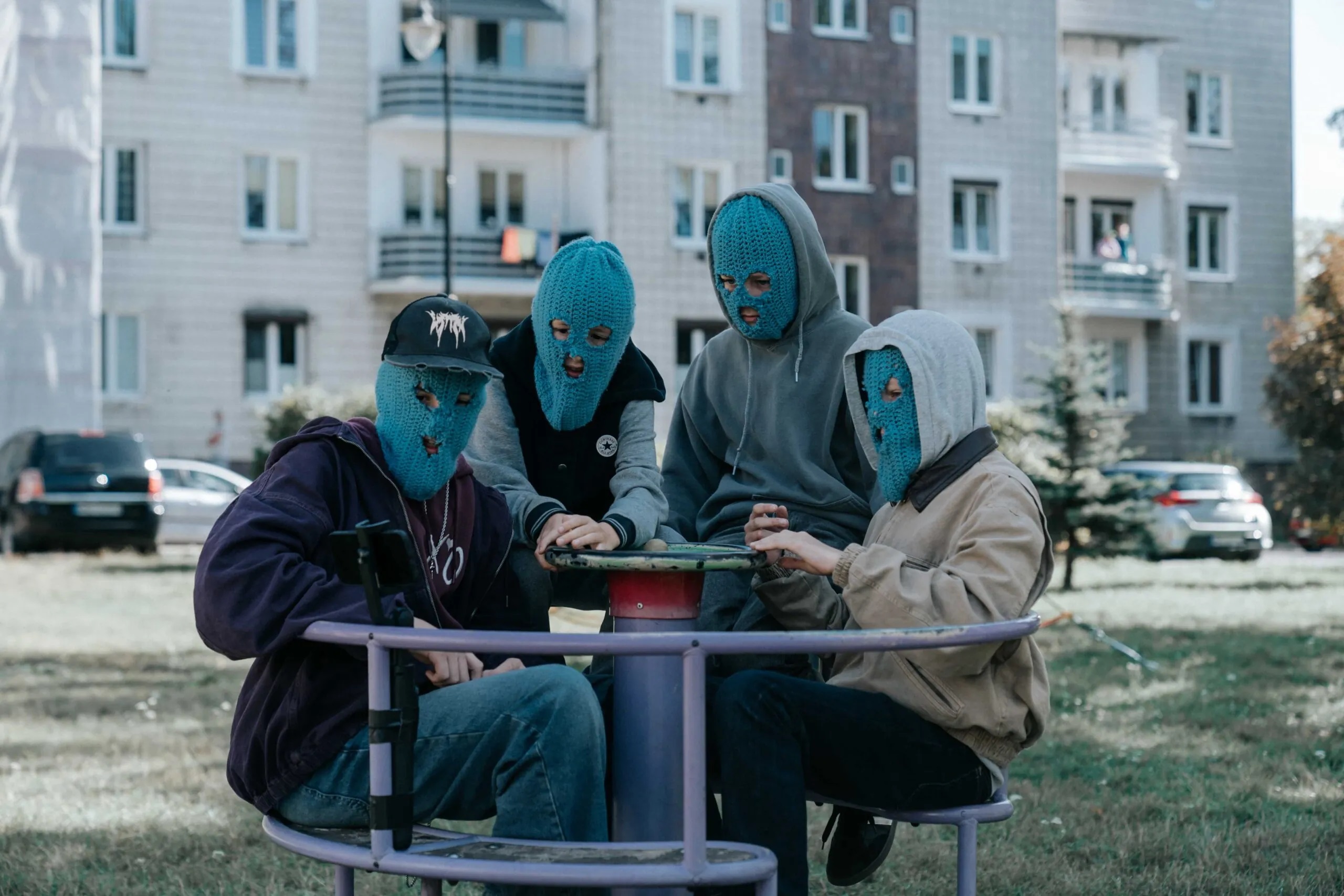
“We won’t change the world with just hip-hop!” says one of the protagonists of the Polish film The Altar Boys (Ministranci) by director Piotr Domalewski. The Altar Boys was one of my personal favourites in the FIPRESCI competition at the 32nd IFF Art Film Košice (19–25 June 2026). It ultimately won the Audience Award.
The Altar Boys
Formally, The Altar Boys is not an especially groundbreaking film. Yet amid a wave of festival titles focused on the darker sides of life, it offered a glimmer of hope that the world might not be quite so broken. It presents a refreshingly childlike view of reality—one not yet tainted by the relativisation of values. Faith in goodness and justice is the main driving force behind the film’s four young protagonists, who encounter the dishonesty and greed of church officials. Not everyone they try to help proves honest either.
Driven by the authentic performances of its four young actors and punctuated by humorous rap interludes, the film finds much of its comedy in the contrast between religious reverence and childlike spontaneity.
We Have to Survive
A different kind of hope emerges in the climate-change documentary We Have to Survive (Musíme prežiť) by Slovak director and producer Tomáš Krupa. When production began seven years ago, the climate crisis dominated public debate. Since then, it has been overshadowed by other global crises, but it has by no means disappeared.
Krupa filmed in Mongolia, Greenland, Australia, and the United States—places where climate change is not an abstract concept but a force reshaping both landscapes and lives. His focus remains firmly on the people confronting these changes, documenting their resilience and ability to adapt, whether by relocating entire homes, burying them underground, or creating oases in inhospitable deserts. The striking cinematography by Martin Čech and Ondřej Szollos is an additional strength.
Everytime
The Blue Angel for Best Film in the International Competition of Feature Films was awarded to the Austrian-German drama Everytime. Its director, Sandra Wollner, also received the Blue Angel for Best Director.
The film examines grief from a temporal distance, avoiding the immediate emotional shock that follows the death of a loved one in favour of exploring its long-term consequences. Hope manifests itself through dreams, visions, and memories that gradually transform the film’s emotional landscape. In its remarkable final act, reality and imagination merge into a hallucinatory sequence in which the boundaries between memory, fantasy, and lived experience become increasingly uncertain.
Made in EU
The textile factory worker portrayed by Gergana Pletnyova in Made in EU appears to have little reason for hope. Exploited by her employer and later ostracised by her entire community after becoming the first local COVID-19 patient, she is turned into a convenient scapegoat. Although the film ends with the possibility of a better future, that hope remains fragile and uncertain.
Stefan Komandarev’s accomplished drama addresses numerous contemporary social issues, earning the FIPRESCI Prize from our jury. It also received a Special Mention from the jury of the International Competition of Central and Eastern European Films. Fellow FIPRESCI juror Pierre-Yves Roger has written in greater detail about the film.
In total, the FIPRESCI jury at the 32nd IFF Art Film Košice evaluated eight films: three in the International Competition of Feature Films, four in the International Competition of Central and Eastern European Films, and one in the In the Light of Shadows section, dedicated to stories centred on women. Among them was Kosara Mitić’s powerful feature debut 17. Had there been an acting award from our jury, its lead performer, Eva Kostic, would certainly have been among the strongest contenders.
Photo: A still from The Altar Boys. Credit: Next Film / Łukasz Bąk.
Matúš Kvasnička
© FIPRESCI 2026