
Lives on the Margin: The Riverbank and Theological-Political Power in an Authoritarian Age
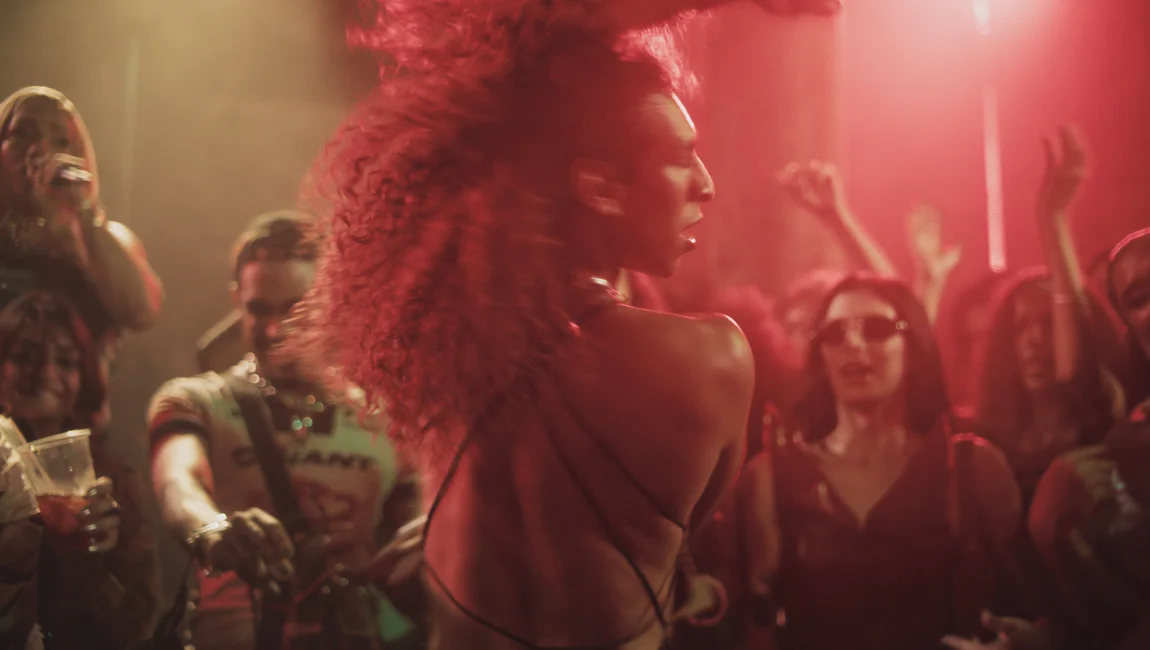
Kurdish film critic Sebahattin Şen examines the FIPRESCI award-winning The Riverbank through the prism of contemporary authoritarianism, exploring how cinematic aesthetics articulate the relationship between religious authority, patriarchal violence, queer desire and freedom.
In recent years, we have witnessed various nation states becoming increasingly authoritarian in Europe and elsewhere: new walls, both real and symbolic, are being built in different parts of the world. This authoritarianism advances in parallel with populist policies, the rhetoric of war and the arming of states. Experts in international relations, politicians, technocrats and journalists declare that the Third World War has begun in a “cold” form. In various media and in interstate discourse, an exclusionary, competitive language hostile to freedom is becoming dominant. Moreover, in the age of Artificial Intelligence, populist and authoritarian states are able to produce new forms of fascist and racist discourse in different ways. Patriarchal and religious ideology constitutes an important dimension of such regimes’ policies and discourses. In this ideology, masculinity, the family, the state, power and religious institutions are sanctified, while women, homosexuals, migrants, animals and ecology are negated. The world, which after the Second World War moved towards freedom, independence and equality, is now heading in the opposite direction, uncannily recalling the uneasy years immediately preceding that conflict.
Screened in the International Competition of the 67th Thessaloniki International Film Festival and winner of the FIPRESCI award, Matheus Farias and Enock Carvalho’s The Riverbank (A Margem do Rio) derives its meaning from the contemporary world described above and becomes a powerful and perceptive critique of its own time. The Riverbank shows how patriarchal, male-dominated discourses and practices are intertwined with religious institutions (in this film, an evangelical church) and with ideology, and illustrates what kinds of violence such combinations can produce. In this respect, it recalls Andrey Zvyagintsev’s Leviathan (Левиафан) (2014), a film that showed how, in Putin’s Russia, state power together with religious and bureaucratic institutions produced repression and violence.
Set in Recife, a Brazilian city surrounded by rivers and mangroves, The Riverbank tells the story of Izaquiel (Caique Copque), a young man who works as a cleaner in a supermarket. Izaquiel’s nightly search for sexual pleasure leads him to Jeremias (Ítalo Martins), a mysterious fisherman. As the violence of a social order woven from moralistic and religious patterns closes in around them, the two men take refuge in the mangroves, where reality and myth intertwine. While the house Izaquiel shares with two trans friends offers him a fragile shelter, the riverbank becomes both a hiding place and a border. In this way, the invisible structures of power that govern the characters’ lives are revealed.
The religious congregation The Riverbank depicts is important in that it allows the film to show how a theological discourse takes shape within an apparatus of power. Neo-Pentecostal churches*, which have spread rapidly in Brazil in recent decades, have become a decisive force within the country’s conservative politics while reaching large masses of Brazilians with the promise of miracles, healing and “prosperity theology”. Forming a powerful evangelical bloc in parliament, these churches are known for their opposition to LGBTQ+ rights. A process that begins with the pastor’s interference in Izaquiel’s appearance and subsequently extends to the violence visited on homosexual men in the mangroves makes visible how this religious power spreads from everyday social ambience into direct assaults on individual human bodies.
Undoubtedly, however, The Riverbank’s significance stems not only from its powerful theological-political critique, but also from its cinematography. In the film, the mangroves, their dark, dense physical structure hidden from the outside, become the site of both secret encounters and violence. This setting plays an important role in shaping The Riverbank’s dreamlike yet uncanny atmosphere. The mangroves turn into a spatialised form of Jacques Lacan’s concept of jouissance and, arguably, an allegory of the terms of our bodily existence: a place oscillating between pleasure and pain, violence and peace, hatred and love. For Izaquiel, the mangroves are at first a space of pleasure and desire, then one of fear and, finally, of liberation.
Another striking feature of The Riverbank is the relative scarcity of dialogue. This strengthens the cinematographic dimension of the film, bringing it closer to a minimalist aesthetic while also foregrounding characters’ physical gestures and facial expressions, their bodies and the performances. In addition, the film’s sound and colour tracks combine a queer perspective with distinctions that reveal class and spatial inequalities, further increasing the film’s power. Consistently apt uses of light and the distribution of sounds and silences reinforce The Riverbank’s contrasts of desire and fear, violence and peace, love and hatred. Careful use of colour, sound and light, steadily rhythmic editing and a slow camera style all strengthen the film’s cinematographic atmosphere.
Finally, let us touch on an aspect of The Riverbank that might be considered a weakness. The opposition established between Izaquiel and Jeremias on the one hand and the church leaders on the other seems to have turned into a straightforward opposition between the good and the bad. However, the world is not a place made up of exclusively good and bad people, as popular cinema and literature often show it. What we identify as good and evil are distributions and practices formed historically, politically, socially and institutionally, and they will be strengthened or weakened by these same forces. We live in a world where, in Karl Marx’s words, all that is solid melts into air once again and in a different form. In this world, the technologies, media, discourses and practices produced by nation states and corporations are moving towards the formation and spread of an authoritarian, repressive, destructive evil opposed to freedom and equality.
*Neo-Pentecostalism is a religious movement that emerged from the evangelical branch of Protestant Christianity and has spread rapidly, especially in Brazil, since the 1970s. Its roots lie in the Pentecostal movement, which is based on the direct experience of the Holy Spirit, miracles, healing and ecstatic worship. The “neo” branch adds to this “prosperity theology”, which holds that faith and donations bring material wealth. It builds large, wealthy churches that make intensive use of the media. Its best-known example is the Universal Church of the Kingdom of God in Brazil. These churches are intertwined with conservative politics in Brazil. They form a powerful evangelical bloc in parliament, take positions against LGBTQ+ rights and supported Bolsonaro. The pastor and his congregation in the film also represent this milieu.
Sebahattin Şen
Edited by Jonny Murray
© FIPRESCI 2026