
London: The Body as Our First Territory
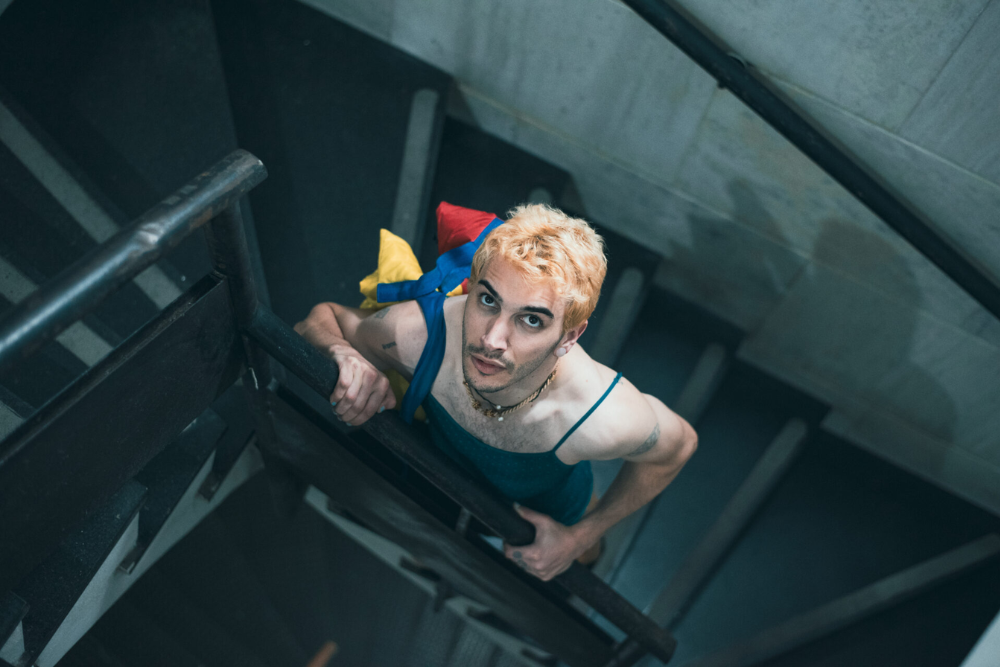
London (2026), directed by Victor Di Marco and Márcio Picoli, had its Brazilian premiere in the Premiere Brasil section of the Rio de Janeiro International Film Festival.
At the beginning of palabras-más, the Chilean poet and artist Cecilia Vicuña tells how she first came to words through riddles. She writes:
“The first questions came to me as visions:
I saw words that contained a question and an answer at once.
I called them riddles.
They said: the word is the riddle and to divine is to find out the divine.”****
My translation. In the original, “adivinar” and “divino” share a root, an echo that English only partly preserves: here, “to divine” keeps the link with the divine, but loses the link with “adivinanza” (riddle).
I try to gather in my head everything that films have taught me. For example, fruits I didn’t know, or words in Southeast Asian countries that sound just like words in Colombian Spanish. I think of all the gestures my body has learned from the upbringing that cinema gave me. Ways of understanding the world that became legible in a movie theater. Like an alphabet that connects territories. I think about this, and I think about how, as a teenager in my neighborhood, I traveled to the antipodes, led by a film. I think that even when I went to a screening alone, cinema was always a bridge that inevitably carried me toward other people.
The first images of London (2026) show the main character from behind, while a few tight shots capture the world rushing past the bus windows. The film’s protagonist, London, speaks in voiceover of the burning of being alive, and of only being able to simply be at night.
The feature follows the story of London, a young Brazilian man, who has a neurological condition and has gone through various episodes of medical diagnoses that lead nowhere. There is a constant contrast between day (the cold light of the city and the hospital, the uncomfortable conversations with family) and night, when London works at a fetish house.
Flipping through my notebook, I find a line by Terry Eagleton written in the margin: ‘There is something in the body that can cause a revolt against the power that marks it.’ Reading it again, I think of London.
I think about everything that makes me uneasy about the word “resistance,” and about how it has become a category that takes in the gestures born from the friction of being alive amid systems of violent corpopolitics. I think of London (2026), of the moments of encounter and friction this character has with others and with themself. What’s very refreshing about this film is imagining new paradigms in which desire, autonomy, and dignity also trace other scenarios of political imagination.
London goes to the hospital, goes to visit their sister and mother. Hides from the diagnoses. Goes to a karaoke bar. Puts up a curtain that falls down and then puts it up again. Has sporadic encounters with lovers. Laughs with their friends. Cries. Laughs. And laughs while crying.
Every time London arrives at the house, a group of children watches from the stairs leading to the building’s upper floors. As if it were a trial. At various points, the film goes back to moments of childhood, when the body is gradually being marked by interaction with other people.
Far from a story, in which the body constantly wants to get out of itself (like the fantasy of virtuality, or of the party as an escape hatch from the world and its violence), this film presents the body as our most immediate way of experiencing life. Without a diagnosis to determine its “limits,” London (2026), brings us back to that first territory through which we touch the world, the place where everything begins. The body, as the limit where we meet the world, takes different forms throughout the film. By day, London walks down the street with an orthopedic brace on one calf. At night, he wraps his body, and those of other men, in plastic. We see him dance with his friends and, in contrast, lie in an MRI machine, forced to stay still in order to receive a “clear” answer about his condition. London (2026) opens cracks in that rigid reading of bodies living with different conditions, and sows gestures of tenderness and humor in the everyday lives of its characters.
This film also feels very important in light of a system/world, in which LGBTQI+ bodies are under threat. London lays out clues for finding possible ways to land and orient ourselves, with desire and closeness, among the fissures of a world governed by systems of knowledge and power like the clinic and gender. And perhaps, as a way of divining the divine, it imagines spaces where the point is not to narrate the story of the wound, but the story of desire.
I imagine that, like dreams and plants, this film has a photosensitive skin that anticipates those forms of friendship that weave familiarity in a context that seems to pull us further and further apart from one another.
Thanks to the light that draws us, together, back to the world.
Leaving the screening, cinema had given me the gift of landing in the world with the certainty, and the desire, to sit down and watch this film with my friends. Because, a little, its universe evoked ours. Sometimes cinema produces strange familiarities that rock our dreams with ferocity and tenderness.
Valentina Giraldo Sánchez
Edited by Ela Bittencourt
© FIPRESCI 2026