
Why Do Women Make Harsher Films?
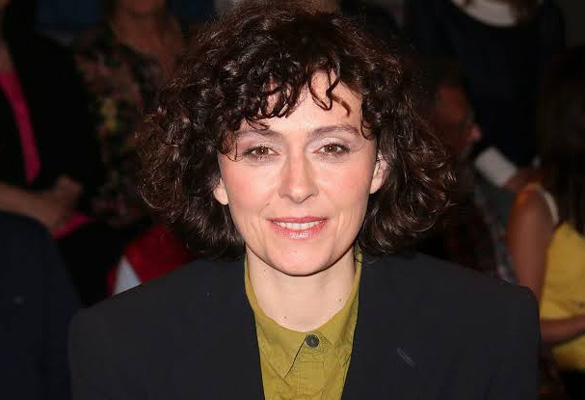
In this interview German filmmaker Isa Willinger discusses her latest documentary No Mercy with Petra Belc, a film with many female directors as subjects and screened in the regional competition program of this year’s festival.
No Mercy by the German director Isa Willinger screened in the regional competition program at this year’s ZagrebDox film festival, which took place 19th-26th April 2026. The film itself provided the momentum behind the round table discussion that took place on the last day of the festival and was titled No Mercy: Female Gaze and the Film Industry. Conceptualized and moderated by Dina Pokrajac, the round table gathered filmmakers, producers and film scholars – Slovenian film director Maja Prettner, Dutch producer and filmmaker Jamillah Van der Hulst, Isa Willinger, and myself as a film scholar, and revolved around different questions opened by the Willinger film. Can we talk about the female gaze or is it essentializing women? Should we talk about a “different gaze” or an “oppositional one” as bell hooks phrased it? How do women use cinematic language when trying to capture the idiosyncrasies of the “universal” female experience and is film criticism perhaps less gendered than the filmmaking space? Panelists coming from different fields and backgrounds, some of them also being mothers, discussed their experiences of being a part of the film industry. Although there was no unanimous conclusion or a definite answer, I feel it is safe to conclude we all agreed on one thing – the film industry can be an unforgiving world, demanding sacrifices and placing enormous pressure on filmmakers. Cinema as a profession is shaped by long hours, precariousness, travel, and intense competition, and especially for women who are mothers, these demands often reveal how deeply the industry continues to be structured around assumptions that do not always accommodate care work and family life.
This does not pertain solely to the practitioners – film scholars can also be accused of “mellowness” in their experience of feminist or deliberately “women’s” films. When I first saw Céline Sciamma’s Petite Maman (2021) in the cinema, I found myself crying, deeply moved by something in the film which was not obvious on the first viewing. Watching Isa Willinger’s latest documentary, which brings together an impressive constellation of filmmakers to discuss women, cinema, violence, desire, and representation through the prism of the Ukrainian film director Kira Muratova’s notion of “harshness”; I was reminded of that experience and the smirk it caused among my male colleagues. Willinger’s No Mercy does not offer definitive answers: It stages a conversation between filmmakers whose positions frequently diverge, resulting in a polyphonic inquiry into the relationship between women’s lived experiences and the moving image. We spoke in Zagreb about feminist film language, motherhood, Kira Muratova, Céline Sciamma, Laura Mulvey, and the challenges of assembling fourteen filmmakers into a single cinematic argument – why do women make harsher films?
Petra Belc: I would start with a question, proposed by my six-and-a-half-year-old daughter, who was curious to know how you decided to make a film on this topic, the contemporary women’s cinema? What was the theoretical or intellectual starting point of No Mercy?
Isa Willinger: Oh, that’s so cute! Well, the starting point was Kira Muratova’s idea that women make harsher films, but there were a couple of starting points. Originally I wanted to make a film on women philosophers, and I was talking to the commissioning editor at ARTE, because she had expressed interest in working with me as well. And I pitched this to her, and she said: ‘Well, how about women directors, then you have more images?’ Since I had always been interested in women’s cinema, this was kind of a no-brainer and when I was thinking what could be the overarching topic or question I remembered Muratova’s hypothesis which was provocative and also surprising enough to build a narrative upon. In the end it became also a film on women philosophers, because these women are also philosophers’ in a way, even though they’re filmmakers, because of the depth of the ideas on perception and film theory they articulate. American filmmaker Ana Lily Amirpour for instance says that she used to identify with the boys on the screen as a kid, and this is an aspect of reception theory – this idea that in film you can identify with whomever on the screen. It is actually a very queer idea. There is much depth to all their thinking in the film. Sometimes I’m a little concerned that it’s overloaded, that people are too challenged in a way. It happened with older viewers who said they needed to see the film twice in order to understand everything. But sometimes I think we are also culturally taught to always need to get a definitive answer. But that is not how art works. In art, quite often, you ask a question and you get more questions back. What art is to me is something unanswerable, something impossible to fully grasp. No Mercy is not like a TV or a Netflix documentary, it is a creative documentary infused with different artistic strategies.
PB: How did you choose this lineup of women? What was your guiding thread? Claire Denis, for instance, is not in the film…
IW: The selection process was subjective. I watched many, many films and afterwards I chose the women whose films really spoke to me and also they had what I felt was somewhat of a connection to Muratova’s hypothesis. With Claire Denis I felt there simply were other French directors who would contribute more interesting thoughts to the conversation since they had voiced interesting ideas about women and cinema before. Also, I’m not a huge fan of Denis’ films personally. For some reason, they do not really speak to me, and this was a precondition — that the films really needed to touch me somehow. I really wanted Catherine Breillat, who is such an early feminist voice in filmmaking. She is so provocative. I knew I wanted Céline Sciamma because she is such an important feminist thinker on film, and I also knew I wanted Virginie Despentes because of her feminist essays. So these were already three important French directors for me, and I wanted to include people from different countries and continents, I really wanted this to be a global conversation.
PB: And what about Kelly Reichardt, or Kathryn Bigelow?
IW: I like Reichardt’s films a lot, but her films are very tender. She wasn’t a perfect fit for me. We asked Bigelow, of course. She was the first one we asked, several times through different channels, but received no answer whatsoever. For the big names, you have to go through their agent, and often you never get any reply. It is very hard. And also, of course, Jane Campion, I would have loved to have her in the film because she said very interesting things about women in cinema, and she was the first woman to win the Palme d’Or. We kept getting answers that she is busy at the moment, and might be available in two years, but we couldn’t wait another two years. So Bigelow and Campion are my two big regrets, because I would have loved to have them in the film, but the rest of the filmmakers I got to interview for the film were also my very first choice and I’m absolutely grateful it worked out.
PB: In any case it’s an impressive array of authors, and some of the names were even new to me, so you definitely gave me plenty of material to jump into.
IW: That was sort of the idea, to create something like – not a canon, because it’s not complete by any means, but an inspiration to watch, to dive into these worlds that many of us haven’t heard about and haven’t seen. Iranian filmmaker Marzieh Meshkini is such an example, she won an award in Venice, but why doesn’t anybody know of her films these days?
PB: How complicated was it to reach all those women?
IW: It was a long process. Our line producer did a lot of the contacting, I would draft personal emails and then she sent those formally. We had a different route with everyone. Sometimes we would contact a producer, sometimes a distributor, sometimes it was an agent, and sometimes we tried some personal paths to somebody who had met somebody… It was very different with each author. With some authors we immediately reached an agreement, but with some it took a longer period of time…
PB: Was it difficult to raise money for this project?
IW: Right away I had an interested broadcaster — ZDF/ARTE, which is the co-producer. The problem was more that we needed a very big budget because of the film excerpts we are using. The budget was one million, because the film excerpts we had to license for No Mercy cost already like a fifth of the budget. In order to get that high of a budget together, we had to find an Austrian co-producer, they had to apply to their film funds, so the process was quite long, but I think not because of the subject…
PB: Compared to your previous film, Plastic Fantastic, was it more expensive?
IW: Yes, it was twice the budget I usually have.
PB: Was there a body of theory or a theoretical apparatus, apart from Laura Mulvey’s concept of the male gaze and its opposite – the female gaze – that you were using as a navigational tool while trying to articulate the film?
IW: There was not one particular theory… Back when I was studying humanities, I wrote my master’s thesis on feminist film theory. This was something that already gave me a solid foundation in terms of what had been written as feminist theory and phenomenology. In that respect, there are different theories underneath my questioning. The women in the film are not theorists, they are all practitioners, and that was a conscious decision – not to include film theorists or film historians. It’s not that kind of film. I wanted to talk with the artists about their motivation and their view on what it is like to be a woman in this world, and what inspires their films and their film language. I wanted to talk about pain and joy and revenge and grief and hope, along the more abstract questions about perception and gender. And I think it is very rich, so I’m not missing a more orderly theoretical frame.
PB: No, I didn’t miss it as well. I just wanted to know what was in the back of your mind while you were asking them questions, or while you were editing the film.
IW: Mulvey had been a huge influence on me, but I was also critical about her text after reading it. I mean – women can also enjoy looking, right? What inspired me to become a filmmaker is precisely the fact that we can also enjoy looking and be voyeurs and love, even fetishize images. I wanted to have that agency as a woman, to be looking and to be gazing and to be enjoying all of that, so that’s definitely part of what inspired me to become a filmmaker. Judith Butler has been a huge influence on my thinking as well, but also French film director and writer Virginie Despentes. She is actually more famous as a writer these days; she’s a best best-selling novelist. She has also written very interesting essays on feminism and she has a very unusual perspective. For example, one of her hypothesis is that in pornography, male viewers actually identify with the woman on screen. Despentes turns around a lot of clichéd thoughts, so that is why I wanted to have her in the film.
PB: You also wrote a book on Kira Muratova. Are you planning to turn No Mercy into a book of integral interviews with the directors? At present we see them as interconnected voices, and I guess you necessarily had to cut something down, right?
IW: Yes of course, I had to cut a lot. Each interview is like an hour and a half, and in the film we can see only five minutes of each conversation. But I don’t see it so much in book format. Since these interviews are already videoed, it would be better to publish them as video podcasts, which too often feature men talking to men. I think it would be a shame to lose the tone and the mimic of the speakers, because some of them are also very funny. Joey Soloway can be hilarious, or the way Amirpour talks – she has a lot of wit, and I think we would lose so much if we just turned this into text. Unfortunately there is no money now to do it, but I would be up for it for sure.
PB: There is this idea of the women’s harshness and brutality being somewhat of a return of the repressed, something that comes back with a vengeance after being suppressed for a long time. Could this maybe stand as a reason for the harshness and brutality in these women’s films?
IW: Yes, revenge for sexual abuse, for example. I mean, in Rape Me (Baise-moi, 2000) by Despentes – it is all right there. There’s a scene when a woman is being cat called by a man in a sort of very vulgar way and then she shoots him. It would be very different if I talked about this with psychoanalysts, but that was not my aim. My aim was really to talk to filmmakers, and sometimes let their work speak for itself.
PB: It was quite refreshing listening to the filmmakers themselves. There is often a bit of a gap between the author’s own ideas and the theory inscribing into or reading from the work certain conclusions.
IW: Yeah, we’re all always reading a little bit of ourselves into all of our work.
PB: How do you define harshness?
IW: There are definitely many definitions, not just one. Regarding women’s cinema, the one I find the most adequate is: brutal honesty. To show in a brutally honest manner the experience women and girls have been going through. Another perspective that I really like was given by the American filmmaker Nina Menkes. She said that if a woman director decides to not have the sexualized, objectified woman in a film, right away the movie appears harsh. I think that is a very smart way of looking at it, and I think it’s true, because we are so used to seeing these characters and the male stories around them in mainstream film, that it became sort of a norm of film for us. When that piece of the puzzle is missing, then right away, the film appears to be somehow a harsher movie, right?
PB: For quite some time I had my questions and doubts regarding cinema as a particular form of artistic labor, which felt more and more like a different game which is harsh by itself. It was Jamillah van der Hulst who quite nicely articulated that during our round table discussion, reflecting on how she as a producer sometimes necessarily needs to be rough and make harsh decisions. That also made me think on whether this artistic labor we decided to be a part of is more like a suit tailored for men, particularly when it comes to maternity clothes like nursing bras or skin-to-skin wrap tops… The concept is the same, but there are slightly different features or tweaks, which can accommodate our different biology’s. I know this is a fraught way to phrase it, and I’ve heard Judith Butler when she said we need to “undo gender” precisely because the assumption that biology is destiny is itself the problem. But I still think there’s something to how the postpartum body specifically works that these designs are responding to.
IW: I guess most of us as feminists are reluctant to generalize so much and say – you know, it’s tough, so it’s for men. But the older I get, the more I also believe gender is sort of a socio-hormonal situation, and not only a social construct. There is also a physiological aspect to gender, for sure, I agree. But the problem is we cannot really recognize what is what, because the social and physiological, biological elements, are really intertwined with each other and it is impossible to undo it and say violence and harshness are male, while peace and tenderness are female. That would be too simple.
PB: For sure. I appreciate Erich Neumann’s theories on the Big Mother where he takes the mother as a central figure in our evolvement and development of consciousness. And of course, mothers can be brutal, they can be very angry, and there is a bit of everything in each of the sexes, so yes, I agree that this brutality should not necessarily be attributed to a male principle, because I think can be very much a female principle.
IW: I agree. Céline Sciamma’s way of thinking aligns violence with an element of patriarchy and a patriarchal film language. I think that is a very interesting thought and I wouldn’t completely dismiss it, but I tend to think that it is a human trait. On the other hand I sometimes also wonder if we would have all these wars coming from male egos that we’re seeing these days if we had complete matriarchy – different sorts of social and organizational structures that we cannot even think about right now. There are, of course, many different kinds of women, but it is women who give birth and we do not want our children to go to war and get killed. Maybe we would also have structures of oppressions in matriarchy, but it probably wouldn’t be the same as we experience them today. So what can we do? We can envision such a world and think of it in a utopian way like Sciamma is doing as a source of inspiration. Her point of view is very fresh; I find her concepts very inspiring.
PB: Did any of the directors demand to see the edit?
IW: Sciamma’s producer did, because we had to license all the excerpts, and we had to pay for them. It was a lot of money, but that is just film business, and it is very tough. Sciamma didn’t let us use any excerpts of her early films that still show violence because they don’t represent her stance anymore. And I think it’s just very consequential of her to refuse using these scenes to illustrate what she was saying, because she does not think these scenes should be out there again and again and again. So we had to take them out. What she is saying becomes maybe a little bit more abstract because when you don’t know her early films, it’s harder to understand what she is talking about and trying to do today.
PB: During our round table discussion you said you found Petite Maman a bit mellow, if I understood you correctly. Could you maybe explain why you see it in such a way?
IW: I found it mellow because it misses conflicts, as Sciamma herself would define it. In the interview I did with her she said that she was trying to get away from the classical film narratives where conflict, deception and lies form an integral part of the film. According to her, there is a patriarchal way of telling stories, using violence, conflict and psychological clash, and so Petite Maman was her attempt to move away from such discourse. Sciamma doesn’t say “harmony”, but the film is beautiful in its symbiosis and harmony between the two girls, and she is exploring new ways of telling stories that are, maybe, her vision of feminist or female. I think it’s a very interesting endeavor, even though I don’t fully agree with her. But then again, there are different perspectives regarding these questions and I love that she explores this unusual perspective.
PB: How do you see an ideal feminist film?
IW: There is no ideal feminist film. A feminist film could be one which centers the female experience, that is what the female gaze actually is. But it can also be done badly; it’s not automatically a good film. Theoretically, anyone can shoot a feminist film. It is film language, anyone can learn it. Also, we all have imagination and empathy to put ourselves into each other’s shoes. But I guess it’s a bit harder for men to enter a woman’s experience, since they’re less used to doing it. A lot of male directors, artists have not been so interested in doing that – sort of stepping out of their own vision, desire or perspective and really put themselves in women’s shoes. It is not impossible, and some have done it.
PB: But the question is whether a woman, like Anna Karenina, would really commit suicide for a love unreturned?
IW: Women are dying so much in men’s works of art that we are kind of tired of dying all the time. And since women are always dying in films by men, being a woman director, I will not have my heroine die now. And also simply, because we work within a certain artistic or cultural tradition and we want to create something original and therefore get away from clichés. So if there hadn’t been that male cliché of dying women, then, you know, maybe I would let my heroine die…
PB: Did you notice that films made by women often tend to be labeled as feminist, simply because of their author’s gender, despite carrying an internalized patriarchal way of seeing or looking at things?
IW: There is a French director, Rebecca Zlotowski, who is quite celebrated as a feminist filmmaker, but I find her very physical and sexual images more in line with the mainstream film language and male films. Knowing who the author is, you will always project a little bit onto the film, and that is another interesting aspect of reception theory. I noticed that there is a tendency that women cast their lead actresses differently from men; they are not quite as perfectly beautiful. If you take Andrea Arnold’s Fish Tank — a masterpiece and one of my favorite films — you will see a fourteen-year-old girl who is very strong and interesting as a character, but she is not particularly beautiful. Hamnet by Chloé Zhao is another example of such casting. The main actress, with wrinkles around her eyes, and not succumbing to perfect Barbie-like standards. Jessie Buckley really has this inner emotional force, the way Zhao directs her and lets her express her feminine strength in a very unusual, almost unseen way in cinema. It’s very interesting to watch that movie just because of the female lead.
PB: There is a remark on Godard made by the French filmmaker Catherine Breillat, which I didn’t really quite catch – what she was trying to convey when she was reading Godard’s letter?
IW: It was Godard’s arrogance that she was addressing. First of all, he turns down her invitation to participate in a film by saying: “Well, I already answered to your question in a film I made thirty years ago”. Then he goes on to quote himself, as well as listing the names of other male directors, without a single woman in that list. And Breillat herself is a woman who is trying to make something unusual, inviting him to be part of it. Instead of a simple refusal, Godard began to ‘mansplain’ to her. I mean, I respect Godard, but I also think all these guys were so macho at the time, and I love how Breillat exposes that machismo by reading that letter to us. Varda is not named in that letter; she was already a great filmmaker at the time.
PB: Are we are coming back to the fact that women’s films are different? If you watch La Pointe Courte or Cléo de 5 à 7 there is a noticeable difference, even if it was a Nouvelle Vague film.
IW: Hmm… I wouldn’t generalize but there is a tendency to be different, I agree, starting with the mere fact that often women center female experience and they do it in a very original way because they are telling stories that they have experienced themselves and have been very close to themselves. Then the big unsolved question is if there is something in our chromosomes, hormones, brains or biology that also creates a difference: do women think less linear, in a more circular or more global, or empathy-related way? This is unanswerable, but I think it is a very interesting question. Speaking of that, No Mercy has a meandering structure, it is not like a linear march where we are asking a question, and providing a clear cut answer in the end. I like to be poetic even when I’m working on political topics.
PB: After reading for so long on women’s cinema and feminist film theories, No Mercy felt like finally coming home. It is also packed with information, and the editing is very impactful and dynamic. How did you decide on such editing approach?
IW: The film picks up a lot of questions on film theory, perception theory, gender theory… As for the editing, the editor Lena Hatebur contributed a big part of the film language to the film. This is the second time I worked with her, and she is not a classical documentary editor. She is very open in her approaches, watching also the way Netflix documentaries or music videos are edited for example. She has a very non-judgmental, sort of non-artsy, non-arrogant approach to her work, thinking everything has its place. Initially I worked with another editor for four months on the material, and the film wasn’t really working out, it felt little bit like a drag the whole time. And then Lena came in, and said we need to dynamize the film and make it wilder and faster, which was the same vision I had, and eventually her approach and my ideas came together well.
PB: Some people commented on the film as “being only informative” and I got an impression that they expected more when it comes to the formal language of the film. On the other hand, I found the topic, the presence of these women and the things you were discussing, especially everything coming from Jackie Buet, director of the Women’s International Film Festival in Créteil (Films de Femmes), already more than enough. Do you have any knowledge of the reception of your film so far?
IW: We had a cinema release in Austria and Germany already in March and there was a lot of press. We were all impressed by how much press we got, both from smaller and bigger publications, and it was overwhelmingly positive, I have to say. I only read one relatively negative review that was by a woman, interestingly, because a lot of the reviewers were men who really liked the film, so that was a positive surprise. This “negative” review complained about not getting an answer to the title question of the film, which I think is a simplistic idea of film, because documentary film doesn’t always have to give you one answer, right? This is not Netflix, it is not message-driven, and has no clear question-answer trajectory.
PB: What would you single out as one or maybe several biggest challenges you faced while making this film?
IW: Editing was the hardest. Because we had fourteen very strong characters, very strong interviews, along with a ton of material for the film excerpts, and then Kira Muratova as a main, fifteenth character, and of course I myself became a character in the film. That was something I did not anticipate, it emerged during the editing process. Finding that overall structure was quite difficult, it took us seven months to edit the film.
PB: How many hours of material did you have?
IW: It is difficult to say as everything was in terabytes, and we also had all the film excerpts… I think the editing really deserves an award, and I hope Lena will get it sooner or later because I think her special approach really helped the piece to come together.
PB: It was very Godardian, with all those big letters on the screen as well.
IW: It is multilayered. Maybe one can draw a comparison to the female body, particularly the vulva and the female orgasm. Our nerve system in our genitalia, space-wise, is different from the male one. The male nerves accumulate in one spot, whereas ours spreads out, so we can experience orgasm in different parts of that large nerve system. Maybe it’s just a metaphor or maybe there is truth to it, I really do not know, but sometimes it is interesting to fantasize about it.
PB: I have one unavoidable question for the end: do you already have plans for your next project?
IW: I am developing a film on artificial intelligence, but it is not there yet in terms of financing…
PB: You already made something along these lines?
IW: Yes, in 2019 my debut film Hi, A. I. came out, a film that dealt with human-robot relationships, but this one is different – it is about human and AI alignment and the loss of control, or the question on how to keep control and the fight for regulation.
PB: Do you use AI?
IW: Yes, of course. I have been developing pitches for television docs this past year. And I use AI for research. But you have to pay attention so they don’t sell you their hallucinations. That is a big problem.
PB: Just as you have to do with people.
IW: Of course. Yeah, you’re right.
Fittingly, our conversation ends the way No Mercy does – without a settled answer. Willinger’s refusal of definitive conclusions, which so many of her subjects share, extends even to the question that gave the round table at this year’s ZagrebDox its title: Is there such a thing as a female gaze, and does it make films harsher? Willinger’s No Mercy doesn’t resolve that question, but it also refuses to look away from it, or to pretend that fourteen very different women could ever agree on what to do with it. That refusal, more than any thesis about gender and violence, is what makes the film worth sitting with.
Petra Belc
Edited by Steven Yates
© FIPRESCI 2026