
Twenty Years On: Returning to the FIPRESCI Jury at the 25th TIFF Cluj-Napoca
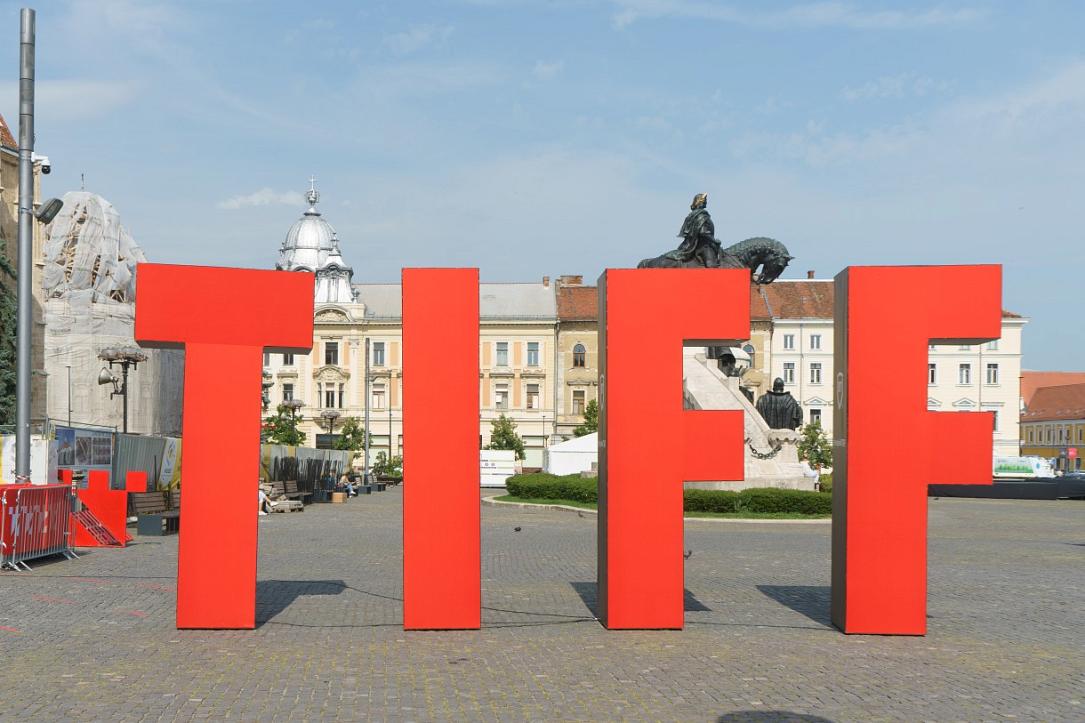
Having first served on a FIPRESCI jury at TIFF in 2007, Romanian critic Marian Țuțui returns nearly two decades later to reflect on the remarkable transformation of the festival, the evolution of Romanian cinema since the New Wave, and the enduring legacy of Stuff and Dough.
In 2007, at the seventh edition of TIFF, I served on my first FIPRESCI jury. This year, at the festival’s 25th edition, almost twenty years later, I returned to the jury and found myself reflecting on how much both the festival and Romanian cinema have changed over the intervening years.
The 2007 edition was marked by the number seven. It featured a series of humorous James Bond-inspired video spots directed by seven Romanian filmmakers—Radu Muntean, Corneliu Porumboiu, Nae Caranfil, Tudor Giurgiu, Adrian Sitaru, Paul Negoescu, and Bogdan Mustață. Although memorable Romanian films competed that year, including Boogie, A Good Day for a Swim (O zi bună de plajă), and Morgen, none received the festival’s highest honours. I also remember the inauguration of Romania’s first drive-in cinema in Cluj-Napoca, where I watched City of God (Cidade de Deus), and the presence of Catherine Deneuve as the festival’s guest of honour.
This year, the leading figures of the Romanian New Wave were present largely outside the competition. Radu Jude presented Dracula, his satirical mosaic of fourteen loosely connected stories, alongside his French-language debut Diary of a Chambermaid (Le journal d’une femme de chambre) and the short documentary Shot Reverse Shot (Plan contraplan), co-directed with historian Adrian Cioflâncă. Corneliu Porumboiu received the festival’s Lifetime Achievement Award, accompanied by a retrospective of his films. Cristi Puiu and Cristian Mungiu were honoured with special screenings celebrating the twenty-fifth anniversary of their feature debuts. Puiu’s Stuff and Dough (Marfa și banii) is widely regarded as the film that inaugurated the Romanian New Wave, while Mungiu’s Occident holds the distinction of being the first feature ever screened at TIFF.
In some respects, the two editions resemble one another. In 2007, the Transylvania Trophy went to the Mexican film Intimidades de Shakespeare y Víctor Hugo, directed by Yulene Olaizola. In 2026, the award went to the Spanish-French co-production Lionel, directed by Carlos Saiz. The guest of honour this year was another great screen icon, Ornella Muti.
The differences, however, are even more striking. The directors who once represented the emerging Romanian New Wave are now internationally established auteurs premiering their work at Cannes, Berlin, Venice, and Locarno. Some have begun making films abroad, such as Radu Jude with Diary of a Chambermaid and Cristian Mungiu with Fjord, which won the Palme d’Or at Cannes earlier this year.
Romanian cinema itself has also evolved. The number of domestic productions has grown, and genres with broader audience appeal have returned alongside the gradual exhaustion of the minimalist dramas that defined the New Wave. Another recent development, reflected at TIFF, is the increasing number of actors making successful directorial debuts. Maria Popistașu, together with screenwriter Alex Baciu, won the award for Best Romanian Feature with Y. Valeriu Andriuță received a Special Mention for The Circle (Cercul), while Cristian Bota won the Debut Award for Back and Forth (Dus întors).
The festival’s growth is equally impressive. In 2007, TIFF presented around 160 films to approximately 55,000 spectators. This year, the programme included 210 films and attracted around 130,000 visitors. Beyond the screenings themselves, the festival now encompasses events such as Notte Morricone, the dance performance choreographed by Marcos Morau, and travelling retrospectives extending throughout the summer to Bucharest, Chișinău, Sibiu, Biertan, Timișoara, and Oradea.
Over the past quarter-century, TIFF has transformed Cluj into Romania’s cinematic capital and one of southeastern Europe’s major cultural destinations. The festival has helped revive local cinemas that were on the verge of disappearing two decades ago, stimulated other cultural institutions, and generated substantial benefits for the city’s hospitality industry and local economy.
Perhaps the most revealing comparison, however, lies between two road movies. Cristi Puiu’s Stuff and Dough (Marfa și banii) from 2001 remains the film universally recognised as launching the Romanian New Wave. Cristian Bota’s Back and Forth, which won this year’s Debut Award, also unfolds as a road movie, though within the confined space of a family van.
Puiu’s film combined the conventions of the road movie and the thriller to produce an unsparing portrait of post-communist Romania. Bota’s work, while skilfully written and featuring sharp, often darkly humorous dialogue, inevitably evokes a sense of déjà vu. Its protagonist, Cornel—played by the director himself—is weighed down by family tensions and resentment towards his remarried father, portrayed by Adrian Titieni, a former intelligence officer haunted by personal tragedy. Both actors also appeared together in The Father Who Moves Mountains (Tata mută munții), where Titieni likewise played a former intelligence officer, reinforcing a certain familiarity in the film’s dramatic construction.
Back and Forth is a solid debut, and audiences clearly responded to its emotional intensity. Yet twenty-five years after Stuff and Dough, Puiu’s film remains an unmatched landmark of Romanian cinema. It continues to stand as one of the defining achievements against which subsequent generations are inevitably measured.
Marian Țuțui
Edited by Birgit Beumers
© FIPRESCI 2026