
The State of the Art of Japanese Youth Film: A Critical Reading of “Burn” from BIFAN 30 World Selection
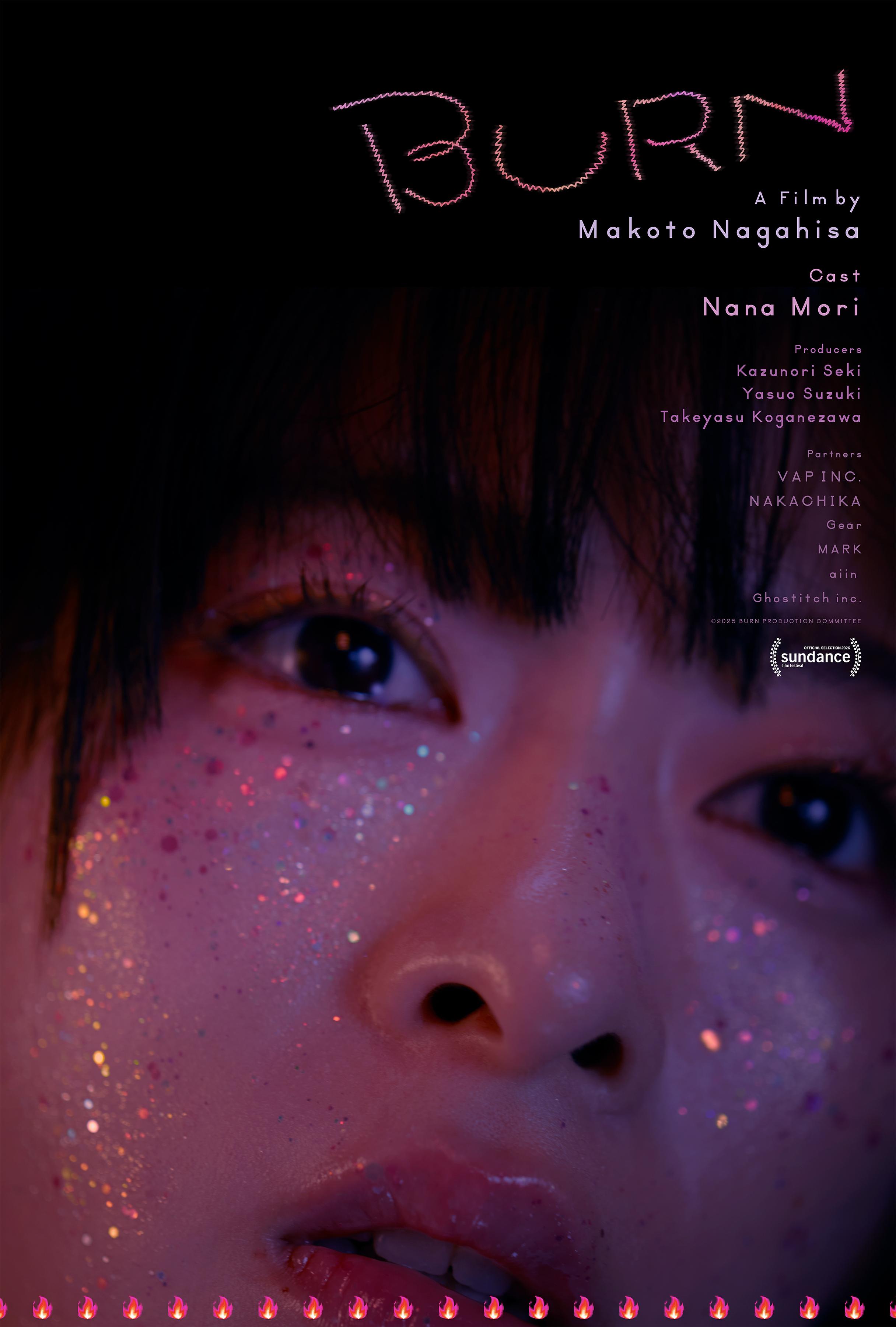
Nagahisa Makoto’s Burn revisits Japan’s tradition of uncompromising youth cinema through the story of vulnerable teenagers drawn into the dangerous underworld of Kabukichō. Giovanni Stigliano Messuti examines the film’s striking visual ambitions and urgent social themes, while questioning whether its pop-cultural style ultimately overshadows the psychological complexity of its young characters.
Under the motto “New era, new skin,” Bucheon International Fantastic Film Festival recently celebrated its 30th edition with an intriguing selection of alternative perspectives on genre cinema from Asia and beyond. Specifically, the Bucheon Choice World: Features section, whose mission is to showcase “films that push beyond convention through bold new worldviews, distinctive styles, and innovative approaches to genre cinema,” featured eleven entries from nine different countries—all in the run for the FIPRESCI Award.
Among them, Burn (Enjō, 2026) by Nagahisa Makoto, one of the two entries representing Japan, stands out as a revival of a defining genre of the Japanese film industry, though it refrains from raising the bar of what can be shown on screen compared to the past. Indeed, this may seem at odds with a cinematic heritage that has achieved global popularity by leveraging on its “extreme” features. After positioning Burn in this niche context, I mean to elaborate on its artistic ambitions, as well as on what it discloses about industry trends in Japan.
In terms of categorising it, Burn can be said to belong to the hardcore strain of seishun eiga (youth film), in that the individual journey of the lead character from childhood to adulthood is not linked to the life events experienced by teenagers within the school or family environment (e.g., an unrequited first love, making friends at afterschool clubs, a summer vacation at the parents’ hometown). If anything, this subgenre is concerned with what happens to kids who, because of the lack or failure of similar safeguards, are left to themselves. As a result, they would start questioning their identity by relying on their inner voice—sometimes giving in to their darkest thoughts—or by cynically subscribing to the worldview of the adults, whereby only sex and money seem to hold value.
While not being exclusive to Japanese cinema, its origins in the country can be traced back to the so-called Taiyōzoku films—from the title of the original novel by Ishihara Shintarō that gave rise to the cultural phenomenon of the “angry young men” of Japan—produced by Daiei and Nikkatsu in the 1950s. It then achieved its current status as a staple of the Japanese film industry in the 1980s, thanks to the efforts of directors such as Sōmai Shinji, who, already accustomed to the conventions of pinku and yakuza eiga, contributed with a fresh perspective on the female body. However voyeuristic, said perspective had the heroines’ body evolve from passive subject of the male gaze to weapon and device that could help their emancipation, as they affirm themselves as women that cannot be toyed with—such as in Bu Su (Busu, 1987) by Ichikawa Jun—or as they willingly linger in childhood against adult logic, whatever the cost—such as in Sōmai’s Typhoon Club (Taifū kurabu, 1985).
Later on, the genre experienced a renaissance between the 1990s and the early 2000s, with an added layer of social commentary pinpointing recent tendencies of the youth that traditional media often failed to grasp and misrepresented.
In this fashion, Kitano Takeshi’s Kids Return (Kizzu ritān, 1996) addressed teen delinquency at a turning point when the conventional system of gang affiliation had become a thing of the past, with less organized formations such as hangure taking over. Similarly, Iwai Shunji’s All About Lily Chou-Chou (Rirī Shushu no subete, 2001) focused on bullying, as well as on the ascent of online forums as meeting places where youngsters felt safer than in the real world. Anno Hideaki’s Love & Pop (Rabu ando poppu, 1998) went even further in shedding light on the grey areas of Japanese society, as a film committed to analyze the malaise driving the protagonists’ decision to enter the underworld of compensated dating (enjo kōsai).
Yet, even in their graphic depiction of social issues, seishun eiga from this period did not fail to pair their j’accuse with a poignant, intimate introspection, rendering the lead characters’ loss of innocence bleak and moving at the same time.
Such is the tradition that Nagahisa Makoto’ Burn, consciously references. As mentioned above, youth film is not a genre exclusive to Japan, and Nagahisa surely does not hide his appreciation of Lilya 4-ever (Lilja 4-ever, 2002) by Lukas Moodysson, whose shaky camera work and final sequence—the near-death experience on the rooftop with the kids wearing angel wings—are paid homage to. Produced independently and distributed by Nakachika Pictures, Burn is consistent with Nagahisa’s visual style from his previous features, mixing the vivid color palette and lush attires of TV commercials—arguably owing to his background as advertisement planner—with found footage and camera angles inspired by Japanese animation—such as when shots are revisited as dioramas from an external p.o.v., reminiscent of Kon Satoshi’s metacinematic divertissements in Paprika (Papurika, 2006).
The film revolves around the life of Julie (played by Mori Nana), a junior high student physically abused by her father, a religious fanatic. When the latter dies, she seizes the moment to flee to Tōyoko Square in Kabukichō, where other “troubled kids” gather under the aegis of a mysterious Twitter user known as Kami-kun, leaving behind her mother and sister. Due to an overdose of sleeping pills, Julie needs to be hospitalized and transferred to a temporary shelter facility where she befriends Mitsuba (Aoi Yamada), a former Tōyoko kid looking forward to getting back to Kabukichō. The two friends decide to break out of their teenage prison and rejoin the group, with a new target in mind: earn ten million yen and run away abroad. Descending into the depths of sex industry to fulfil their promise, their dreams shatter, together with their sanity.
While the story is technically fictional, the misfortunes of Julie and the other teenagers around her are based on actual events. The phenomenon of the Tōyoko kids, who gather in the cordoned-off perimeter informally known as Tōyoko square (i.e., “close to the Tōhō Theater” in Shinjuku), has been drawing growing attention from the authorities, especially in the wake of concerned posts by foreign tourists on social media regarding the well-being of these wandering minors. Even during the pandemic, the prohibition of large gatherings in public spaces did not prevent them to return to the square, with two of them committing suicide in 2021 while under the influence—as referenced in Burn by the tragic end of Risu (Sota Ryōsuke), whose addiction and depression bring him to take his own life.
Generally speaking, Shinjuku area is known for the plethora of barely-legal businesses it hosts, where child prostitution and unfair billing are overlooked by law enforcement: such is the case for “tsuke,” a practice by which male escorts (hosuto) charge unsuspecting teenage girls for activities outside the club’s premises, presenting an exorbitant tab at the end of the month—which Mitusba falls prey to in the film. Albeit timidly, Burn also seems to point at the lack of governmental control over sects. The figure of Julie’s abusive father (Furutachi Kanji), mixing beliefs of Christianism with a fanatic approach to impurity and divine retribution, is stylized as an adept of the Unification Church. Founded in South Korea, the Japanese branch of this cult has developed a deep network of corruption and human trafficking involving the upper echelons of the country, and is linked to former PM Abe Shinzō’s assassination in 2022. Despite the Supreme Court ruling ordering its disbandment, public opinion fears that this will not halt the Church’s activities, as its adepts continue to operate in its interest unofficially, keeping a low profile—just like Julie’s father does in the movie.
In addition to social commentary, Burn feels artistically ambitious in its attempt to bridge the gap between genre cinema and auteur cinema—against the prejudice of those who believe in this gap. One instance of said ambition is, on a metatextual level, the direct reference to Ichikawa Kon’s Conflagration (Enjō, 1958), based on the eponymous novel by Mishima Yukio. Inspired by the arson incident in which Kyōto’s Kinkakuji temple was set on fire by a mentally unstable novice in 1950, Mishima turns the historic account into a parable exemplifying his lifelong aesthetic quest. As the embodiment of perfect beauty, the young monk Mizoguchi—renamed Goichi in the cinematic version—hates the temple as an ominous presence constantly reminding him of his physical abjection. Humiliated by life events that see him succumb to moral baseness while the temple remains unaffected, Mizoguchi resorts to destroying the Kinkakuji in order to free himself.
In Burn, too, Kabukichō is set on fire by Julie as a symbolic liberation, though on a different premise. In Kon’s version, which tries to faithfully capture Mishima’s sentiment, the Kinkakuji stands for the fulfilment of the aesthetic purpose of art, which is found incompatible with the decay that is inherent to the human condition. On the other hand, in Nagahisa’s Burn, Kabukichō represents no aesthetic ideal: rather, it embodies the lowest human condition, in the absence of any aesthetic ideal that may serve as counterbalance. In this perspective, Julie’s crime can be read not as an act of destruction but as a creative one, by which the lead character burns her personal hell to the ground in the hope of reestablishing a semblance of moral grounds.
Whether the above ambitions have been realized, though, remains an open question. While Burn surely manages to summon the most pressing social issues on screen, they seem to constitute a series of unfortunate events rather than man-made horrors stemming from actual psychological distress and abuse. The inner voice of the main character—which has always been a cornerstone of seishun eiga—is silenced after the first quarter, while other characters are not even entitled to have one, preventing the viewer from making sense of the deeper causes that have brought such a tragic destiny upon Julie and her friends, as well as to ascertain whether the trauma they experience leads to any epiphany.
Overall, Burn seems to be concerned more with its pop-culture coating than with the social reality and the delicate age it purports to retell, alongside countless mainstream films for the national market in which the youth is the agency-less victim of a world they cannot control nor understand. Indeed, this runs counter to the progressive steps made by the seishun eiga genre in reaffirming the centrality of the body, and in the portrayal of adolescence as an age of redemption rather than of subservience.
By Giovanni Stigliano Messuti
Edited by Savina Petkova
Copyright FIPRESCI 2026